What is IMAX?
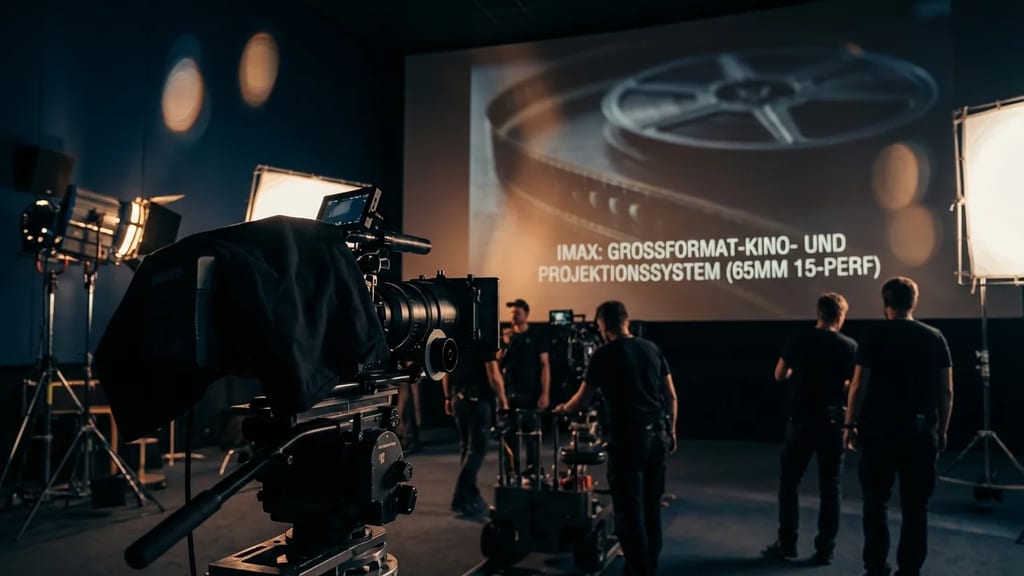
IMAX (Image Maximum) is a Canadian large-format cinema and projection system developed in 1967. The system comprises specialized cameras, film stock, projectors, and purpose-built cinema auditoriums.
The core is the 65mm 15-perf film format – the largest commercially used film strip. With an image area of 69.6 × 48.5 mm, IMAX offers approximately ten times more resolution than standard 35mm film (equivalent to 18K).
The IMAX Formats
IMAX exists today in several variants:
Film-based (Original):
- IMAX 15/70 – The classic 70mm film format with 15 perforations, aspect ratio 1.43:1
- Resolution: ~18K equivalent
- Only in a few specialized cinemas now
Digital:
- IMAX Digital – Dual 2K projection (since 2008), aspect ratio 1.90:1
- IMAX Laser – 4K dual laser projection, both aspect ratios possible
- IMAX with Laser GT – Highest digital quality, approaching film level
Aspect Ratios
| Format | Ratio | Usage |
|---|
| IMAX 15/70 | 1.43:1 | True IMAX cinemas with curved screens |
| IMAX Digital | 1.90:1 | Multiplex IMAX, flat screens |
| IMAX Scope | 2.39:1 | Hybrid productions |
The IMAX Camera
IMAX film cameras are legendary for their size and weight. The MSM 9802 weighs over 50 kg and produces a characteristic loud rattle. This makes them problematic for dialogue scenes – Nolan solves this through post-synchronization.
Digital alternatives like the IMAX-certified ARRI Alexa 65 or Panavision DXL2 offer more flexibility with a lower film equivalent.
History & Milestones
| Year | Milestone |
|---|
| 1967 | Founding of IMAX Corporation in Canada |
| 1970 | First IMAX projection at Expo '70 in Osaka |
| 1971 | Tiger Child – first IMAX film |
| 2002 | Apollo 13 – first Hollywood film re-mastered for IMAX |
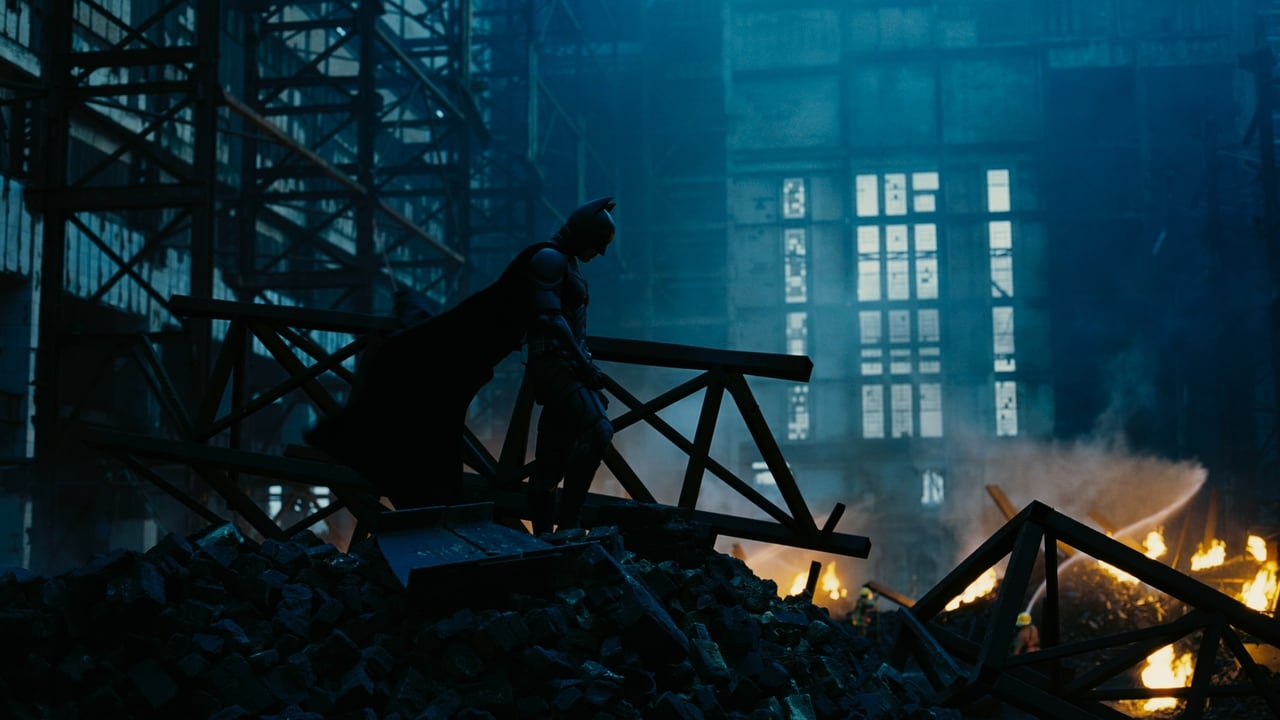
| 2008 | The Dark Knight – first Hollywood production with IMAX sequences |
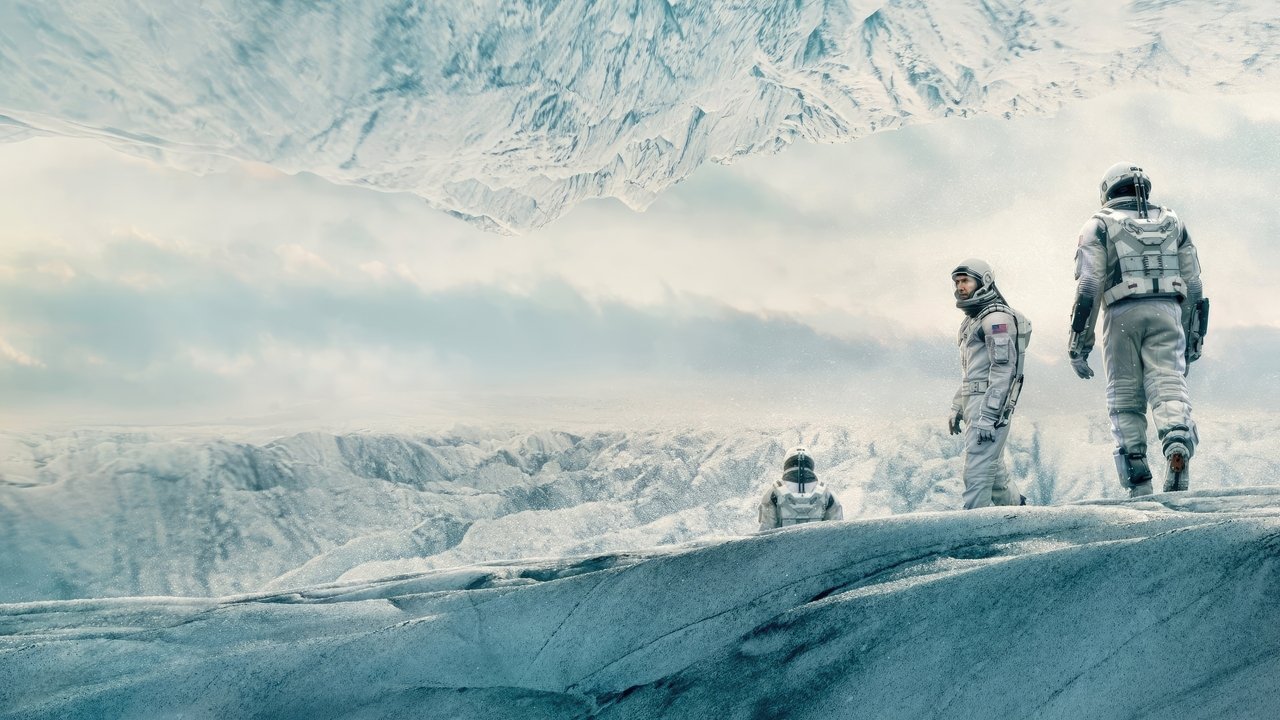
| 2014 | Interstellar – over 60 min. of IMAX footage |
| 2017 | Dunkirk – 75% shot in IMAX |
| 2023 | Oppenheimer – longest IMAX sequence in history |
Notable IMAX Films
Christopher Nolan – The most prominent IMAX advocate:
| Film | Year | IMAX Percentage | Special Feature |
|---|
| The Dark Knight | 2008 | ~28 min. | First IMAX sequences in Hollywood |
| The Dark Knight Rises | 2012 | ~72 min. | Opening entirely in IMAX |
| Interstellar | 2014 | ~60 min. | Space sequences |
| Dunkirk | 2017 | ~75% | Almost entire film |
| Tenet | 2020 | ~50 min. | Action sequences |
| Oppenheimer | 2023 | ~70 min. | Trinity test, hearings |
Other Directors:
| Director | Film | Year |
|---|
| Denis Villeneuve | Dune | 2021 |
| Denis Villeneuve | Dune: Part Two | 2024 |
| Brad Bird | Mission: Impossible – Ghost Protocol | 2011 |
| Patty Jenkins | Wonder Woman 1984 | 2020 |
| Ryan Coogler | Black Panther: Wakanda Forever | 2022 |
| Jon Favreau | The Lion King | 2019 |
| Rian Johnson | Star Wars: The Last Jedi | 2017 |
"True" vs. "LieMax"
Cinephiles critically distinguish between:
True IMAX:
- 1.43:1 aspect ratio
- Curved screen up to 30m wide
- 70mm film projection or IMAX Laser GT
"LieMax" (colloquial):
- Converted multiplex auditoriums
- 1.90:1 aspect ratio
- Dual 2K projection
- Significantly smaller screens
Why IMAX?
IMAX is more than resolution – it's an immersive experience. The massive screen fills the peripheral vision, and the 1.43:1 format utilizes an unusual amount of vertical space. Viewers report physiological reactions: dizziness in height scenes, a true sense of space in landscape shots.
For filmmakers, IMAX means a different approach to thinking: fewer cuts, longer takes, more deliberate composition. The cost enforces discipline – with three minutes per magazine, every frame is valuable.