Cinematographer
1.90:1 is a compromise. I compose for 1.43:1 because I know true IMAX theaters will show the full image. For the digital halls, they then crop the top and bottom – I lose 25% of my vertical composition.
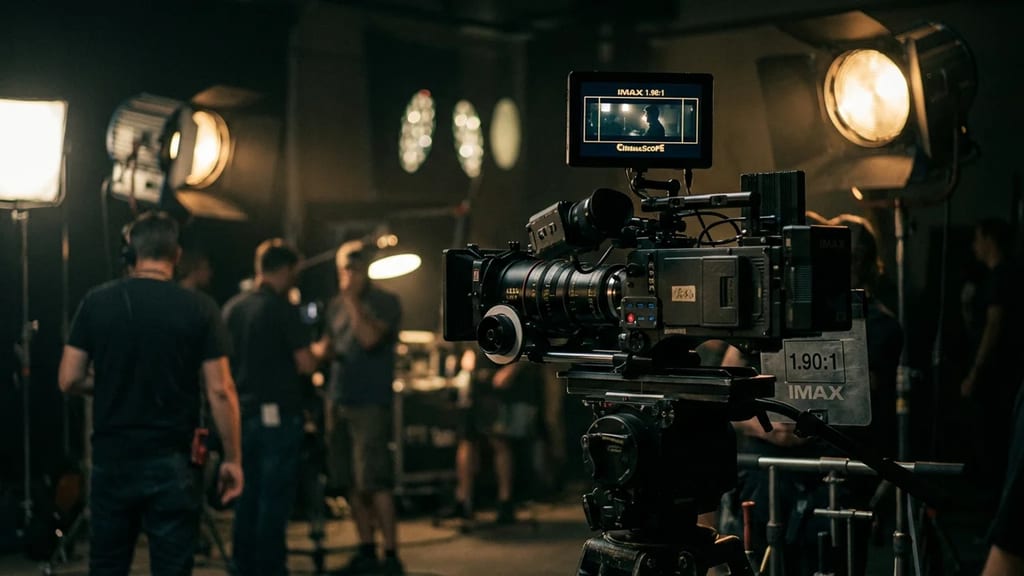
The aspect ratio of the digital IMAX system (1.90:1 ≈ 17:9). Wider than native 1.43:1 film IMAX, but narrower than CinemaScope. Standard for IMAX Digital and multiplex IMAX auditoriums — often criticized as a reduced format.
1.90:1 is the standard aspect ratio for IMAX Digital projections. It was introduced in 2008 with the digital IMAX system and is now the dominant format in most IMAX cinemas worldwide.
Mathematically, 1.90:1 is approximately 17:9 – wider than 16:9 (1.78:1), but significantly narrower than the original IMAX ratio of 1.43:1.
| Format | Ratio | Height (at 100 Width) | Usage |
|---|---|---|---|
| IMAX 15/70 | 1.43:1 | 70 | Film IMAX, IMAX GT |
| IMAX Digital | 1.90:1 | 53 | Multiplex IMAX |
| Standard HD | 1.78:1 | 56 | Television |
| Cinemascope | 2.39:1 | 42 | Cinema Widescreen |
The decision for 1.90:1 was based on practical reasons:
Technical Factors:
Economic Factors:
For films shot for 1.43:1, 1.90:1 means a loss of ~25% of the image height:
Original 1.43:1:
┌─────────────────────┐
│ │
│ │
│ FULL FRAME │
│ │
│ │
└─────────────────────┘
Cropped to 1.90:1:
┌─────────────────────┐
│▓▓▓▓▓CROPPED▓▓▓▓▓│
│ │
│ VISIBLE │
│ │
│▓▓▓▓▓CROPPED▓▓▓▓▓│
└─────────────────────┘Directors like Christopher Nolan shoot using the Open Matte technique:
In "Oppenheimer," for example, IMAX 15/70 viewers see more sky and ground than digital IMAX viewers.
The ARRI Alexa 65, certified for IMAX, records natively in 1.90:1:
These cameras cannot achieve true 1.43:1 – only the old film cameras offer the full IMAX ratio.
Many modern IMAX films switch between aspect ratios:
Example "Dune" (2021):
The image "opens up" for important moments – a visual effect that is impactful in the cinema.
Advantages:
Disadvantages:
1.90:1 is a compromise between the immersive 1.43:1 original and the practical requirements of digital distribution. For filmmakers, it means composing for two target formats – the full IMAX and the reduced digital IMAX.
1.90:1 is a compromise. I compose for 1.43:1 because I know true IMAX theaters will show the full image. For the digital halls, they then crop the top and bottom – I lose 25% of my vertical composition.
The problem with 1.90:1 is that it looks almost like 16:9. The viewer doesn't notice a big difference from their TV. The immersive 'window' feeling of true IMAX gets lost.
1.90:1 is the reality for 80% of IMAX viewers. We have to optimize our films for both aspect ratios – open matte for 1.43:1, but composed so that 1.90:1 still works.
1. Was beschreibt „1.90:1 IMAX Digital" am besten?
2. Zu welchem Department gehört „1.90:1 IMAX Digital"?
3. Wie viele verschiedene Fachperspektiven bietet dieser Eintrag?
The Lexikon is part of the Filmfarm ecosystem — alongside budgeting (FilmBalance), an industry magazine (FilmCircus) and crew networking (FilmCall, CrewMesh). One shared vocabulary for the whole production.