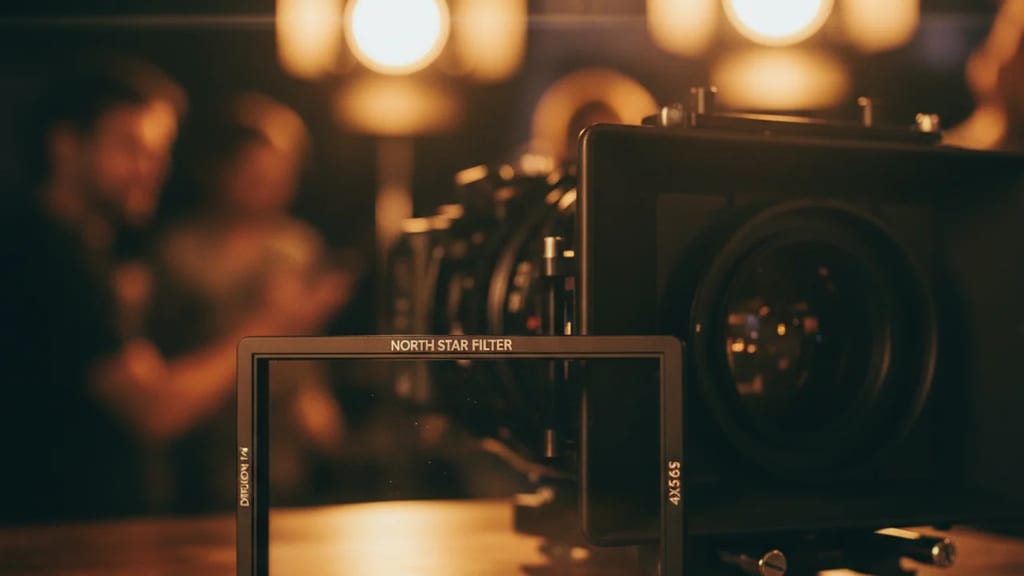
Technical Details
Star filters are made of optical glass with etched parallel lines or stretched fine wires measuring 0.01-0.05mm in thickness. 4-point filters use a single line grid, 6-point filters use three grids offset by 60°, and 8-point filters use two crossed grids offset by 45°. The number of lines per millimeter (typically 50-200 lpi) determines the length of the spikes – fewer lines produce longer spikes. Available thread sizes range from 49mm to 82mm, with step-up/down rings for various lens diameters.
History & Development
Tiffen introduced the first commercial Star Filter for the film industry in 1978, after special effects pioneers developed experimental versions for science fiction productions in the 1970s. Douglas Trumbull used prototypes for the spaceship sequences in "Close Encounters of the Third Kind" in 1977. The 1980s saw their breakthrough with standardized variants from Hoya, B+W, and Cokin. Modern digital post-production increasingly supplanted physical filters from 2000 onwards, though high-quality optical versions continue to be valued for authentic in-camera effects.
Practical Use in Film
Ridley Scott extensively used Star Filters in "Blade Runner" (1982) for its iconic city lights and neon atmosphere. John Carpenter employed them in "They Live" (1988) for alien signal sources. Classic applications include streetlights in night scenes, candlelight for romantic moods, and sunlight filtering through treetops. The filter enhances existing light sources but does not work with diffuse light. Modern cinematographers like Roger Deakins use them sparingly for specific narrative accents.
Comparison & Alternatives
Star filters differ from diffusion filters by creating sharp, geometric light patterns rather than soft diffusion. Pro-Mist filters create atmospheric effects without starbursts. Digital alternatives like After Effects' "CC Star Burst" offer post-production control but do not achieve the optical authenticity of physical filters. Anamorphic lenses produce natural horizontal lens flares, while Star Filters create symmetrical patterns in all directions. Variable Star Filters allow for rotation of the spike direction during shooting.