Filmlexikon.
Support
TV Cut
Directing · Terms

TV Cut

Murnau AI illustration
axial cut cross cut cross cutting cut cutter cutting on dialogue cutting on movement cutting rhythm

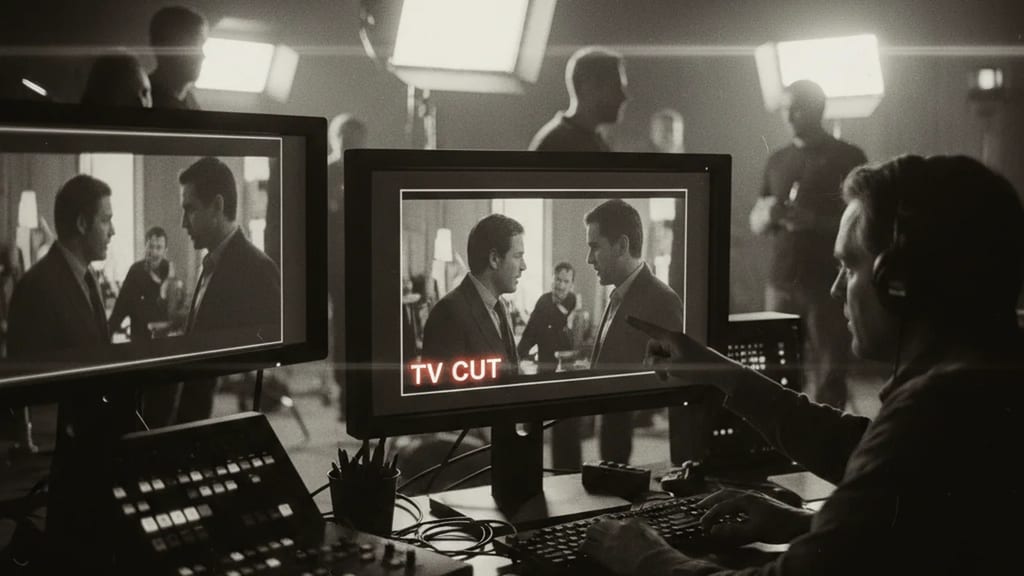
Broadcast-edited version of a film trimmed to 90–120 minutes for television airtime, with violence, nudity, and profanity removed or altered per broadcast standards.

Technical Details

TV Cuts are tailored to standard broadcast times of 90, 120, or 180 minutes, including commercials. A 140-minute theatrical film is shortened to approximately 92-96 minutes of net running time for a 120-minute slot. Edits are made at dramaturgically appropriate points for commercial breaks, creating 8-12 additional entry and exit points. Scenes of violence, nudity, and strong language are edited or completely removed according to broadcast time guidelines (Prime Time vs. Late Night).

History & Development

In 1961, NBC first aired a feature film specifically shortened for TV – "The Bridge on the River Kwai" was reduced from 161 to 140 minutes. In 1968, ABC introduced the "Movie of the Week" format, establishing the 90-minute TV slot as standard. In the 1980s, cable expansion led to various versions: uncensored versions for pay TV and heavily shortened versions for free TV syndication.

Practical Application in Film

"Apocalypse Now" (1979) exists in a 149-minute TV Cut compared to its 183-minute theatrical length – Coppola primarily removed excesses of violence and philosophical monologues. "Scarface" (1983) lost 37 minutes and over 200 expletives for its TV broadcast. Today, studios produce TV Cuts concurrently with the theatrical edit, with directors often providing alternative takes for problematic scenes. The TV editor works with a pre-approval system from broadcasters, which dictates specific edit lists and replacement scenes.

Comparison & Alternatives

TV Cuts differ from Director's Cuts in their restrictive nature – they remove material rather than add it. Unlike International Cuts, which make cultural adjustments, TV Cuts focus on broadcast time and child protection. Streaming platforms have largely rendered the concept obsolete, as they show original lengths without commercial interruptions. Pay TV channels today mostly use the theatrical version with inserted breaks, while free-to-air TV continues to broadcast shortened versions.
From the crafts

Perspectives

Cinematographer

Als DoP muss ich bereits beim Dreh berücksichtigen, dass bestimmte Einstellungen für TV-Fassungen problematisch werden könnten - explizite Gewaltdarstellungen oder Nacktheit filme ich daher oft mit alternativen Winkeln oder Kadrierungen. Bei Actionszenen erstelle ich zusätzliche Cutaway-Shots, die als Überbrückung für entfernte Gewaltspitzen dienen können, ohne die Kontinuität zu zerstören.

Director

TV-Fassungen zwingen mich dazu, bereits im Drehbuch alternative Dialogversionen für kritische Szenen zu entwickeln und beim Dreh clean Takes ohne Kraftausdrücke aufzunehmen. Ich muss die dramaturgische Struktur so anlegen, dass auch eine um 30-40 Minuten gekürzte Version noch narrativ funktioniert - das bedeutet, dass bestimmte Subplot-Stränge vollständig entfernbar sein müssen, ohne die Haupthandlung zu beschädigen.

Producer

TV-Fassungen generieren zusätzliche Postproduktionskosten von 50.000-150.000 Dollar, je nach Komplexität der Anpassungen und benötigten ADR-Sessions für saubere Dialogversionen. Gleichzeitig sichern sie aber TV-Lizenzerlöse von mehreren Millionen Dollar über die Verwertungskette ab. Ich plane heute 3-5 zusätzliche Drehtage für alternative Takes ein, um später teure Reshoots zu vermeiden.

More in the lexikon

Related terms

Test your knowledge

Quiz

1. Was beschreibt „TV-Fassung" am besten?

2. Zu welchem Department gehört „TV-Fassung"?

3. Wie viele verschiedene Fachperspektiven bietet dieser Eintrag?

Report an error
From the Filmfarm ecosystem

Understand visual language, budget productions, connect crew.

The Lexikon is part of the Filmfarm ecosystem — alongside budgeting (FilmBalance), an industry magazine (FilmCircus) and crew networking (FilmCall, CrewMesh). One shared vocabulary for the whole production.

FilmFarm FilmRadarComing soonFilmPulseComing soonFilmNumbersComing soonFilmCapitalComing soonFilmLabComing soonFilmBalanceComing soonFilmCircusComing soon