Filmlexikon.
Support
Twist
Theory · Terms

Twist

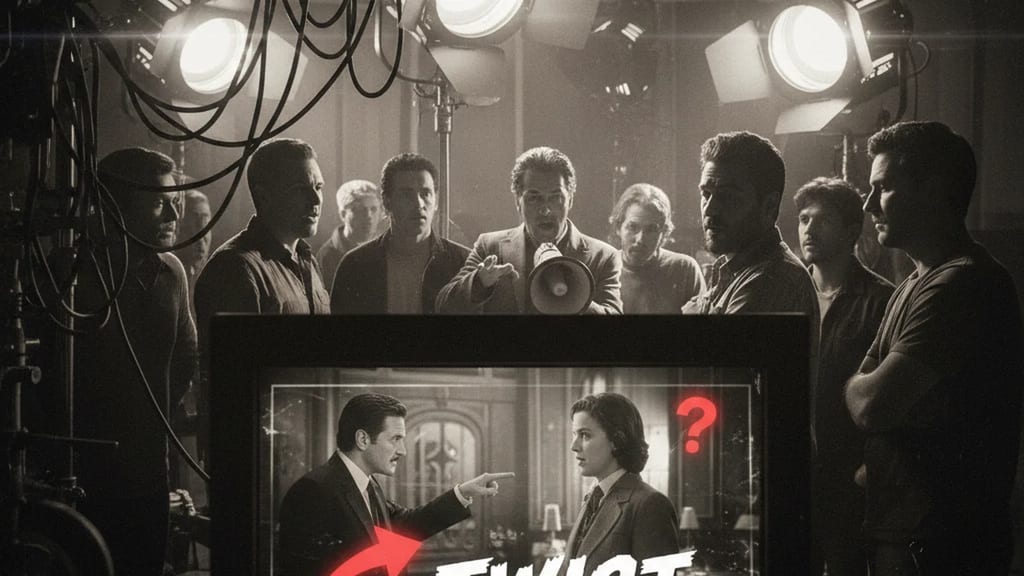
Murnau AI illustration
flow roll setup

Twist is a technique of professional narrative filmmaking.

Technical Details

Twists follow a three-stage structure: Setup (establishing false assumptions), Misdirection (deliberate misleading), and Reveal (unveiling). The most effective twists fulfill the "rewatch criterion" – logical consistencies emerge upon rewatching. Classification is based on resolution type: Identity Twists (false person identity), Reality Twists (altered plane of reality), Time Twists (chronological restructuring), and Unreliable Narrator Twists (unreliable narrative perspective). The optimal placement is statistically between 75-85% of the total runtime.

History & Development

Literary twists have existed since antiquity; cinematically, Hitchcock systematically established them from the 1930s. "Psycho" (1960) defined the modern twist through the protagonist change after 47 minutes. M. Night Shyamalan popularized the twist as a trademark and genre expectation starting with "The Sixth Sense" (1999). The streaming era since 2010 has led to "twist inflation" – series like "Westworld" integrate multiple twists per episode. Modern twists react to the audience's genre knowledge and operate on meta-levels.

Practical Application in Film

"Fight Club" uses visual cues in 37 shots before the Tyler Durden reveal. "The Usual Suspects" constructs the entire narrative as a Keyser Söze deception through unreliable narration. "Shutter Island" works with double meanings of dialogue lines for both interpretive levels. Technically, twist films require parallel script versions and careful continuity control. Editing and music composition must support both readings. Documentaries like "Catfish" developed real-time twists through investigative turns during production.

Comparison & Alternatives

Twists differ from Red Herrings (temporary distractions) and MacGuffins (meaningless plot drivers) through a permanent re-evaluation of established facts. Cliffhangers create suspense without information revision. Modern alternatives include Multiple Timeline Narratives ("Memento") and Audience Participation formats ("Black Mirror: Bandersnatch"). Interactive media enable twist variations depending on viewer decisions. For genre-savvy audiences, Meta-Twists (audience expectations as the object of the twist) replace classic surprise moments.

From the crafts

Perspectives

Cinematographer

Ich muss bereits beim ersten Dreh beide Realitätsebenen visuell unterstützen – jede Einstellung braucht Subtext für die spätere Enthüllung. Lighting und Framung müssen die falsche UND wahre Interpretation gleichermaßen bedienen, ohne die Wendung zu verraten.

Director

Ich choreographiere Wendungen wie chirurgische Eingriffe – jeder Plot-Point muss im Nachhinein logisch wirken, während er live überrascht. Die Herausforderung liegt darin, fair zu täuschen ohne zu lügen, besonders bei der Schauspielführung für Doppelrollen-Charaktere.

Producer

Twist-Filme bedeuten doppelte Script-Supervision und NDAs für das gesamte Team – Spoiler können Opening-Weekend um 40% reduzieren. Marketing läuft über Mysterium statt Content, was die Trailer-Produktion verkompliziert und höhere Test-Screening-Kosten verursacht.

More in the lexikon

Related terms

Test your knowledge

Quiz

1. Zu welchem Department gehört „Wendung"?

2. Wie viele verschiedene Fachperspektiven bietet dieser Eintrag?

Report an error
From the Filmfarm ecosystem

Understand visual language, budget productions, connect crew.

The Lexikon is part of the Filmfarm ecosystem — alongside budgeting (FilmBalance), an industry magazine (FilmCircus) and crew networking (FilmCall, CrewMesh). One shared vocabulary for the whole production.

FilmFarm FilmRadarComing soonFilmPulseComing soonFilmNumbersComing soonFilmCapitalComing soonFilmLabComing soonFilmBalanceComing soonFilmCircusComing soon