Filmlexikon.
Support
Tuned Lens
Camera · Equipment

Tuned Lens

Murnau AI illustration
anamorphic lens anamorphic projection lens angenieux optimo prime arri master prime arri signature prime arri ultra prime arri zeiss variable prime atlas lens co

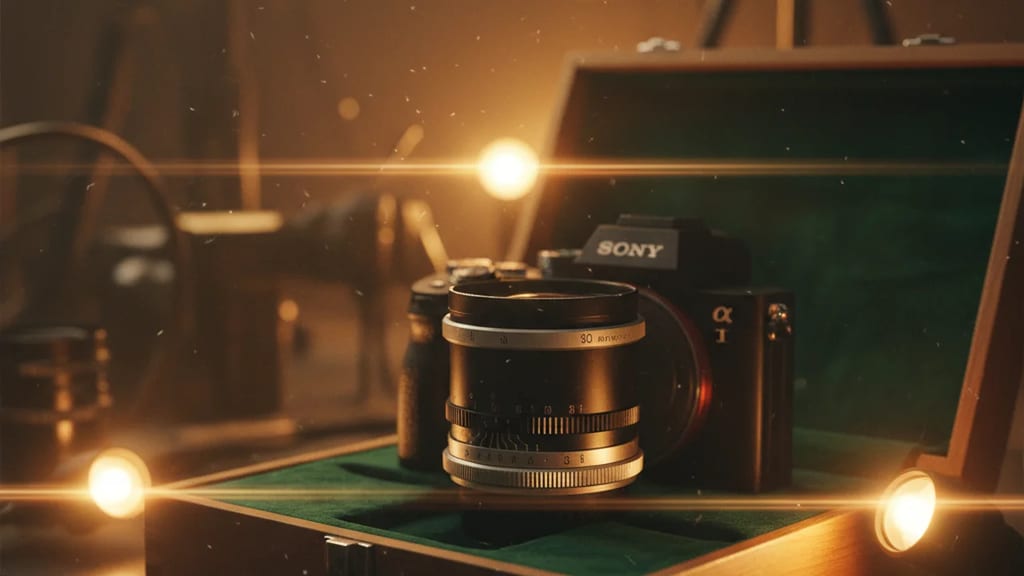
Modified lens with intentionally reduced coatings or altered elements for vintage optical character. Loses 0.3–0.7 stops of light, producing controlled lens flares.

Technical Details

Common tuning measures include reducing the anti-reflection coating by 30-50%, deliberately creating lens flares and contrast loss. Mechanical interventions involve reducing the number of aperture blades from a standard 9-11 to 5-6 or altering the blade shape to produce characteristic bokeh forms. Optical tuning is achieved by replacing individual elements with those having different refractive indices (nd values between 1.5-1.9 instead of the standard 1.52). Vintage tuning simulates aging effects through controlled de-centering of the lens mount by 0.1-0.3mm or the deliberate incorporation of optical aberrations.

History & Development

In 1982, cinematographer Jordan Cronenweth developed the first documented tuned lens for "Blade Runner" by removing the anti-reflection coating of a Zeiss Super Speed. In 1995, Panavision established the first commercial tuned series with their "Primo Vintage" lenses. Cooke followed in 2004 with the "S4i Vintage" lenses, which were specifically designed with optical "imperfections." Since 2010, specialists like TLS (True Lens Services) have offered systematic rehousing and tuning of vintage lenses, while modern manufacturers like Sigma produce brand-new lenses with vintage characteristics in their "Classic" series.

Practical Use in Film

"Her" (2013) exclusively used re-housed and tuned Zeiss Super Speeds from the 1970s for its characteristic warm skin tones and soft contrast ratio. Since "The Dark Knight" (2008), Christopher Nolan has used tuned Hasselblad lenses on IMAX cameras for his films, with the coatings selectively removed. The workflow requires precise calibration, as tuned lenses can become 0.3-0.7 stops slower and exhibit altered color temperatures of ±200K.

Comparison & Alternatives

Tuned lenses differ from vintage lenses in their deliberate, controlled modification rather than natural aging. Filter-based solutions like Pro-Mist or Glimmerglass create similar effects but influence the entire image uniformly. Digital post-production can simulate vintage looks but does not achieve the physically correct light scattering of actual optical modifications. Modern "vintage-style" lenses like the Cooke Panchro/i Classic combine contemporary mechanics with tuned optical properties, offering the reliability of modern systems with classic image aesthetics.
From the crafts

Perspectives

Cinematographer

Ich setze getunte Zeiss Super Speeds gezielt für Nahaufnahmen ein, da die reduzierte Vergütung sanfte Hauttöne ohne Härte erzeugt. Die veränderte Bokeh-Charakteristik durch modifizierte Blendenlamellen gibt mir völlig neue gestalterische Möglichkeiten bei der Tiefenschärfe-Staffelung. Allerdings muss ich die um eine halbe Blende reduzierte Transmission und die veränderten Farbtemperaturen bei der Belichtungsmessung berücksichtigen.

Director

Getunte Objektive ermöglichen mir, bereits beim Dreh eine spezifische emotionale Atmosphäre zu schaffen, die digital nicht authentisch reproduzierbar ist. Das organische Flare-Verhalten und die weiche Zeichnung unterstützen besonders bei intimen Charakterstudien die narrative Intention. Die Einzigartigkeit jedes getunten Objektivs wird zum visuellen Markenzeichen des Films.

Producer

Tuned-Objektive kosten 15-25% mehr als Standardmieten und erfordern längere Testzeiten vor Drehbeginn, da jedes Set individuelle Eigenschaften aufweist. Der Workflow wird durch notwendige Reserveobjektive und spezialisierte Wartung komplexer, spart jedoch Postproduction-Zeit für Vintage-Looks. Die Verfügbarkeit ist begrenzt, weshalb frühe Buchung und Backup-Lösungen essentiell sind.

More in the lexikon

Related terms

Test your knowledge

Quiz

1. Was beschreibt „Tuned-Objektiv" am besten?

2. Zu welchem Department gehört „Tuned-Objektiv"?

3. Wie viele verschiedene Fachperspektiven bietet dieser Eintrag?

Report an error
From the Filmfarm ecosystem

Understand visual language, budget productions, connect crew.

The Lexikon is part of the Filmfarm ecosystem — alongside budgeting (FilmBalance), an industry magazine (FilmCircus) and crew networking (FilmCall, CrewMesh). One shared vocabulary for the whole production.

FilmFarm FilmRadarComing soonFilmPulseComing soonFilmNumbersComing soonFilmCapitalComing soonFilmLabComing soonFilmBalanceComing soonFilmCircusComing soon