Definition
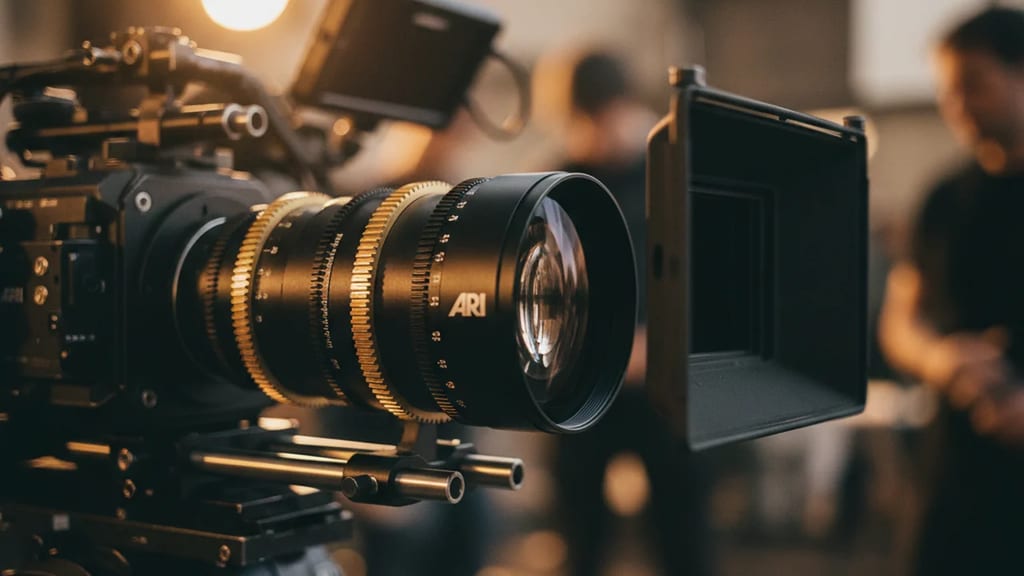
The anamorphic lens is a specialized film optics system that compresses horizontal image dimensions by a specific factor while leaving vertical dimensions unchanged. This creates a characteristic widescreen aesthetic with typical features such as horizontal lens flares and almond-shaped bokeh.
Technical Specifications
Compression Ratios
The most common anamorphic compression ratios are:
- 1.33x (4:3) – Subtle, moderately pronounced look, most common for streaming
- 1.5x – Moderate compression, balance between look and practicality
- 1.8x – Pronounced anamorphic character, distinct horizontal stretch
- 2x (1:2) – Classic anamorphic format, very dramatic stretch, requires de-squeezing
Optical Characteristics
- Horizontal Lens Flares – Characteristic linear light reflections
- Bokeh Shape – Almond-shaped or oval in horizontal direction (dependent on f-stop)
- Focus Breathing – Focal point shift during focus (typical in older designs)
- Depth of Field – More critical than spherical, especially horizontally
- Vignetting – Typically stronger at the corners
- Color Rendition – Manufacturer-specific (e.g., Cooke warm, Panavision dynamic)
Focal Length Equivalents
Anamorphic lenses are often described as effective spherical equivalents:
- 40mm Anamorphic 2x ≈ 80mm spherical (angle of view)
- 50mm Anamorphic 1.33x ≈ 67mm spherical (angle of view)
- 75mm Anamorphic 2x ≈ 150mm spherical (angle of view)
Historical Development
Origins and Evolution
1950s - Cinemascope Era
- Anamorphic lenses developed to create widescreen formats (2:1) on standard 35mm film
- 20th Century Fox "Cinemascope" employed anamorphic optics exclusively
- Early designs had strong optical aberrations and focus breathing
1960s-1970s - Golden Age
- Panavision, Zeiss, and Cooke develop high-quality anamorphic series
- Panavision C-Series and E-Series become standard for Hollywood productions
- Cooke Speed Panchro Anamorphic gains popularity for its color rendition
1980s-1990s - Refinement
- Better aberration corrections
- Zeiss Master Anamorphic developed with reduced focus breathing
- Panavision T-Series offers improved optical quality
2000s - Digital Transition
- New anamorphic designs optimized for digital sensors
- Cooke Anamorphic/i series with electronic metadata
- Modern designs offer consistent optical performance across all focal lengths
2010s-2020s - Renaissance
- Anamorphic lenses experience renewed interest through streamers and high-end series
- New series: Zeiss Vintage Anamorphic (classic look)
- ARRI/Zeiss Master Anamorphic with minimal aberration and stable performance
Legendary Manufacturers and Series
Panavision Anamorphic
- C-Series (1970s), E-Series (1980s), T-Series (1990s), Ultra-Wide (2010s)
- Characteristic bokeh, warm-tonal
- Gold standard for feature films
- Examples: 35mm, 40mm, 50mm, 75mm, 100mm
Cooke Speed Panchro Anamorphic
- Produced since the 1970s
- Legendary for color character (warm, elegant, retro)
- T/2.0 or T/2.3 aperture
- Preferred for drama and classic films
Zeiss Master Anamorphic
- Modern high-end optics
- Minimal focus breathing
- Consistent across focal length range (35mm to 100mm)
- Technically precise, less characteristic than Cooke
ARRI Signature Anamorphic (2018+)
- Specifically optimized for digital cinema cameras
- Digital metadata (lens data)
- Minimal aberrations
- 40mm, 50mm, 75mm, 100mm available
Practical On-Set Usage
Focus Pulling with Anamorphic Lenses
Focus pulling with anamorphic lenses is technically more demanding:
Horizontal vs. Vertical Depth of Field
- Horizontal depth of field is significantly narrower
- Vertical depth of field is wider
- Focus puller must understand and compensate for this difference
Follow-Focus Techniques
- Often preferred: Remote focus control (wireless follow focus)
- Witness marks are essential for accurate focus positions
- Slow, controlled focus transitions recommended
Typical Set Configurations
Feature Film (2x Anamorphic)
Lens Set:
- 40mm – Standard Wide
- 50mm – Standard Mid-range
- 75mm – Standard Mid-tele
- 100mm – Long Tele

Setup:
- Wireless Follow Focus System (Bartech or Preston)
- Zoom Viewfinder on Monitor
- Witness Marks for each position
- Aberration Correction calculated in post
Drama Series (1.8x or 2x Anamorphic)
Lens Selection:
- At least 3 prime lenses
- Typically 40mm, 75mm, 100mm as core set
- Optional 35mm or 50mm as alternative

Focus Team:
- Dedicated focus puller with anamorphic experience
- Witness marks and rehearsals essential
- Monitor setup with zoom magnification
Documentary (1.33x Anamorphic - subtle)
- Simpler focus management
- Zoom lenses feasible (e.g., 24-180mm Anamorphic)
- Less specialization required
- Better handheld mobility
Character and Aesthetics
Bokeh Characteristics
Anamorphic bokeh differs fundamentally from spherical:
At f/2.0 (2x Anamorphic)
- Almond-shaped, horizontally stretched
- Soft transitions between sharp and out-of-focus
- Often described as "dreamy" or "romantic"
- Cooke: warm, soft bokeh
- Zeiss/Panavision: precise, structured bokeh
At f/4.0
- Bokeh becomes more polygonal
- Characteristic "anamorphic shapes" become more subtle
- Better edge definition
Lens Flare Character
The iconic feature of anamorphic lenses:
Panavision-Style
- Horizontal light rays
- Multi-element flares
- Warm tone, elegant appearance
- Subtle and cinematic
Cooke-Style
- Also horizontal, but less complex
- Softer transitions
- Warm, nostalgic appearance
Zeiss-Style
- Clean, defined lens flares
- Less organic, more precise
- Technical look
Aberrations and Corrections
Typical Anamorphic Aberrations
- Spherical Aberration – Different focal points at open aperture
- Chromatic Aberration – RGB separation especially in corners
- Astigmatism – Different focal points horizontal/vertical
- Coma – Point distortion in corners
- Focus Breathing – Focal point shift during focus (older designs)
- Barrel Distortion – Especially in wide anamorphic (35mm)
Modern Design Approaches
- Zeiss Master Anamorphic reduces focus breathing to <0.5%
- New aspherical elements correct aberrations more effectively
- Digital-optimized designs reduce CA in corners
- Cooke Anamorphic/i+ uses element movement for aberration correction
Comparison: Various Anamorphic Series
| Series | Era | Characteristic | Ideal For |
|---|
| Panavision C-Series | 1970s | Warm tone, organic | Classic films |
| Cooke Speed Panchro | 1980s | Elegant, retro | Drama/Feature |
| Zeiss Master Anamorphic | 2000s | Technical, neutral | Documentary |
| ARRI Signature Anamorphic | 2018+ | Modern, digital | Contemporary |
| Panavision Ultra-Wide | 2010s | Dramatic, wide | Epics |
Production Workflow
Preparation
- Lens Testing – Test all anamorphic lenses before production
- Back-Focus Calibration – Calibrate for specific camera
- Aberration Profiling – Know what corrections are needed
- Focus Assist Setup – Configure monochrome or peaking monitor
During Production
- Witness Marks – Create for each setup
- Test Takes – Test focus performance under actual lighting conditions
- Monitoring – Constantly verify focus accuracy
- Aberration Notes – Document visible aberrations
Post-Production
- Lens Correction – Optional CA/distortion corrections
- Bokeh Enhancement – Sometimes bokeh is artificially enhanced (in VFX)
- Lens Flare Integration – Add authentic lens flares to VFX shots
- Color Grading – Anamorphic lenses have specific color tones to consider
Modern Trends
- 4K/8K Anamorphic – New designs for ultra-high-resolution
- Streaming Anamorphic – Lighter 1.33x or 1.5x versions for mobility
- Hybrid Designs – Anamorphic with variable compression ratio (experimental)
- Electronic Anamorphic – Software-based anamorphic simulation (e.g., RED's Magic Lantern)
Related Terms
- Spherical Lens – Standard non-anamorphic optics
- Bokeh – Out-of-focus rendering
- Lens Flare – Light reflections in optics
- 2x Anamorphic – Classic extreme format
- 1.33x Anamorphic – Subtle moderate format
- De-squeezing – Software process to correct anamorphic compression
- Focus Breathing – Focal point shift
- T-Stop – Transmission aperture