Filmlexikon.
Support
RED One
Camera · Kameras

RED One

Murnau AI illustration
red epic red scarlet red komodo red v raptor red gemini redcode raw redcode r3d

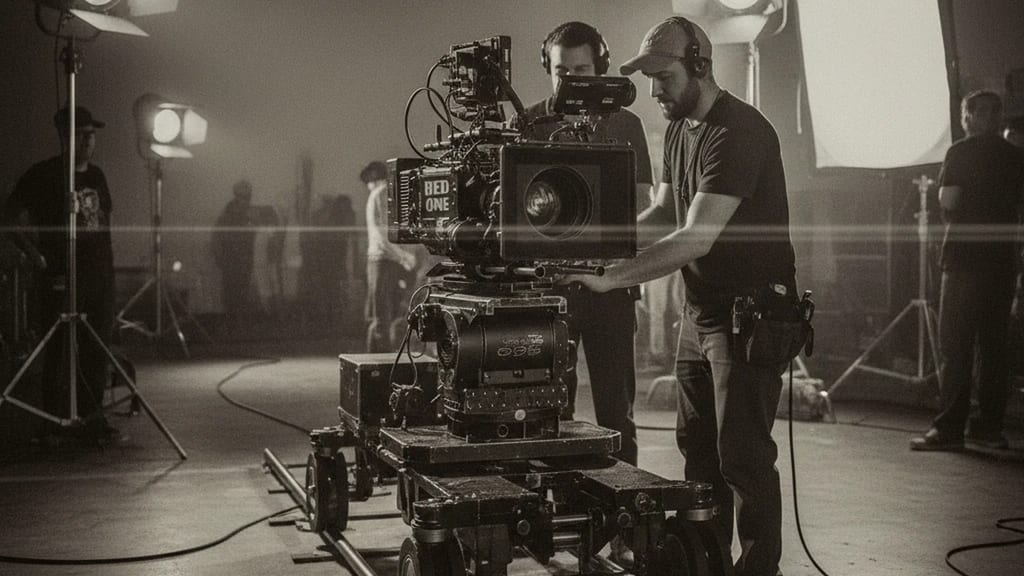
RED digital cinema camera featuring Mysterium sensor, 4K REDCODE recording, 13 stops dynamic range. Weighed 4.5 kg; cost one-tenth of traditional film cameras.

Technical Details

The RED One features a Mysterium sensor with 12-bit color depth and a dynamic range of 13 stops. The camera records in the proprietary REDCODE format, a lossless wavelet codec with variable compression ratios between 3:1 and 18:1. The body weighs 4.5 kg and supports PL, Nikon, and Canon lenses via respective adapters. The maximum frame rate is 30fps at 4K, 60fps at 3K, and 120fps at 2K resolution. RED FLASH MAG cards with capacities between 8GB and 64GB are used as storage media.

History & Development

RED founder Jim Jannard announced the One in 2006 as a disruption to the established cinema camera industry, dominated by Arri and Panavision. The first production models were delivered in 2008, after prototypes were already tested in 2007 on "Wanted" and "The Social Network." In 2009, the improved RED One MX followed, featuring the Mysterium-X sensor, which optimized noise performance and dynamic range. Production ended in 2012 in favor of the Epic and Scarlet series.

Practical Use in Film

Peter Jackson shot the "The Hobbit" trilogy entirely with RED One cameras, utilizing its 48fps capability for High Frame Rate projection. David Fincher used the camera on "The Social Network" and praised the flexibility in post-production workflow due to the RAW format. Steven Soderbergh filmed "Che" with a RED One and appreciated its compact design for handheld shots. Typical workflows involve transcoding REDCODE files to ProRes or DNxHD for editing, while color grading is done directly with the RAW files.

Comparison & Alternatives

In 2008, the RED One primarily competed with the Arri Alexa (2010) and Sony F35, but offered 4K resolution at a tenth of the cost of conventional digital cinema cameras. Unlike the warmer, more filmic image characteristic of the Alexa, the RED One produces a sharper, higher-contrast image with more pronounced detail. Modern alternatives include the RED Komodo, Arri Alexa Mini, or Blackmagic URSA Mini Pro 12K, all of which offer higher frame rates and improved low-light performance.
From the crafts

Perspectives

Cinematographer

Als DoP schätze ich an der RED One die außergewöhnliche Detailauflösung bei 4K, die mir enormen Spielraum beim Reframing in der Post gibt. Das REDCODE RAW-Format erlaubt nachträgliche Korrekturen von Weißabgleich und Belichtung, die bei anderen Formaten unmöglich wären. Allerdings erfordert das digitale, manchmal sterile Bild der RED One bewusste Beleuchtungsstrategien, um die organische Wärme von Film zu erreichen.

Director

Die RED One gibt mir als Regisseur die Freiheit, spontaner zu arbeiten, da die langen Aufnahmezeiten digitaler Medien mehr Takes ermöglichen als teure 35mm-Rollen. Die 4K-Auflösung erlaubt es mir, in der Post verschiedene Bildausschnitte zu wählen, ohne Qualitätsverlust - praktisch mehrere Kameraperspektiven aus einem Setup. Das saubere, detailreiche Bild unterstützt besonders gut moderne, realistische Erzählstile.

Producer

Die RED One reduzierte meine Kamerakosten von 150.000€ auf 25.000€ pro Unit, bei gleichzeitig höherer technischer Spezifikation als etablierte Systeme. Der Wegfall von Filmkosten und Laborentwicklung senkt die laufenden Produktionskosten erheblich, erfordert aber Investitionen in leistungsstarke Post-Production-Hardware für 4K-Workflows. Die Anschaffung rechtfertigt sich bereits ab mittelgroßen Produktionen durch eingesparte Mietkosten.

More in the lexikon

Related terms

Test your knowledge

Quiz

1. Was beschreibt „RED One" am besten?

2. Zu welchem Department gehört „RED One"?

3. Wie viele verschiedene Fachperspektiven bietet dieser Eintrag?

Report an error
From the Filmfarm ecosystem

Understand visual language, budget productions, connect crew.

The Lexikon is part of the Filmfarm ecosystem — alongside budgeting (FilmBalance), an industry magazine (FilmCircus) and crew networking (FilmCall, CrewMesh). One shared vocabulary for the whole production.

FilmFarm FilmRadarComing soonFilmPulseComing soonFilmNumbersComing soonFilmCapitalComing soonFilmLabComing soonFilmBalanceComing soonFilmCircusComing soon