Overview
ProRes RAW is a video codec introduced by Apple in 2018 that applies ProRes compression technology to the camera sensor's unedited image data. Unlike classic ProRes (which stores already processed, demosaiced images), ProRes RAW preserves the raw sensor data before debayering. This format combines the creative flexibility of RAW material with the real-time editing performance of ProRes.
The key advantage for post-production: parameters such as demosaicing, white balance, ISO/exposure, and linear-to-log conversion are determined during editing, not during shooting. This expands the latitude in highlights and shadows and makes image development largely independent of the manufacturer's proprietary camera RAW format.
Variants and Properties
There are two compression levels:
- ProRes RAW – Standard variant with high image quality at a moderate data rate.
- ProRes RAW HQ – higher quality at a correspondingly higher data rate.
Both work with variable bit rate (VBR): the bitrate adapts to the image content to maintain constant quality across all frames. This makes ProRes RAW a lossy, but visually very high-quality codec for HDR productions.
Recording and Equipment
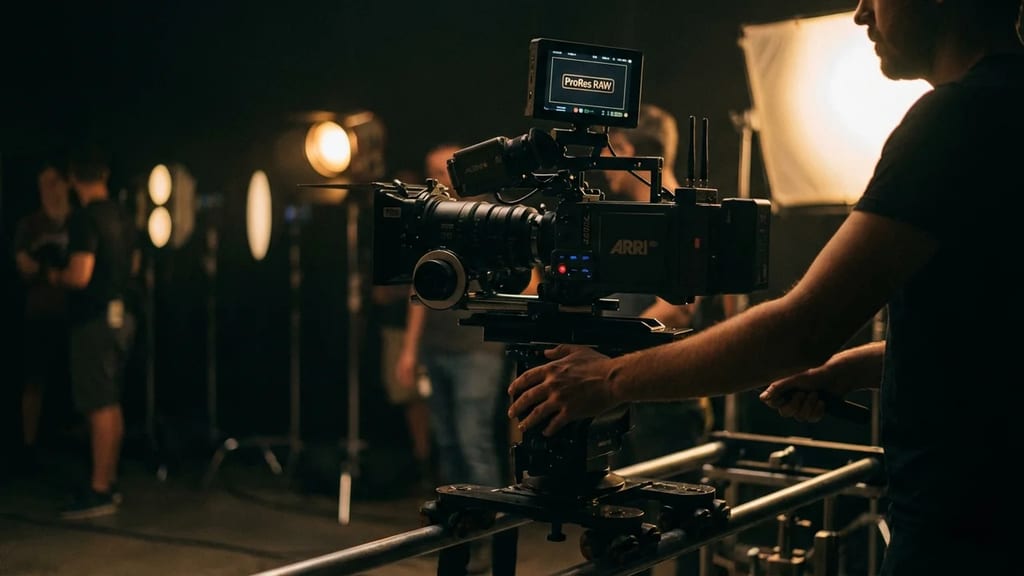
ProRes RAW is not generated internally by cameras in all devices, but is typically recorded via external HDMI/SDI recorders. Atomos monitor recorders (e.g., the Ninja series) are common, receiving the RAW signal from compatible cameras and writing it to ProRes RAW. Many of these recorders additionally offer camera control via USB-C for parameters such as ISO, shutter speed, aperture, and white balance.
Apple maintains the exact list of supported cameras, recorders, and software in the official overview of authorized products.
Use in Post-Production
ProRes RAW can be processed in common editing software, including Apple Final Cut Pro, Adobe Premiere Pro, DaVinci Resolve, and Avid Media Composer. In Final Cut Pro, Motion, and Compressor, the material can also be exported to other formats. In grading, the format allows the application of custom LUTs as well as post-shoot control of demosaicing and log conversion – relevant for all departments that fine-tune the lighting mood and dynamic range after shooting.