Filmlexikon.
Support
Molipso
Lighting · Terms

Molipso

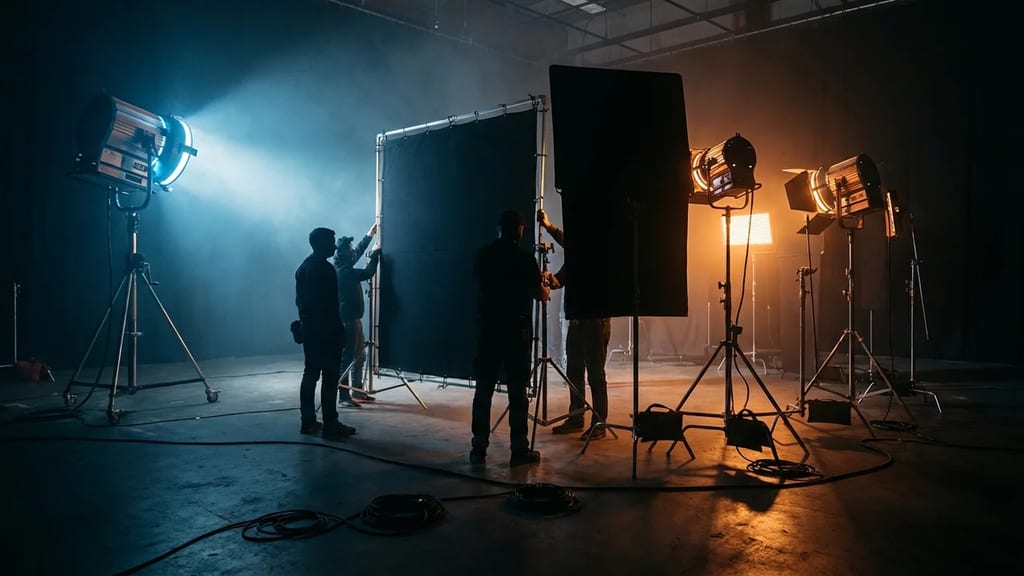
Murnau AI illustration
color temperature flow roll take

Rotating light system with dual 320mm Fresnel lenses producing mobile light cones of 12°–68° at 18,000 lumens via 2.5kW HMI lamp.

Technical Details

The Molipso operates with two concentric Fresnel lenses (320mm diameter), rotating at 0.5-3 revolutions per minute. The light beam varies between a 12° and 68° beam angle with a constant 18,000 lumens of light output. The system requires a 2.5kW HMI lamp and weighs a total of 24kg. Three variants exist: Molipso Standard (fixed speed), Molipso DMX (remotely controllable via 512 channels), and Molipso Compact (reduced size for a 1.2kW lamp).

History & Development

In 1987, Italian lighting technician Giuseppe Marelli developed the first Molipso for Cinecittà Studios. Originally created to simulate cloud shadows for Western films, it gained international distribution in 1991 through "Terminator 2." Arri licensed the technology in 1994 and integrated it into the M-Series system. Since 2018, Aputure has offered an LED-based version with 12,000 lumens.

Practical Use in Film

Roger Deakins used Molipso units for the prison scenes in "The Shawshank Redemption" (1994) to create subtle light changes through bars. In "Blade Runner 2049" (2017), six synchronized Molipsos simulated the flickering neon light of the city scenes. The rotating beam is particularly suitable for underwater scenes, dream sequences, and atmospheric night exteriors. Disadvantages include motor noise (42 dB) and high power consumption.

Comparison & Alternatives

Compared to static gobos, the Molipso creates more organic light movements without visible repeating patterns. Modern LED panels with programmed light animation are increasingly replacing HMI-based Molipsos, but do not achieve their light intensity. For interior shots, cinematographers often prefer Dedo-Lights with motorized iris diaphragms, as they operate more quietly. For large productions, Molipso systems remain standard for dynamic lighting moods with high base brightness.
From the crafts

Perspectives

Cinematographer

Ich setze das Molipso hauptsächlich als Hintergrundlicht ein, um statische Szenen zu beleben – die kontinuierliche Lichtbewegung verhindert, dass Gesichter flach wirken. Bei 5600K Farbtemperatur muss ich allerdings die Hauttöne mit Minusgrün-Filtern korrigieren, und das Motorengeräusch zwingt mich oft zu größeren Abständen vom Set.

Director

Das Molipso hilft mir, psychologische Unruhe zu erzeugen, ohne dass die Bewegung bewusst wahrgenommen wird – perfekt für Thriller oder Charakterstudien. In Dialogszenen lasse ich es langsam über die Gesichter wandern, um Emotionsverläufe zu unterstreichen. Die hypnotische Wirkung des rotierenden Lichts verstärkt bei längeren Einstellungen die Konzentration der Zuschauer auf die Schauspieler.

Producer

Ein Molipso-Setup kostet mich täglich 180€ Miete plus zusätzlich 45€ für den spezialisierten Lichttechniker, der die DMX-Programmierung beherrscht. Der Stromverbrauch von 2,5kW erfordert oft Generatoren an Außenlocations, was weitere 200€ täglich bedeutet. Dafür spare ich Zeit bei der Beleuchtung komplexer Szenen, da ein Molipso die Arbeit mehrerer konventioneller Scheinwerfer übernimmt.

More in the lexikon

Related terms

Test your knowledge

Quiz

1. Zu welchem Department gehört „Molipso"?

2. Wie viele verschiedene Fachperspektiven bietet dieser Eintrag?

Report an error
From the Filmfarm ecosystem

Understand visual language, budget productions, connect crew.

The Lexikon is part of the Filmfarm ecosystem — alongside budgeting (FilmBalance), an industry magazine (FilmCircus) and crew networking (FilmCall, CrewMesh). One shared vocabulary for the whole production.

FilmFarm FilmRadarComing soonFilmPulseComing soonFilmNumbersComing soonFilmCapitalComing soonFilmLabComing soonFilmBalanceComing soonFilmCircusComing soon