Filmlexikon.
Support
Molebeam
Lighting · Terms

Molebeam

Murnau AI illustration
color temperature flow mole roll take

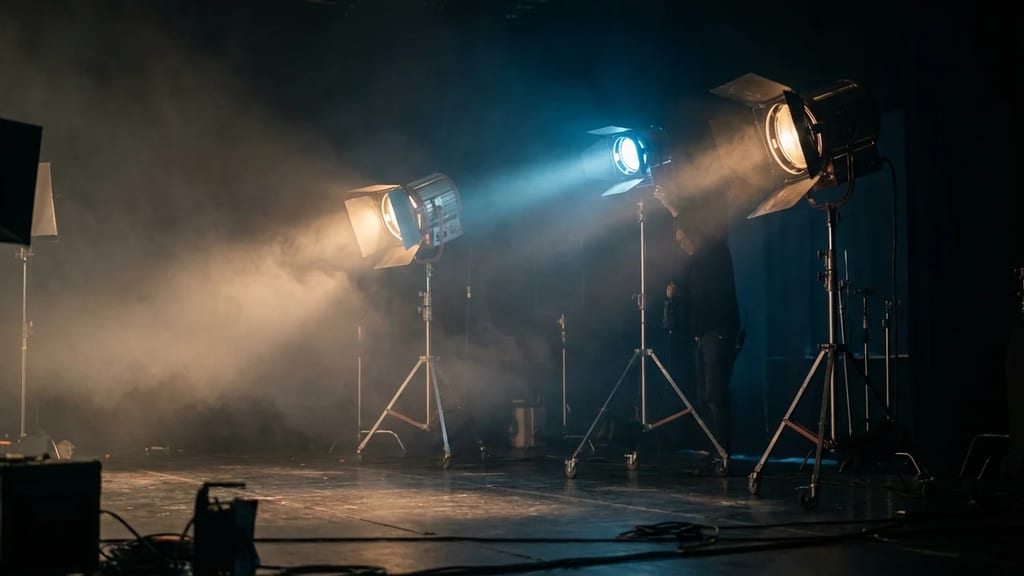
Compact Fresnel spotlight by Mole-Richardson with 6–8 inch lens and tungsten-halogen lamps; versatile as key light, fill light, or rim light.

Technical Details

Standard Molebeams use tungsten-halogen lamps with an Edison screw base (E40) and achieve a luminous efficacy of approximately 20-25 lumens per watt. The focusing system is based on a 6-8 inch Fresnel lens, which can be adjusted between 15-30cm from the lamp via a rotating mechanism. The die-cast aluminum housing measures approximately 35x25x40cm for the 1000W version and weighs 4.2kg without a stand. Barn doors with four adjustable leaves are standard equipment, as is a 5/8" spigot for tripod mounting.

History & Development

Peter Mole founded the Mole-Richardson Company in 1927 and developed the first compact Fresnel spotlights for Hollywood studios as early as the 1930s. The classic Molebeam emerged in the 1950s as a cost-effective alternative to large studio lights and established itself as a standard in independent film due to its robustness. HMI versions were added in the 1980s, and since 2010, Mole-Richardson has also offered LED variants with comparable light characteristics.

Practical Use in Film

Molebeams function as versatile key lights for close-ups or as fill lights in larger setups. Cinematographer Roger Deakins used them extensively in "No Country for Old Men" (2007) for the nighttime hotel scenes, with the 650W version being used through windows as simulated moonlight. Positioned as hair or edge lights, they create precise highlights when tightly focused. The quick spot-flood adjustment makes them ideal for handheld work or tight shooting spaces.

Comparison & Alternatives

Unlike Redheads, Molebeams feature Fresnel lenses for softer light fall-off and more precise control. Compared to Arri 300/650 Tungsten lights, they offer comparable performance at a lower cost, but with fewer accessory options. Modern LED panels like the Aputure LS 600d achieve similar light output with lower power consumption and heat generation, but cannot fully replicate the specific light characteristics of tungsten lamps. For classic film aesthetics, Molebeams remain unrivaled.
From the crafts

Perspectives

Cinematographer

Ich setze Molebeams gerne als Key Light für Interviews ein, weil ich mit einem Handgriff von hartem Spot für dramatische Schatten auf weiches Flood für Porträts wechseln kann. Die Fresnel-Linse gibt mir diesen typischen runden Lichtabfall, den LEDs einfach nicht schaffen - besonders bei Hautstrukturen macht das einen enormen Unterschied.

Director

Mit Molebeams kann ich die Stimmung einer Szene während der Probe noch spontan ändern - von der romantischen Flood-Einstellung für zarte Momente bis zum harten Spot für Thriller-Atmosphäre. Diese Flexibilität gibt mir die Freiheit, auch am Set noch kreativ zu experimentieren, ohne dass das Licht-Team alles neu aufbauen muss.

Producer

Ein Molebeam kostet etwa 400 Euro statt 1200 für vergleichbare Arri-Leuchten und braucht keinen teuren elektronischen Ballast wie HMI-Lampen. Das macht sie perfekt für Low-Budget-Produktionen, wobei ich bei längeren Drehs die Stromkosten von 1000W Leuchten gegen LED-Alternativen rechnen muss - da können sich über Wochen schnell 500 Euro Mehrkosten akkumulieren.

More in the lexikon

Related terms

Test your knowledge

Quiz

1. Was beschreibt „Molebeam" am besten?

2. Zu welchem Department gehört „Molebeam"?

3. Wie viele verschiedene Fachperspektiven bietet dieser Eintrag?

Report an error
From the Filmfarm ecosystem

Understand visual language, budget productions, connect crew.

The Lexikon is part of the Filmfarm ecosystem — alongside budgeting (FilmBalance), an industry magazine (FilmCircus) and crew networking (FilmCall, CrewMesh). One shared vocabulary for the whole production.

FilmFarm FilmRadarComing soonFilmPulseComing soonFilmNumbersComing soonFilmCapitalComing soonFilmLabComing soonFilmBalanceComing soonFilmCircusComing soon