Filmlexikon.
Support
Modified Lens
Camera · Equipment

Modified Lens

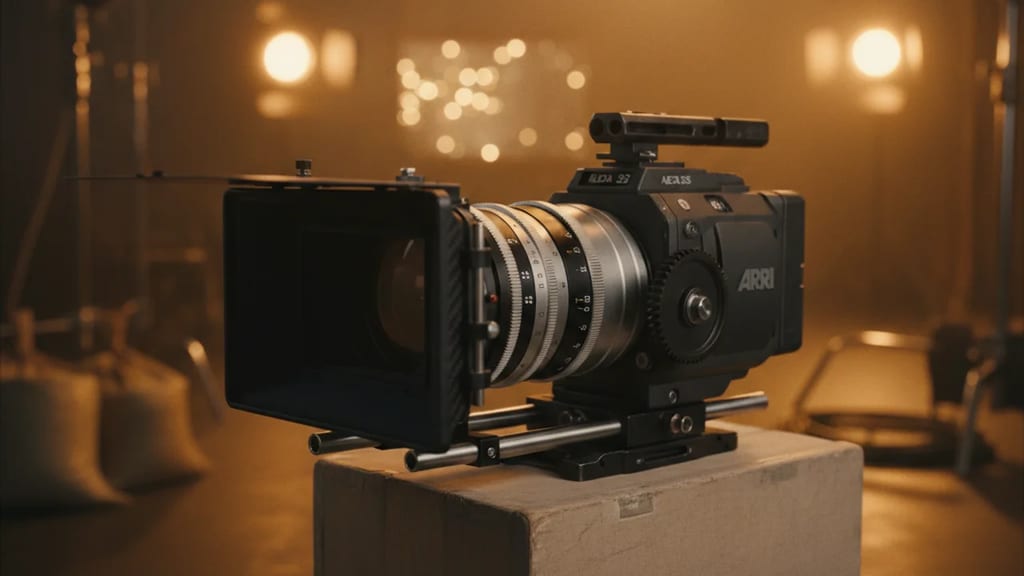
Murnau AI illustration
anamorphic lens anamorphic projection lens angenieux optimo prime arri master prime arri signature prime arri ultra prime arri zeiss variable prime atlas lens co

Photography lens mechanically converted to cinema specs: 300° focus throw, de-clicked aperture, 80mm gear diameter for follow focus systems.

Technical Details

Standard modifications include mechanical conversion to unified gear positions with 80mm diameter for focus and aperture rings. The original focus throw of typically 90°-180° is extended to a cinematic 270°-300° to allow for more precise focus pulls. Electronic lenses receive manual override mechanisms, while their original autofocus motors are removed. For still lenses, the aperture is converted from a click-stop mechanism to a de-clicked, stepless adjustment. Housing modifications standardize front and rear diameters, as well as flange focal distances for various camera systems.

History & Development

The systematic modification of still lenses for cinema purposes began in the 1970s when cinematographers sought affordable alternatives to expensive cine lenses. Pioneers like P+S Technik (founded 1982) initially established the service for 16mm productions. The breakthrough came in 2008 with the Canon 5D Mark II and the DSLR filmmaking trend, which triggered massive demand for modified Canon EF and Nikon F-mount lenses. Today, companies like Duclos Lenses, GL Optics, and Iron Glass Adapters offer standardized conversion services for over 200 lens models.

Practical Application in Film

Roger Deakins used modified Zeiss Otus lenses for "Skyfall" (2012) to combine their exceptional sharpness with professional handling ergonomics. "The Revenant" (2015) relied on converted Canon L-series lenses for wide-angle shots under extreme conditions. Modified lenses are preferentially used in budget productions, documentaries, and as supplements to cine lens sets for special focal lengths like 14mm or 200mm+, which are missing in standard series. The workflow requires 2-4 weeks of conversion time and recalibration of lens maps for digital follow-focus systems.

Comparison & Alternatives

Unlike native cine lenses, modified lenses often lack metadata transmission and parfocal properties. Modern alternatives include hybrid "cine-style" lenses such as the Sony FX series or Canon CN-E range, which offer cinematic mechanics from the factory. Pure still lenses remain more cost-effective (factor of 3-5), while true cine lenses impress with consistent color characteristics and T-stop calibration. The choice depends on budget, desired look, and production requirements.
From the crafts

Perspectives

Cinematographer

Ich schätze modifizierte Objektive für ihre einzigartigen optischen Charakteristika, die echte Cine-Objektive oft nicht bieten - etwa die extreme Schärfe eines Otus 85mm oder das Bokeh eines Canon 50mm f/1.2. Die 270°-Fokusverstellung gibt mir deutlich präziseren Kontrolle über Schärfeverlagerungen als die ursprünglichen 90°, allerdings muss ich bei Lens-Breathing und inkonsistenten T-Stops zwischen verschiedenen Brennweiten aufpassen.

Director

Modifizierte Vintage-Objektive wie umgerüstete Helios oder Pentax-Linsen verleihen meinen Bildern eine organische, weniger sterile Anmutung als moderne Cine-Objektive. Die charakteristischen Aberrationen und das spezielle Bokeh unterstützen die emotionale Bildsprache erheblich besser als klinisch perfekte Optiken. Bei Nahaufnahmen nutze ich gerne die besonderen Unschärfeübergänge sowjetischer Objektive, die nach der Modifikation endlich professionell bedienbar werden.

Producer

Ein Satz modifizierter Canon L-Objektive kostet mich 15.000-25.000 Euro statt 80.000+ für vergleichbare Cine-Optiken, bei nur geringfügig längeren Drehzeiten durch das manuelle Handling. Die 3-4 Wochen Vorlaufzeit für die Modifikation plane ich fest ein, dafür habe ich Objektive, die bei Folgeproduktionen wiederverwendbar sind und einen stabilen Wiederverkaufswert behalten.

More in the lexikon

Related terms

Test your knowledge

Quiz

1. Was beschreibt „Modifiziertes Objektiv" am besten?

2. Zu welchem Department gehört „Modifiziertes Objektiv"?

3. Wie viele verschiedene Fachperspektiven bietet dieser Eintrag?

Report an error
From the Filmfarm ecosystem

Understand visual language, budget productions, connect crew.

The Lexikon is part of the Filmfarm ecosystem — alongside budgeting (FilmBalance), an industry magazine (FilmCircus) and crew networking (FilmCall, CrewMesh). One shared vocabulary for the whole production.

FilmFarm FilmRadarComing soonFilmPulseComing soonFilmNumbersComing soonFilmCapitalComing soonFilmLabComing soonFilmBalanceComing soonFilmCircusComing soon