Filmlexikon.
Support
Light Grid Cloth
Lighting · Equipment

Light Grid Cloth

Murnau AI illustration
216 diffusion 250 diffusion 251 diffusion artificial silk china silk diffusion filter diffusion gel diffusion

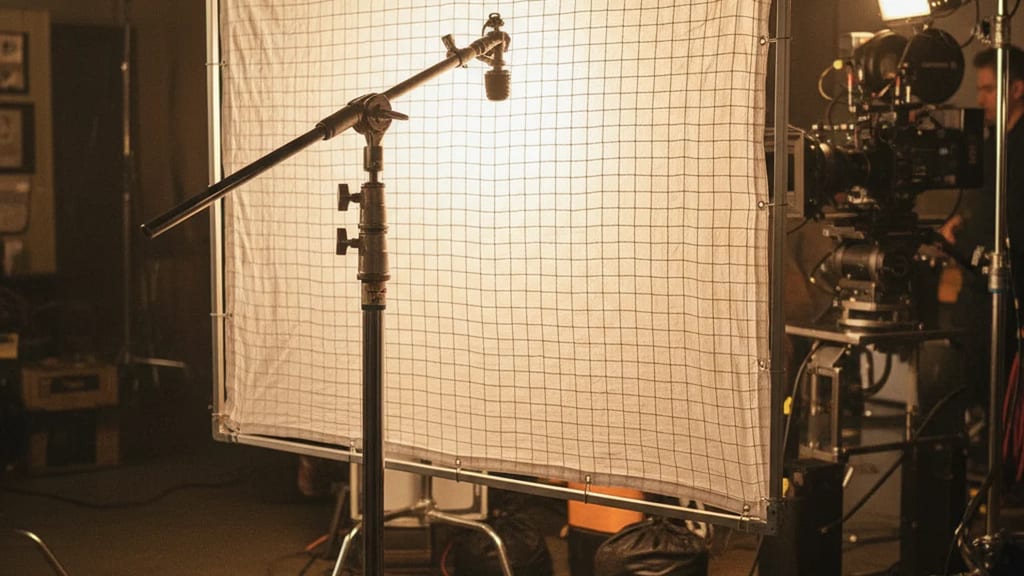
Heat-resistant polyester diffusion fabric with black grid pattern; reduces light intensity 15–70% depending on density (1/4 to Full Grid) with minimal color shift.

Technical Details

Standard Light Grid Cloth is available in densities of 1/4 Grid (6mm openings), 1/2 Grid (3mm), and Full Grid (1.5mm). The base material consists of heat-resistant polyester or silk with black nylon threads forming the grid structure. Light transmission is approximately 85% for 1/4 Grid, 60% for 1/2 Grid, and 30% for Full Grid. Standard sizes range from 6x6 feet to 20x20 feet, with a material thickness of 0.2-0.4mm. The grid pattern, through diffraction, creates characteristic soft shadows with minimal color temperature shift of a maximum of 200K.

History & Development

Light Grid Cloth was developed in 1974 by Cinematographer James Crabe for "Rocky" to diffuse harsh sunlight more controllably than with conventional diffusers. Grip equipment manufacturer Matthews Studio Equipment launched the first commercial version in 1978. In the 1980s, Grid Cloths became standard for exterior shots, especially after Roger Deakins' innovative use in "Barton Fink" (1991). Modern LED-optimized versions since 2010 account for the changed spectral characteristics of digital lighting.

Practical Application in Film

Grid Cloth is primarily used for daylight shooting to soften harsh shadows without eliminating the direction of light. In "Mad Max: Fury Road" (2015), DoP John Seale used large-scale 1/4 Grid setups over vehicle scenes for even illumination during 120fps shots. The structured light fall is particularly suitable for portraits, as the grid pattern emphasizes natural skin textures. Disadvantages include the susceptibility of large areas to wind and potential moiré effects when shooting at certain angles to LED panels.

Comparison & Alternatives

Unlike Silk or Diffusion, Grid Cloth creates sharper shadow gradients due to its structured pattern. While opal diffusers scatter light evenly, Grid Cloth maintains the original light direction with reduced intensity. Modern alternatives include digital light shaping through DMX-controlled LED arrays or laser-perforated films with variable opening patterns. For interior shots, bounce lighting with white duvetyne often replaces the more complex grid setup.
From the crafts

Perspectives

Cinematographer

Grid Cloth gibt mir präzise Kontrolle über Schattenverläufe ohne die natürliche Lichtrichtung zu zerstören – entscheidend für organisch wirkende Gesichtsmodellierung. Bei LED-Setups muss ich auf Moiré-Bildung achten und teste das Grid-Pattern immer gegen meine Sensorgröße. Die verschiedenen Dichten erlauben mir stufenweise Anpassung der Lichtintensität ohne ND-Filter oder Dimmer.

Director

Grid Cloth unterstützt meine visuelle Erzählung durch weiche aber gerichtete Beleuchtung, die Charaktere natürlich modelliert ohne dramatische Schatten zu eliminieren. Besonders bei emotionalen Nahaufnahmen bewahrt es die Intimität des Lichts, während es technische Härten wegfiltert. Die subtile Struktur des Grid-Patterns kann ich gezielt für organische Lichteffekte in Naturszenen einsetzen.

Producer

Grid Cloth reduziert meine Stromkosten erheblich, da ich weniger HMI-Power für die gleiche Ausleuchtung benötige als bei Bounce-Setups. Die Aufbauzeit steigt allerdings um 20-30% durch das Rigging großer Frames, besonders bei Wind. Verschleiß ist moderat – ein gutes 12x12-Grid hält etwa 80-100 Drehtage bei sachgemäßer Handhabung.

More in the lexikon

Related terms

Test your knowledge

Quiz

1. Was beschreibt „Light Grid Cloth" am besten?

2. Zu welchem Department gehört „Light Grid Cloth"?

3. Wie viele verschiedene Fachperspektiven bietet dieser Eintrag?

Report an error
From the Filmfarm ecosystem

Understand visual language, budget productions, connect crew.

The Lexikon is part of the Filmfarm ecosystem — alongside budgeting (FilmBalance), an industry magazine (FilmCircus) and crew networking (FilmCall, CrewMesh). One shared vocabulary for the whole production.

FilmFarm FilmRadarComing soonFilmPulseComing soonFilmNumbersComing soonFilmCapitalComing soonFilmLabComing soonFilmBalanceComing soonFilmCircusComing soon