Filmlexikon.
Support
Lens Support
Camera · Equipment

Lens Support

Murnau AI illustration
anamorphic lens anamorphic projection lens angenieux optimo prime arri master prime arri signature prime arri ultra prime arri zeiss variable prime atlas lens co

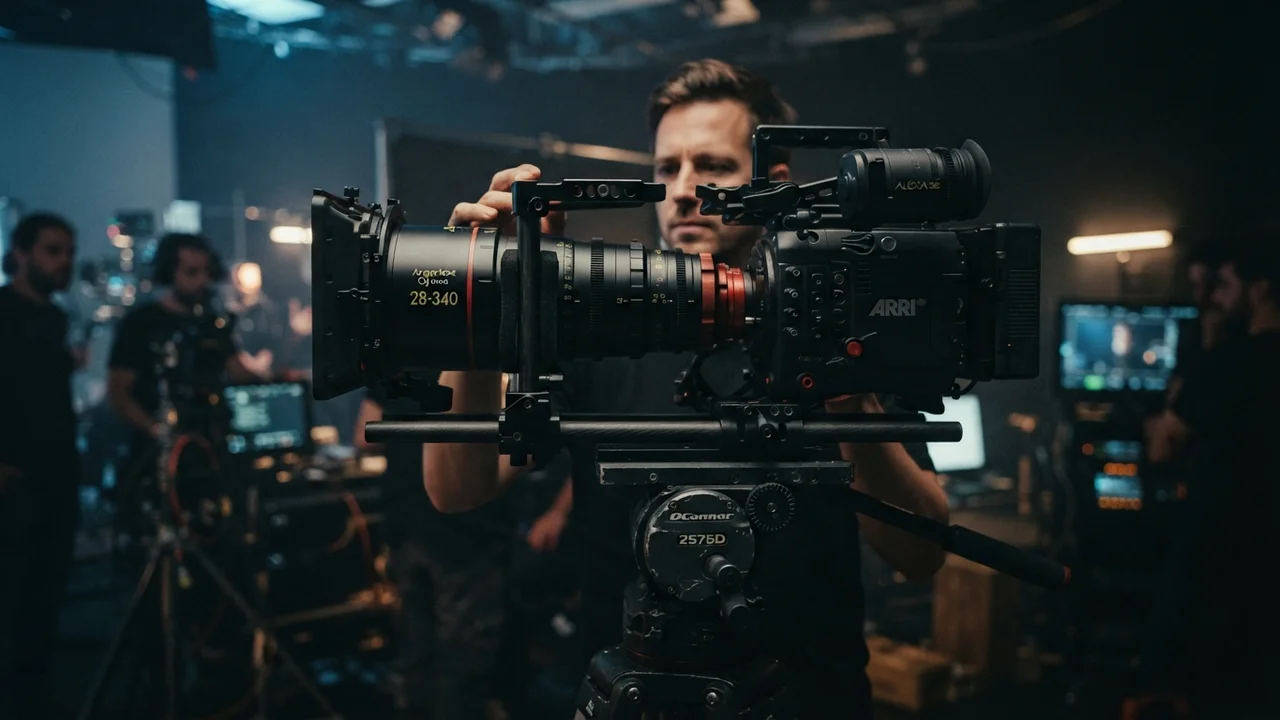
Adjustable rail support (15–25mm rod system) for heavy lenses over 2kg, prevents sag and reduces tripod strain on telephoto lenses up to 400mm focal length.

Technical Details

Professional lens supports consist of a rail (usually a 15mm or 19mm rod system) with an adjustable clamping mechanism that supports the lens at its center of gravity. The standard load capacity ranges from 2-15 kg, with high-performance models like the Arri LWS-19 carrying up to 25 kg. Carbon variants reduce the inherent weight by 40-60 percent compared to aluminum constructions. Modern systems feature quick-release mechanisms and 360-degree rotation for lens changes without disassembly.

History & Development

The first documented lens support was developed in 1963 by French camera technician Jean-Marie Lavalou for the Panavision anamorphic lenses of the "Nouvelle Vague." Arriflex introduced standardized supports in 1971 with the Studio System. The breakthrough came in 1985 with Steadicam's modular approach, which could balance variable lens weights without tools. Since 2010, carbon fiber constructions with integrated damping systems have dominated the market.

Practical Use in Film

In "Blade Runner 2049," lens supports stabilized the 300mm telephoto lenses for the wide-angle compression effects in the cityscapes. Documentarians use them for discreet telephoto shots with 200-400mm focal lengths without the risk of camera shake. In TV production, they enable rapid focal length changes during live broadcasts, as the tripod system does not need to be rebalanced. Setup takes 30-45 seconds, whereas conventional weight distribution can take up to 3 minutes.

Comparison & Alternatives

Lens supports differ from counterweight systems through direct weight transfer rather than leverage. Gimbal systems replace them for dynamic movements but offer less precision for static shots. Shoulder rigs integrate support functions but limit focal length selection to under 200mm. Modern remote heads like the Newton S2 combine lens support with motorized control for inaccessible camera positions.

From the crafts

Perspectives

Cinematographer

Ich verwende Objektivstützen ab 135mm-Brennweiten, um Mikrovibrationen zu eliminieren, die selbst bei 1/250s sichtbare Unschärfen verursachen. Bei anamorphen 2.39:1-Aufnahmen reduzieren sie die Objektivrotation um kritische 2-3 Grad, was sonst kostspielige Nachbearbeitung bedeutet. Die Präzision meiner Schärfenverlagerungen verbessert sich messbar, besonders bei T-Stops über 2.8.

Director

Objektivstützen ermöglichen mir längere Brennweiten ohne Stativwechsel, wodurch ich spontan zwischen intimen Nahaufnahmen und distanzierten Beobachterperspektiven wechseln kann. Diese Flexibilität verändert meine Inszenierung grundlegend – ich komponiere Szenen weniger statisch und nutze Brennweitenvariation als dramaturgisches Mittel. Besonders in Dialogszenen schaffe ich subtile Perspektivwechsel, ohne die Schauspieler durch Kameraumbau zu unterbrechen.

Producer

Eine Objektivstütze für 800-1.200 Euro amortisiert sich durch eingesparte Drehtage, da Kameraumbau und Neuausrichtung von 8-12 Minuten auf unter 2 Minuten reduziert werden. Bei 14 Drehtagen spare ich durchschnittlich 1,5 Stunden täglich, was 150-200 Euro Crew-Kosten entspricht. Zusätzlich reduziere ich Versicherungsrisiken für teure Objektive um geschätzte 60 Prozent durch mechanische Entlastung.

More in the lexikon

Related terms

Test your knowledge

Quiz

1. Was beschreibt „Objektivstütze" am besten?

2. Zu welchem Department gehört „Objektivstütze"?

3. Wie viele verschiedene Fachperspektiven bietet dieser Eintrag?

Report an error
From the Filmfarm ecosystem

Understand visual language, budget productions, connect crew.

The Lexikon is part of the Filmfarm ecosystem — alongside budgeting (FilmBalance), an industry magazine (FilmCircus) and crew networking (FilmCall, CrewMesh). One shared vocabulary for the whole production.

FilmFarm FilmRadarComing soonFilmPulseComing soonFilmNumbersComing soonFilmCapitalComing soonFilmLabComing soonFilmBalanceComing soonFilmCircusComing soon