Filmlexikon.
Support
Full Grid
Lighting · Equipment

Full Grid

Murnau AI illustration
216 diffusion 250 diffusion 251 diffusion artificial silk china silk diffusion filter diffusion gel diffusion

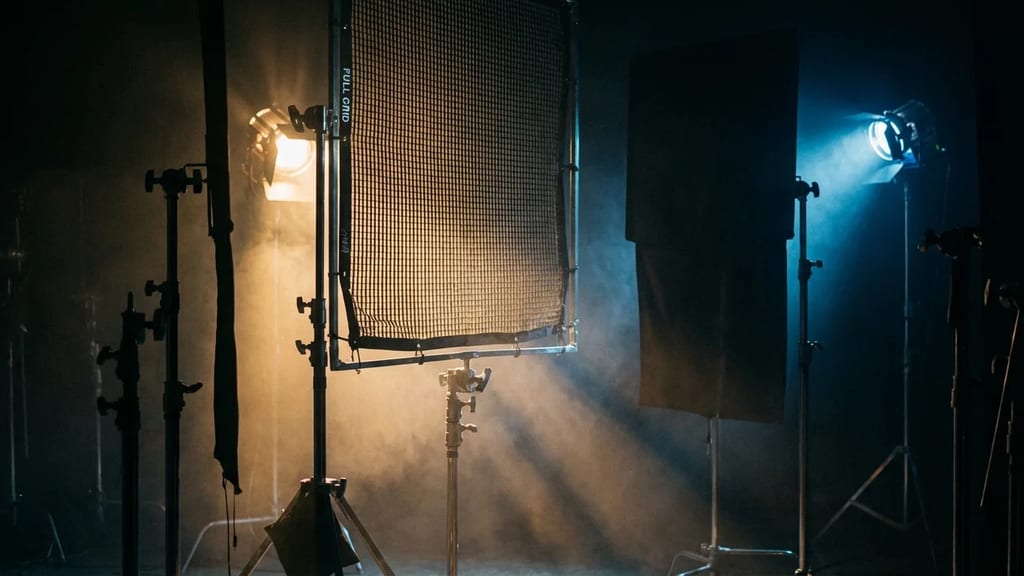
Full Grid setup uses 16–144 individually controlled light sources via DMX-512 protocol to produce nearly shadow-free illumination.

Technical Details

Standard Full Grid setups use 16 to 144 individual light sources, each with a power output of 300-2000 watts, depending on the desired area illumination. Modern LED-based systems operate with a color temperature of 5600K or 3200K and achieve illuminance levels of 500-5000 Lux with even distribution (±10% deviation). Control is via DMX-512 protocol with at least 3 channels per fixture (intensity, color temperature, optional color). Typical installation heights range from 4 to 8 meters above the scene.

History & Development

In 1974, cinematographer Gordon Willis first introduced a rudimentary grid system for "The Godfather Part II" to achieve consistent lighting in the casino sequences. The actual Full Grid technique developed from 1985 onwards in British television studios. The breakthrough came in 1999 with digitalization and computer-controlled moving lights. Since 2010, LED technology and real-time rendering have enabled precise adjustments during shooting.

Practical Application in Film

Full Grid is primarily used for large-scale interior shots, such as in ballrooms, warehouses, or office complexes. "Blade Runner 2049" (2017) utilized an 8x6 grid of ARRI SkyPanels for the Wallace Corporation scenes. "The Matrix Resurrections" (2021) employed 144 individually programmable LED panels for the Simulate sequences. The workflow requires 2-4 hours of setup time and at least two gaffers for real-time control during shooting.

Comparison & Alternatives

In contrast to single spotlights (spot lighting) or linear arrays, Full Grid completely eliminates hard shadows and produces nearly shadowless light. Softboxes or diffusers achieve similar uniformity but do not offer pinpoint control. LED Volumes (Virtual Production) represent the most modern alternative but require 10-15x higher investment costs. Full Grid is suitable for static scenes with complex choreography, while moving lights are more flexible for dynamic camera movements.
From the crafts

Perspectives

Cinematographer

Ich kann mit Full Grid jeden Bereich der Szene individuell dimmen und farblich anpassen, ohne die Scheinwerfer physisch zu bewegen – das gibt mir absolute Kontrolle über Kontrast und Modelling. Die gleichmäßige Grundausleuchtung eliminiert ungewollte Schatten auf Gesichtern, während ich trotzdem selektiv dramatische Akzente setzen kann.

Director

Full Grid erlaubt mir, die Stimmung einer Szene in Echtzeit zu verändern – von neutraler Bürobeleuchtung zu bedrohlicher Atmosphäre mit einem Tastendruck. Ich kann während der Probe verschiedene Lichtszenarien testen und dabei zuschauen, wie sich die emotionale Wirkung auf die Schauspieler verändert, ohne Drehzeit für Licht-Setups zu verlieren.

Producer

Ein Full Grid kostet 80.000-300.000 Euro Miete pro Drehtag, spart aber durch wegfallende Umbauten bis zu 40% der Beleuchtungszeit ein. Die Vorlaufzeit für Installation beträgt 1-2 Tage, dafür können wir komplexe Sequenzen ohne Licht-Unterbrechungen durchdrehen und sparen am Ende 2-3 Drehtage bei größeren Produktionen.

More in the lexikon

Related terms

Test your knowledge

Quiz

1. Was beschreibt „Full Grid" am besten?

2. Zu welchem Department gehört „Full Grid"?

3. Wie viele verschiedene Fachperspektiven bietet dieser Eintrag?

Report an error
From the Filmfarm ecosystem

Understand visual language, budget productions, connect crew.

The Lexikon is part of the Filmfarm ecosystem — alongside budgeting (FilmBalance), an industry magazine (FilmCircus) and crew networking (FilmCall, CrewMesh). One shared vocabulary for the whole production.

FilmFarm FilmRadarComing soonFilmPulseComing soonFilmNumbersComing soonFilmCapitalComing soonFilmLabComing soonFilmBalanceComing soonFilmCircusComing soon