Technical Details
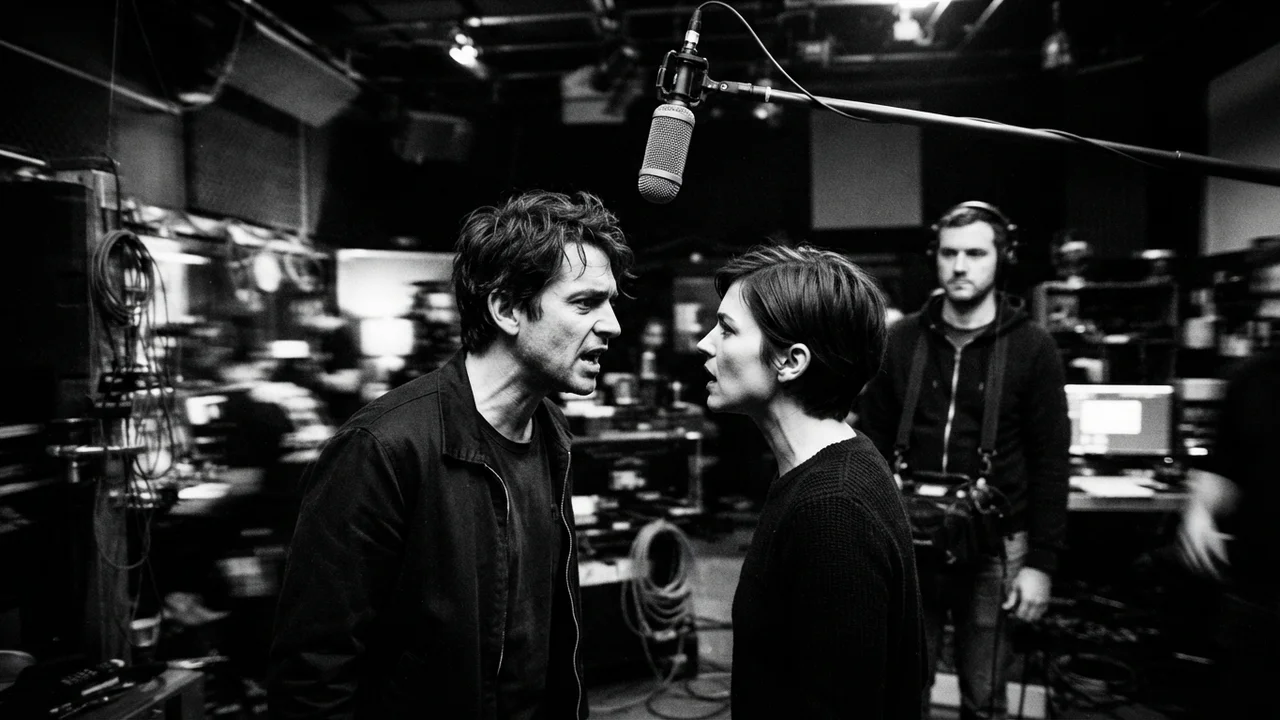
Dialogue is primarily recorded on set using directional microphones (typically Sennheiser MKH 416 or Audio-Technica AT4053b), supplemented by wireless microphones with a signal-to-noise ratio of at least 60 dB. Recording is done at 24-bit/48 kHz or 96 kHz resolution. In post-production, dialogue is typically boosted in the 2-4 kHz frequency spectrum to ensure intelligibility. ADR (Automated Dialogue Replacement) replaces unusable on-set recordings in soundproof studios with RT60 values below 0.3 seconds. Modern productions utilize plugins like iZotope RX for restoration and FabFilter Pro-Q for EQ adjustments.
History & Development
The first commercial sound film, "The Jazz Singer" (1927), established dialogue as a cinematic means of expression. In 1928, Western Electric developed the Vitaphone system for synchronized dialogue recording. The transition from optical to magnetic soundtracks (1952) significantly improved dialogue quality. Dolby Stereo (1975) first enabled the spatial positioning of dialogue. With the introduction of Dolby Digital (1992) and DTS (1993), the Center Channel became established as a dedicated dialogue channel. Pro Tools revolutionized digital dialogue editing starting in 1991, while modern AI-based tools like Adobe Podcast AI (2023) enable automatic dialogue enhancement.
Practical Application in Film
Christopher Nolan deliberately avoids ADR, preferring live dialogue, as seen in "Dunkirk" (2017) with original recordings made in IMAX cockpits. Quentin Tarantino structures films like "Pulp Fiction" (1994) primarily through dialogue sequences, which constitute 70% of the runtime. Aaron Sorkin developed walk-and-talk dialogue for "The West Wing," requiring special Steadicam techniques and precise microphone choreography. Animated films like "Toy Story" (1995) record dialogue entirely before animation to ensure lip-sync.
Comparison & Alternatives
Dialogue differs from voice-over through direct character interaction and from monologue through dialogic exchange. Subtext conveys meaning beyond spoken words, while exposition provides background information. In international productions, dubbing or subtitles replace the original dialogue. Silent sequences or purely visual narration serve as deliberate dialogue alternatives, as in the first 10 minutes of "UP" (2009).