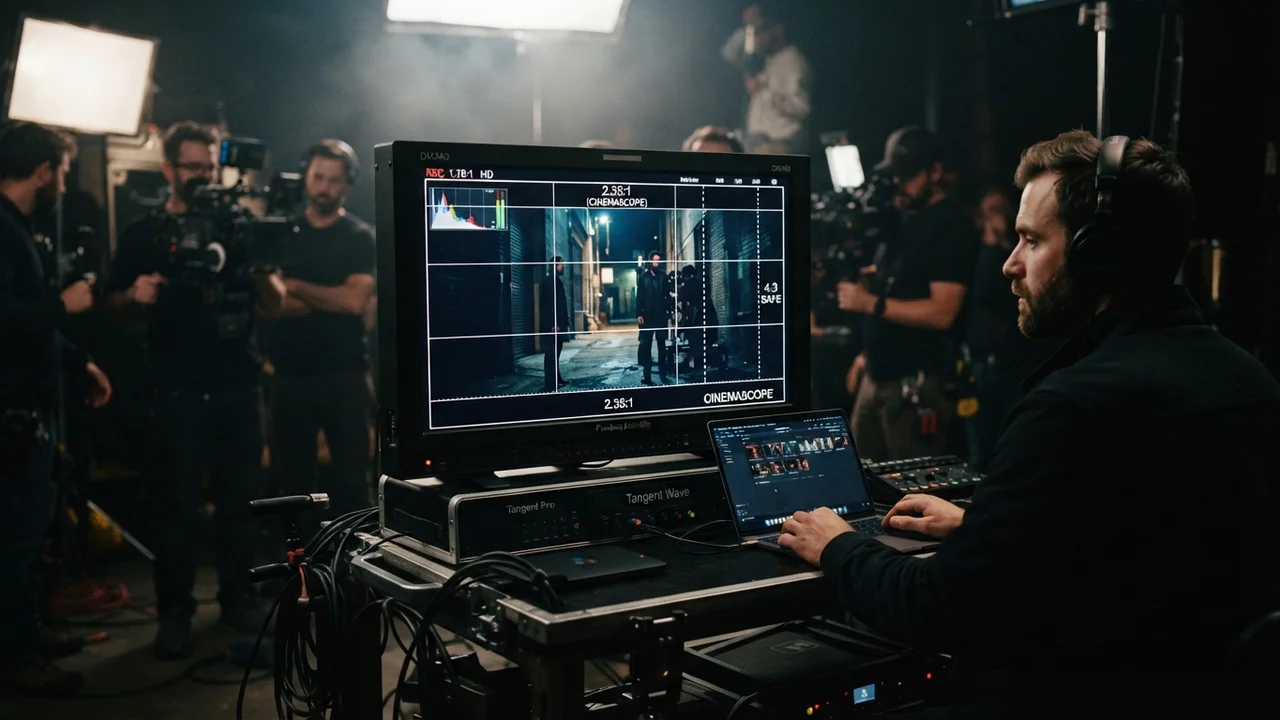
Digital widescreen standard 1.78:1, mathematically exactly 16:9. The universal format for HDTV, digital cameras, and modern streaming. De facto standard since 1990s for television and digital content.
History
The 16:9 format was developed gradually and is one of the most significant standards of the digital age:
Development Path:
- 1977: Fujifilm and Philips discuss 16:9 as a TV standard
- 1985-1990: ITU (International Telecommunication Union) standardizes 16:9 for HDTV
- 1993: 16:9 becomes ATSC standard in USA for digital television
- 1997: DVD specification natively supports 16:9
- 2005-2010: HD cameras (Sony HDV, Panasonic, Canon) standardized to 16:9
- 2009: Digital television transition in many countries to 16:9
- 2010-Present: Universal standard for cameras, streaming, displays
Why 16:9?
- Mathematically elegant: 1.777... ≈ 1.78:1 (16÷9 = 1.777...)
- Compromise between academic formats and widescreen
- Optimal for human field of vision and television use
- Flexible: Can be cropped to other formats
- Technologically neutral for digital systems
Technical Details
Aspect Ratio Specifications:
- Aspect Ratio: Exactly 16:9 = 1.7777...:1
- Other Designation: 1.78:1 (rounded)
- No Physical Film Standards: Purely digital
- Pixel Ratios: Always 16:9 proportioned
Standard Resolutions:
- HD (720p): 1280 × 720 pixels
- Full HD (1080p): 1920 × 1080 pixels
- 2K DCI: 2048 × 1152 pixels (True 16:9)
- 4K UHD: 3840 × 2160 pixels
- 4K DCI: 4096 × 2304 pixels
- 8K (UHD-2): 7680 × 4320 pixels
Frame Rates (Standard Combinations):
- 720p @ 24fps (24fps cinematic look)
- 1080p @ 24fps (Broadcasting standard)
- 1080p @ 30fps (NTSC television)
- 1080p @ 25fps (PAL television)
- 720p @ 60fps (Sports broadcasting)
- 4K @ 24fps, 30fps, 60fps
Color Space Standards:
- Rec. 709: Television (HD)
- DCI-P3: Digital Cinema
- Rec. 2020: Ultra-HD (4K/8K)
- ACES: Professional Post-Production
Usage Today
The 16:9 format is THE Quasi-Standard for practically all digital media:
Television and Streaming:
- Netflix: Exclusively 16:9 or Cinemascope (2.35:1)
- Amazon Prime: 16:9 standard
- Disney+: 16:9 and 2.35:1 depending on content
- YouTube: 16:9 optimized (anything can be uploaded)
- TV Broadcasting: Global standard
Digital Cameras:
- Red Komodo: 16:9 native
- Sony FX-Series: 16:9 native
- Panasonic S-Series: 16:9 standard
- Nikon Z: 16:9 native
- Canon EOS: 16:9 standard
Cinema Filmmakers:
- Netflix Originals: Often 16:9 for home viewing
- Disney+ Marvel Shows: 16:9 for streaming
- HBO Max: Mix of 16:9 and 2.35:1
- Independent Films: Increasingly 16:9 instead of Cinemascope
Why 16:9 Dominates:
- All modern displays are natively 16:9
- Smartphones and tablets follow 16:9 logic
- Streaming platforms optimize for it
- Global compatibility
- Easy scaling to other formats
- Economical: minimal cropping losses
Comparison: 16:9 to Other Digital Formats
| Format | Ratio | Usage | Height (relative) | Modern? |
|---|
| 1.33:1 Academy | 1.33:1 | Archive | 75% | Obsolete |
| 1.66:1 European | 1.66:1 | Archive | 60% | Rare |
| 1.85:1 American | 1.85:1 | Cinema | 54% | Declining |
| 16:9 / 1.78:1 | 1.78:1 | Streaming/TV | 56% | Standard |
| 2.35:1 Cinemascope | 2.35:1 | Premium Cinema | 43% | Increasing |
| DCI 2.39:1 | 2.39:1 | Digital Cinema | 42% | Increasing |
Practical Differences:
| Aspect | 1.85:1 (Cinema) | 16:9 (Digital) | 2.35:1 (Epic) |
|---|
| Display Compatibility | With black bars | Native | With black bars |
| Vertical Headroom | Generous | Medium | Scarce |
| Lateral Room | Moderate | Generous | Extreme |
| Television | Crops | Perfect | Crops/Black bars |
| Smartphones | Portrait required | Landscape native | Portrait/Pillarbox |
16:9 in the Context of the Streaming Revolution
Netflix Strategy:
- 16:9 for series and comedy
- 2.35:1 for films and prestige content
- Adaptive bitrates across all ratios
YouTube:
- 16:9 gold standard
- 4:3 (for old content) becomes pillarboxed
- Shorts: 9:16 portrait revolution
Mobile-First World:
- Smartphones film 9:16 (portrait)
- Tablets follow 16:9
- Streaming players adapt dynamically
- 16:9 as a "safe format" for all devices
Artistic Considerations
Why Some Filmmakers Reject 16:9:
- Too "electronic" for cinematic aesthetics
- Cinemascope (2.35:1) for "real" cinema quality
- 16:9 too close to television/broadcast
- Associations with reality TV, streaming
Why Progressive Filmmakers Embrace 16:9:
- The future of consumption is streaming
- 16:9 is democratic (all devices)
- Technologically flexible
- Height is important for detail changes
Practical Conversion and Cropping
From 16:9 to Other Formats:
16:9 (1.78:1) → 1.85:1: Crop top/bottom ~ 3%
16:9 (1.78:1) → 2.35:1: Crop top/bottom ~ 25%
16:9 (1.78:1) → 1.33:1: Crop sides ~ 42%
From Cinemascope to 16:9:
2.35:1 → 16:9: Crop sides, or pillarbox (black bars)
Digital Workflow Standards
Post-Production Timelines:
- Premiere Pro: Standard 1920×1080 or 3840×2160
- DaVinci Resolve: Flexible rates, mostly 16:9
- Final Cut Pro: Native 16:9 + 4K options
Broadcasting Standards:
- ProRes: All rates 16:9 compatible
- DNxHR: 16:9 standard
- Codec-agnostic: Format independent of codec
Further Information
Technical Standards:
- ITU-R BT.709: HD color space and gamma
- ITU-R BT.2020: Ultra-HD color space
- CEA-861-E: HDMI and 16:9 specifications
- SMPTE ST 2086: HDR metadata
Related Entries:
- Full HD (1080p)
- 4K / UHD
- 2K / DCI
- Cinemascope (2.35:1)
- Academy Standards (historical)
Future Direction:
- 8K (7680×4320) will be the next standard
- Will the format remain 16:9 or shift to 9:16 (mobile-first)?
- Flexible aspect ratios for different platforms