
A camera movement that retreats from a subject or scene, increasing distance and revealing spatial context through progressive widening of the frame.
Famous examples · Pull-Out / Backing Up / Withdrawal Shot
The Graduate
The famous closing pull-out reveals Benjamin and Elaine on the bus as their initial euphoria fades into uncertainty – the camera withdrawing to expose the emotional emptiness of the moment.

Raiders of the Lost Ark
The final pull-out over the vast government warehouse where the Ark disappears masterfully uses the withdrawal to visualize bureaucratic indifference toward the supernatural.

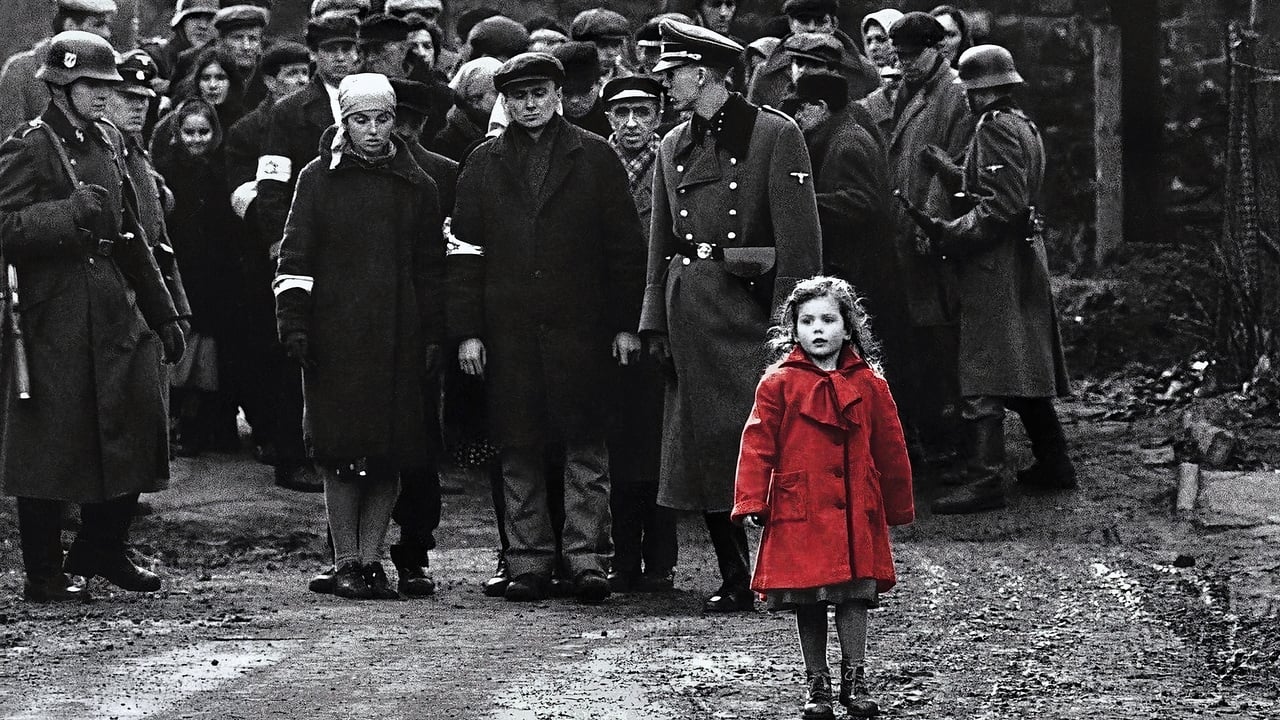
Schindler's List
Several pull-outs during liquidation sequences withdraw the camera from individual fates, creating a sense of collective tragedy and the individual's helplessness within historical horror.
1917
Deakins employs pull-outs within the apparent single-take to situate the protagonists within the devastated warscape, emphasizing their vulnerability against the overwhelming environment.

Film stills sourced via the TMDB API. This product uses the TMDB API but is not endorsed or certified by TMDB. themoviedb.org ›
Definition
A Pull-Out (Rückfahrt / Wegfahrt) is a camera movement that continuously moves away from a subject or point of focus. The camera moves backward spatially, progressively revealing more environmental context. Unlike push-ins, the pull-out reduces psychological proximity and creates new spatial perspective.
Technical Execution
Track Systems & Equipment
Standard Dolly Pull-Out
- Moving backward on tracks
- Precision: ±2-5mm (identical to Push-In)
- Speed: 0.2-2 m/s, variable
- Challenge: Dolly grip drives blind backward (Video assistant navigates)
- Alternative: Remote control for precise backward movement
Steadicam Pull-Out
- Operator walks backward with Steadicam
- Significantly more unstable than forward movement
- Operator uses video monitor behind their back for navigation
- Risk of tripping increases error rate
- Usually 5-8 takes for a usable shot
Crane Pull-Out (Vertical Component)
- Crane moves backward while arm extends upward
- 3D pull-out with simultaneous height change
- Creates monumental, revealing effects
- Technocrane: up to 22 meters height, 15 meters reach
Gimbal Pull-Out
- Remote controlled, quickly repeatable
- Modern standard method in streaming production
- Can program specific pull-out curves
- DJI Ronin 4D with LiDAR focus tracking
Focus Profile
- Negative Focus Ramp: Focus continuously shifts backward
- Multi-Zone Focus: Foreground sharp at start, then transitions to background
- Soft Reveal: Starts with shallow focus, progressively increasing depth of field
- Swing Out: Focus jumps from foreground to background at the end
Focal Lengths & Perspective
| Focal Length | Reveal Effect | Usage |
|---|---|---|
| 14mm | Extreme perspective widening | Montage effect, dramatic reveal |
| 24mm | Subtle perspective shift | Standard exterior pull-outs |
| 35mm | Naturalistic feel | Dialogues, interior scenes |
| 50mm | Neutral, psychological | Narrative pull-outs |
| 85mm | Minimal perspective | Close-ups to wide shots |
History & Development
1920s – Silent Film Technology
F.W. Murnau's "The Last Laugh" (1924) used primitive pull-outs for context revelation. The technical challenge was greater than push-ins – cameramen had to navigate blind.
1940s – Welles Innovation
Orson Welles perfected the monumental pull-out in "Citizen Kane" (1941). The famous closing sequence slowly pulls back from Rosebud details to a monumental wide shot of Xanadu – a shot carrying narrative significance. The system required a custom-built 100-meter track.
1970s – New Hollywood Era
Terrence Malick used slow, meditative pull-outs in "Badlands" (1973) and "Days of Heaven" (1978). Stanley Kubrick experimented with controlled pull-outs in "The Shining" (1980) for psychological disorientation. Paul Thomas Anderson would later use pull-outs as a narrative structural element.
1980s–1990s – Technical Refinement
Motion control systems enabled precise, repeatable pull-outs. David Fincher used stylized pull-outs in "Se7en" (1995) for scene closure. Gimbal systems dramatically reduced setup time.
2000s–2020s – Digital Integration
Filmmakers combine in-camera pull-outs with digital zoom pull-outs in post-production. Alfonso Cuarón used extended pull-outs in "Gravity" (2013) for spatial disorientation. Gimbal technology allows for precise variable-speed pull-outs.
Practical Film Examples
Classic Pull-Out Masterpieces
- "Citizen Kane" (1941) – Monumental pull-out as conclusion (Welles)
- "Badlands" (1973) – Meditative pull-outs through landscape (Malick)
- "Days of Heaven" (1978) – Golden hour pull-outs (Malick)
- "The Shining" (1980) – Psychological pull-outs (Kubrick)
Modern Applications
- "Se7en" (1995) – Stylized pull-outs as scene closure (Fincher)
- "There Will Be Blood" (2007) – Extended pull-outs (P.T. Anderson)
- "Gravity" (2013) – Spatial disorientation pull-outs (Cuarón)
- "The Lighthouse" (2019) – Slow pull-outs in black and white (Eggers)
Artistic Dimensions
Psychological Impact
- Distancing: Progressive movement away creates reflexivity
- Context Revelation: Viewers re-understand the scene
- Isolation: Pull-out isolates the character in a larger space
- Melancholy: The pull-out often feels melancholic/reflective
Narrative Functions
- Closure: Pull-outs signal scene endings
- Reinterpretation: Revealed contexts change meaning
- Spatial Understanding: Viewers orient themselves in space
- Temporal Distance: A pull-out can also create metaphorical temporal distance
Technical Challenges
| Challenge | Solution | Cost |
|---|---|---|
| Blind Navigation | Video monitor behind camera, spotter | +€100 |
| Focus Drift Backward | Negative focus ramp with mark points | Part of setup |
| Stability Variance | Steadicam > Dolly for smoothness | Operator +€300 |
| Ground Surface | Tracks eliminate unevenness | 3-4 hours setup |
| Space Requirement | Clear space behind camera | +1-2 hours |
Special Variants
Reveal Pull-Out
A pull-out that gradually reveals hidden image elements – often over obstacles or through doorways.
Surprise Pull-Out
A rapid pull-out (2-4 seconds) revealing shocking contexts. Creates a surprise effect.
Crane Pull-Out
Simultaneous backward and upward movement. Creates monumental, epic effects.
Rotational Pull-Out
A pull-out combined with a panning movement. Creates 3D spatial understanding.
Comparison: Pull-Out vs. Push-In
| Dimension | Push-In | Pull-Out |
|---|---|---|
| Psychological Impact | Intensifying | Distancing |
| Narrative Function | Escalation | Closure/Reflection |
| Technical Complexity | Moderate | Higher (navigation) |
| Focus Challenge | Forward | Backward |
| Emotional Effect | Confinement/Intimacy | Melancholy/Isolation |
| Frequency of Use | Very frequent | Selective |
Practical Planning Guidelines
- Space Check: Clear at least 20% more space behind the camera
- Navigation Spotter: Specialized person behind camera required for safety
- Multiple Takes: Plan for 6-10 takes for a flawless pull-out
- Focus Adjustment: Test negative focus ramp before production
- Timing: Pull-out duration should carry narrative meaning
Equipment Manufacturers
- Elemac: Track systems with optional remote control
- Fisher Dolly: Standard for professional pull-outs
- Technocrane: For crane pull-outs with a vertical component
- Steadicam Operator: Specialized training programs
- DJI Ronin 4D: Gimbal-based remote pull-outs