
A camera movement that advances toward a subject or area of interest, reducing distance and increasing psychological intensity through progressive spatial compression.
Famous examples · Push-In / Advancing Shot
Vertigo
Hitchcock uses slow push-ins toward Madeleine/Judy to make Scottie's obsessive fixation spatially tangible – the camera physically invades the character's psychological space.

Der Pate
Gordon Willis deploys precise dolly push-ins onto Vito Corleone's face to concentrate authority and menace – the spatial compression transforms the scene into psychological confrontation.

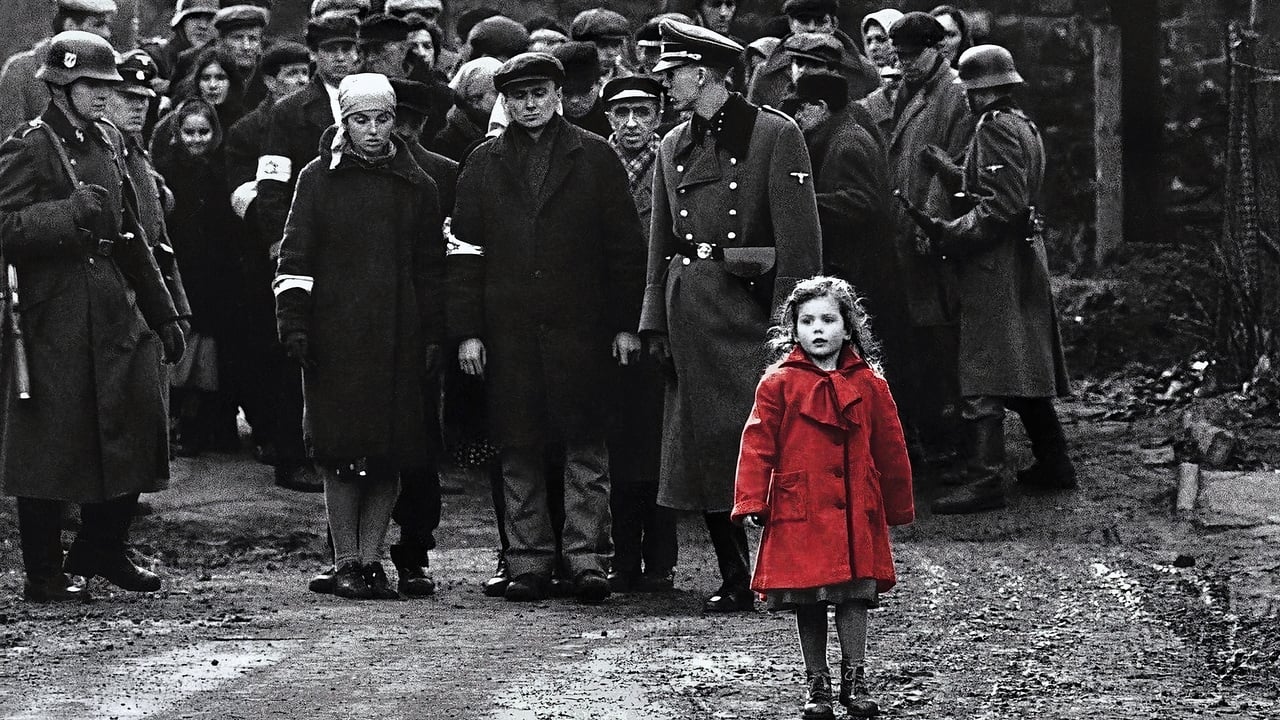
Schindlers Liste
Spielberg and Kamiński use slow push-ins onto Schindler's face to externalize the character's inner transformation – the camera physically approaches the moment of moral reckoning.
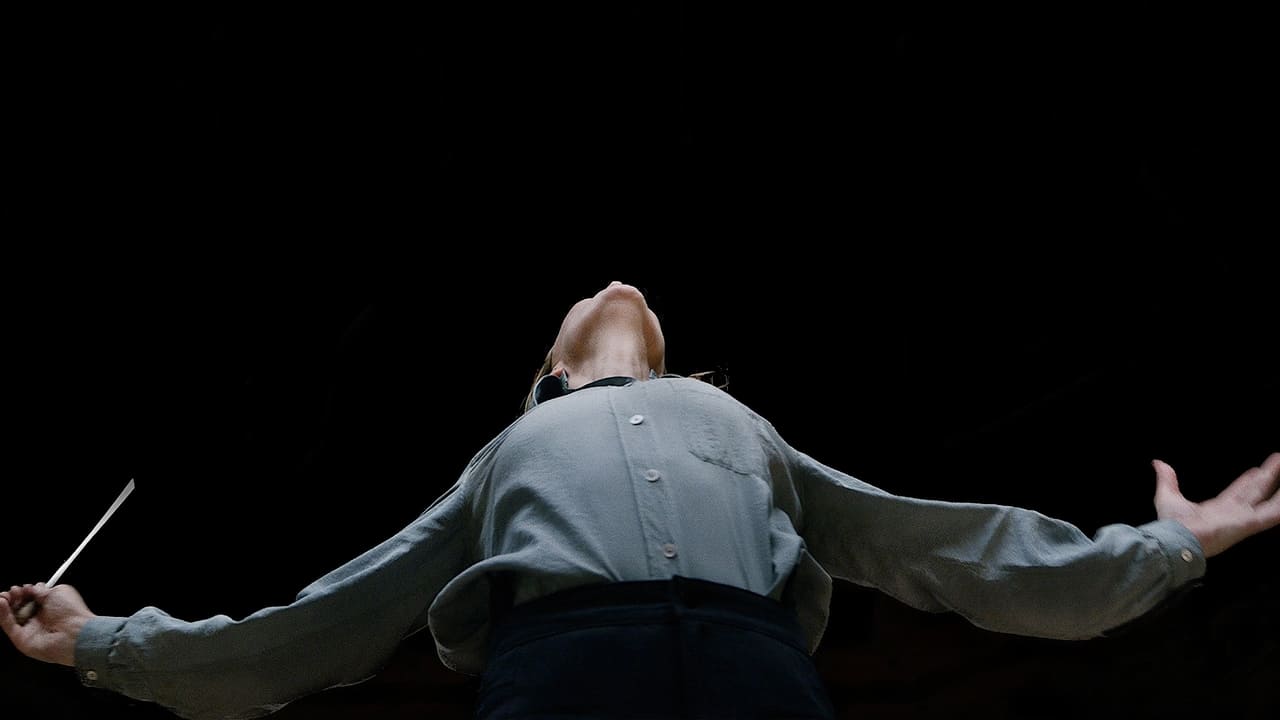
Tár
Florian Hoffmeister employs subtle, near-imperceptible push-ins on Lydia Tár that visually compress the mounting pressure and erosion of her power – the spatial tightening mirrors her psychological unraveling.
Film stills sourced via the TMDB API. This product uses the TMDB API but is not endorsed or certified by TMDB. themoviedb.org ›
Technical Execution
Execution Methods
Dolly Push-In (Track System)
- Camera on dolly, tracks lead directly towards subject
- Precision: ±2-5mm, repeatable to the millimeter
- Speed: 0.2-2 m/s, variably controllable
- Focal lengths: 35-85mm optimal
- Setup time: 2-3 hours for 10-meter push-in
- Equipment: Chapman PeeWee IV or Fisher Dolly
Steadicam Push-In
- Operator wears Steadicam on body rig and moves forward
- More organic, natural movement
- Speed: 0.5-1.5 m/s (operator physics limited)
- More subtle vibrations than tracks
- Specialized operators required (1,500-3,000 Euros per day)
Gimbal Push-In (Remote Controlled)
- Electronically stabilized gimbal on vehicle/crane
- Quick to set up, variable speed profiles
- Remote control allows complex movement curves
- Less precision than tracks for close-ups
- DJI Ronin 4D with integrated focus tracking via LiDAR
Zoom Push-In (Combined)
- Simultaneous dolly movement + zoom for effect enhancement
- Creates a hyperbolic, artistic effect
- Example: Spielberg's "Jaws" (1975) - famous dolly-zoom push-in
Focus Ramp Profile
- Linear Focus Ramping: Focus continuously moves forward
- Front-Heavy: Quick initial focus shift, then stabilization
- Rear-Heavy: Initially sharp on mid-ground, progressive advancement
- Swing Focus: Focus shifts during the move (artistic effect)
Focal Length Selection
| Focal Length | Effect | Recommendation |
|---|---|---|
| 28mm | Strong distortion, dramatic warping | Sci-fi, horror, fear |
| 35mm | Subtle distortion, natural | Standard dialogue |
| 50mm | Neutral, psychologically intense | Emotional, drama |
| 85mm | Compressed, intimate | Close-ups, facial reactions |
| 135mm | Very compressed, minimalist | Teleportation effect |
History & Development
1920s – Silent Film Primitives
F.W. Murnau first systematically used camera push-ins for dramatic intensification in "The Last Laugh" (1924). The improvised track system was a technical sensation.
1940s – Hollywood Standardization
Orson Welles perfected the dramatic push-in in "Citizen Kane" (1941). The push-in to the snow globe creates a psychological turning point through progressive spatial compression. Deep-focus lenses (28mm at T/16) enabled sharp focus throughout the entire move.
1970s – Scorsese & Spielberg Era
Martin Scorsese established subtle emotional push-ins in "Taxi Driver" (1976). Steven Spielberg perfected the dolly-zoom push-in in "Jaws" (1975) - simultaneous approach + focal length change creates psychological alienation. Garrett Brown invented Steadicam and revolutionized handheld push-ins.
1980s–1990s – Kubrick Precision
Stanley Kubrick used millimeter-precise controlled push-ins in "The Shining" (1980) for psychological disorientation. 300-meter track construction for continuous tension building. Martin Scorsese combined Steadicam push-ins with wide-angle lenses (14mm) in "Goodfellas" (1990).
2000s–2020s – Digital Hybrid
Motion control and later gimbal systems enabled precise, repeatable push-ins without physical tracks. Sam Mendes used 500-meter track systems in "1917" (2019) for seamless one-shot sequences.
Practical Film Examples
Classics of Push-In Mastery
- "Citizen Kane" (1941) – Push-in to the snow globe (Welles)
- "Jaws" (1975) – Dolly-zoom push-in for psychological effect (Spielberg)
- "Taxi Driver" (1976) – Subtle psychological push-ins (Scorsese)
- "The Shining" (1980) – 2-minute push-in through the hotel lobby (Kubrick)
Modern Applications
- "The Irishman" (2019) – Subtle push-ins in dialogue scenes (Scorsese)
- "Joker" (2019) – Aggressive push-ins for psychological decompensation (Phillips)
- "1917" (2019) – Extended push-ins in one-shot sequences (Mendes)
- "Good Time" (2017) – Handheld push-ins for hyperactivity (Safdie Brothers)
Artistic Dimensions
Psychological Impact
- Progressive Intimacy: Gradual reduction of distance creates psychological connection
- Tension Escalation: Push-in tempo signals emotional intensification
- Isolation: A fast push-in isolates the subject from the context
- Revelation: Push-in gradually reveals details or facial expressions
Narrative Functions
- Moment Marking: Push-in shows a character's internal change
- Information Reveal: Progressive disclosure of visual details
- Emotional Embodiment: The viewer shares the closeness of the experience
- Timing Signal: The speed of the move signals urgency or contemplation
Comparison: Push-In vs. Zoom
| Aspect | Push-In (Dolly) | Zoom |
|---|---|---|
| Perspective | Naturally changing | Artificially compressing |
| Depth of Field | 3D realistic | 2D flat |
| Bokeh | Changing | Constant |
| Speed | 0.2-2 m/s | Arbitrary |
| Setup Time | 2-3 hours | <10 minutes |
| Cost | 500-2,000 Euros | Minimal |
| Repeatability | Millimeter precise | Exactly numerical |
| Emotional Effect | Immersive, present | Distant, artistic |
Special Variants
Crash Push-In
Very fast push-in (1-2 seconds for 2 meters), appears aggressive or shocking. Ideal for surprise moments.
Drift Push-In
Push-in combined with subtle lateral movement (tracking + dolly). Creates complex spatial shifts.
Blind Push-In
Push-in starting out of focus, progressively coming into focus. Creates a visual "awakening".
Suspended Push-In
Push-in on a crane, perspective changes during the approach. Creates a 3D spatial feeling.
Practical Planning Guidelines
- Focus Calibration: Allow for 0.5 seconds of focus lag
- Move Speed: 0.5 m/s = emotional effect; 1.5 m/s = normal; 2+ m/s = aggressive
- Light Consistency: Push-in must maintain constant brightness levels
- Rehearsals: Minimum 5-8 takes for perfect focus ramp
- Editing Timing: Push-in should end at a psychological climax
Equipment Partners
- Fisher Dolly: Standard for push-in tracks
- Chapman PeeWee IV: Professional variant
- Elemac: European equivalent
- Steadicam Operator Specialist: Certified operators required
- DJI Ronin 4D: Remote controlled with LiDAR focus
- Supertechno Cranes: For overhead push-ins