
A lateral camera movement that travels alongside a subject or through a scene on rails or dolly, maintaining a consistent angle and distance to create spatial continuity and follow action.
Famous examples · Tracking Shot
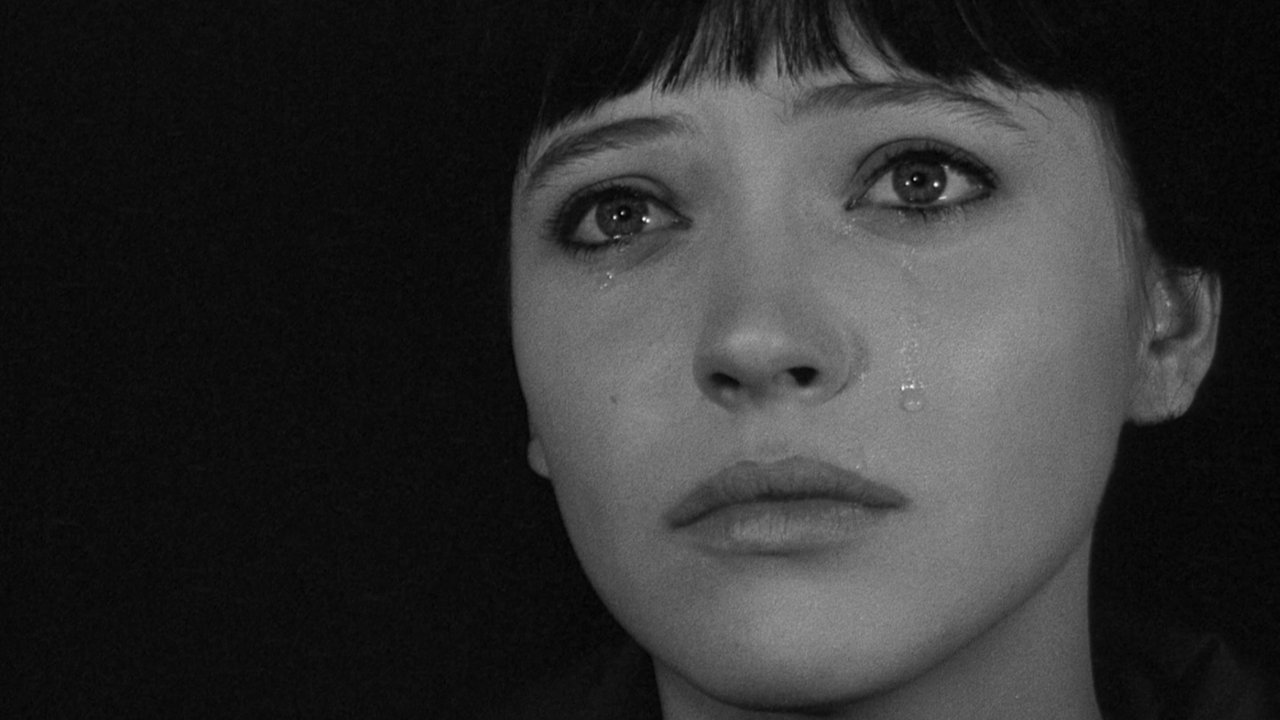
Vivre sa vie
Coutard's lateral tracking shots follow Nana through Parisian streets and spaces with cool detachment, visually translating the character's emotional alienation.
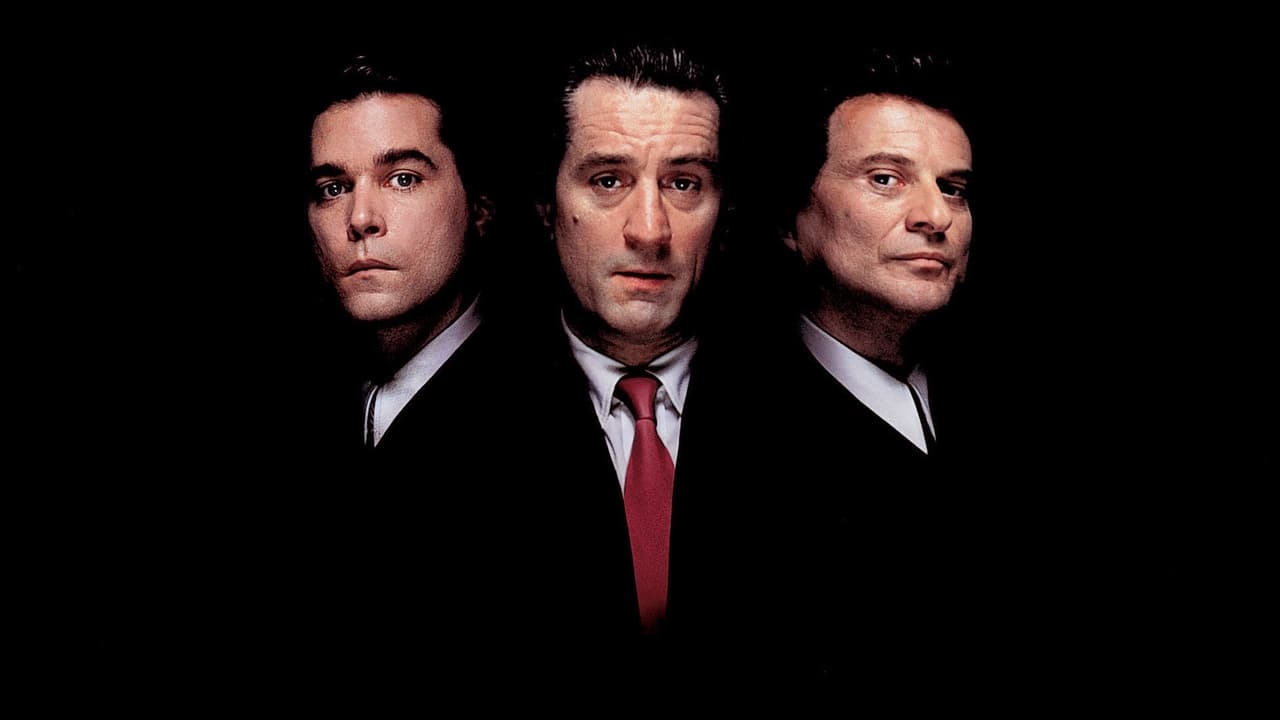
Goodfellas
The famous Copacabana sequence features an uninterrupted tracking shot through kitchens and corridors, embodying Henry's power and hubris in a single, fluid movement.
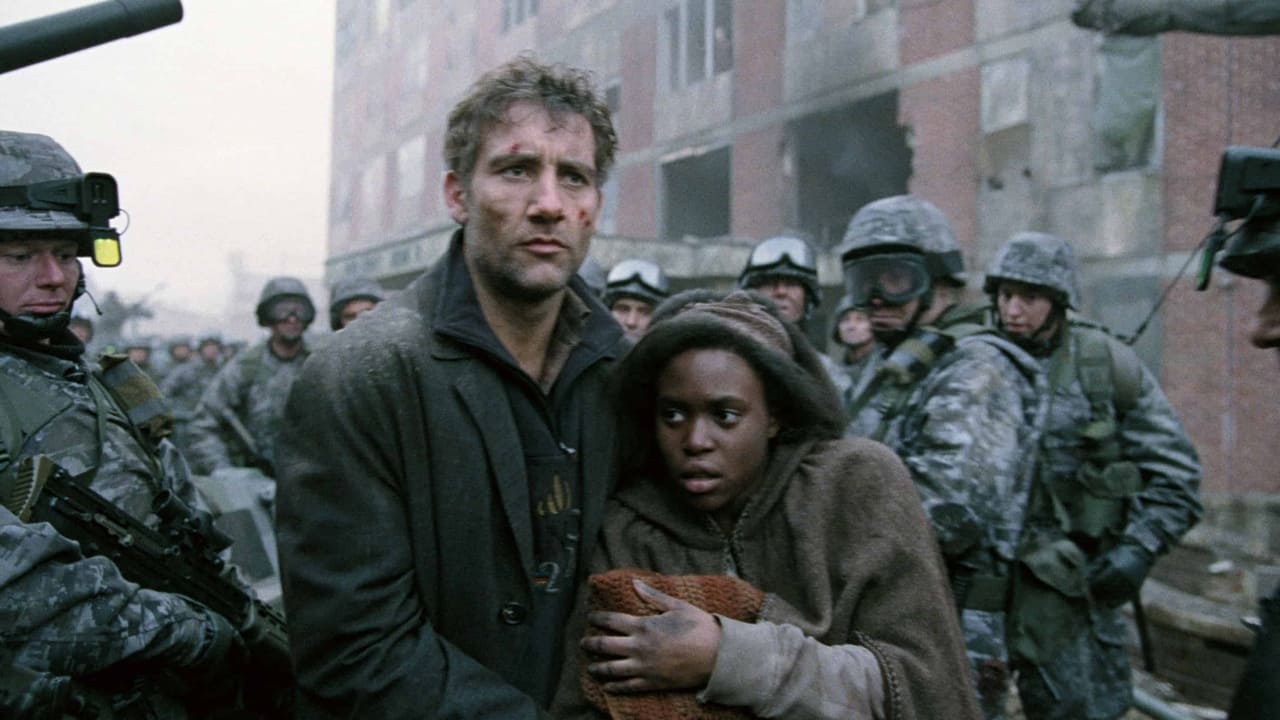
Children of Men
Lubezki's camera follows Theo in long, uncut tracking shots through battlefields, making survival in chaos immediately palpable through the camera's physical movement.
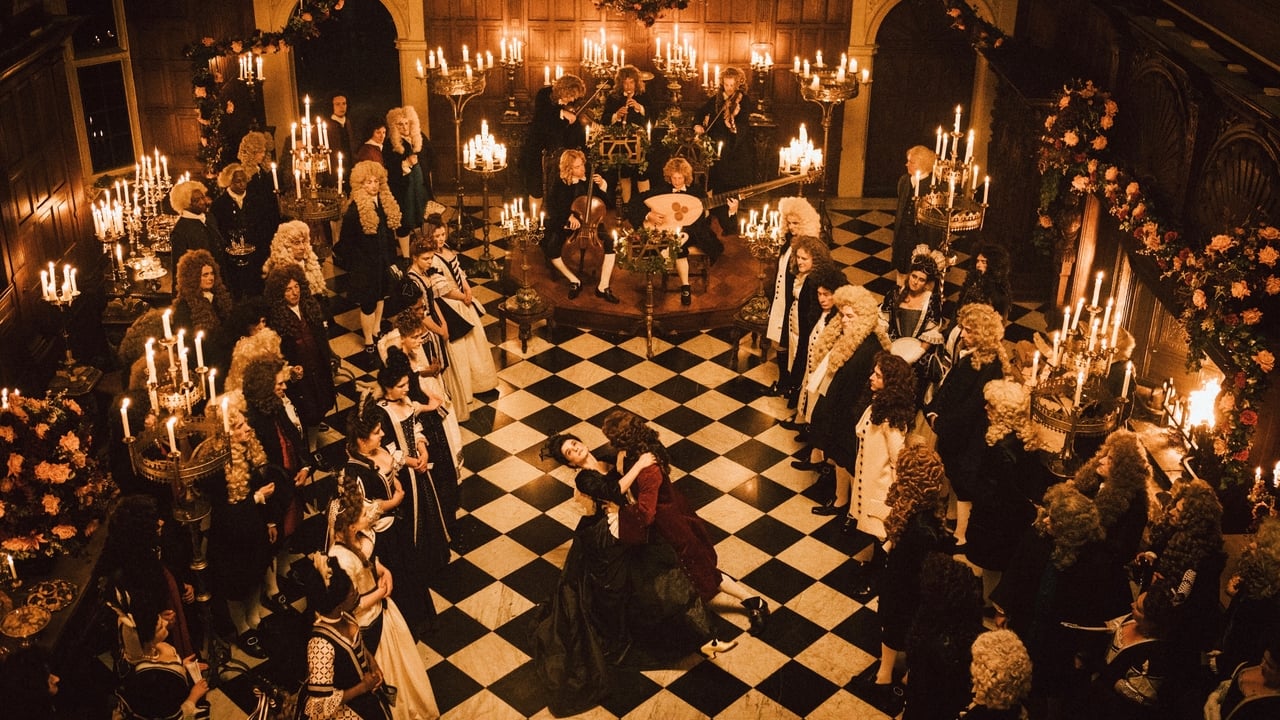
The Favourite
Robbie Ryan's lateral tracking shots through palace corridors accompany the rival courtiers, making the spatial hierarchy and power dynamics between characters physically tangible.
Film stills sourced via the TMDB API. This product uses the TMDB API but is not endorsed or certified by TMDB. themoviedb.org ›
Definition
A Tracking Shot (Kamerafahrt / Verfolgungsfahrt) is a horizontal or lateral camera movement where the camera follows a subject parallel to it, or navigates through a scene, using tracks, a dolly, or other vehicles. Unlike pan movements, the entire camera physically moves through space.
Technical Execution
Track Systems
- Elemac Nova – Modular, ±2mm precision, up to 50 meters track length
- Fisher Dolly – Hollywood standard, payload 300kg, variable speed 0.01-3 m/s
- Grip Modular Track – Quick setup, flexible curve radii
- Dolly Zoom combined – Simultaneous tracking with focal length change creates distortion effect
Equipment
- Dolly Grip Operator operates the vehicle (brake, throttle, steering)
- Focus Puller (1st AC) continuously adjusts the plane of focus
- Marking System – Tape markers on tracks for positioning
- Video Assistant monitors focus and framing on a monitor
Tracking Speed
- Emotional scenes: 0.3–0.7 m/s (slow, immersive)
- Standard dialogue: 0.7–1.5 m/s (accompanying, time-correct)
- Dynamic scenes: 2–4 m/s (energetic, fast)
- Action chases: 5–8 m/s (intense, chaotic)
Focal Length Adjustment
- 28mm: Highly distorted tracking movements, large perspective shift
- 50mm: Neutral, natural-looking, standard for emotional scenes
- 85mm: Subtle, compressed movements, ideal for close-ups
- 135mm: Minimalist movements with maximum image compression
History & Development
1920s – Early Experiments
F.W. Murnau's "The Last Laugh" (1924) features one of the earliest tracking shots in film history. The system consisted of an improvised track that guided a specially constructed camera tripod dolly. The shot lasted over 90 seconds and was a technical sensation.
1940s – Hollywood Standardization
Orson Welles established the psychological power of tracking shots in "Citizen Kane" (1941). The famous cabaret scene uses a 7-meter tracking shot to visualize the emotional distance between protagonists. In parallel, grip departments like Fisher & Chapman developed standardized track systems.
1970s–1980s – Steadicam Revolution
Garrett Brown's invention of the Steadicam (1976) revolutionized tracking shots. The iconic Steadicam shot in "The Shining" (1980) through the Overlook Hotel established a new category of fluid movement without tracks.
1990s–2000s – Digital Precision
Motion control systems enabled millimeter-accurate repeatability. "Saving Private Ryan" (1998) utilized computer-controlled tracking shots for combat scenes. "Goodfellas" (1990) presents arguably the most famous tracking shot in film history – the 214-second Copacabana sequence (technically a combined tracking + crane shot).
2010s–2020s – Hybrid Systems
Gimbal systems on vehicles combine tracking mobility with optical stabilization. Drone tracking offers new perspectives. Digital mirrorless cameras allow for precise auto-focus tracking during tracking movements.
Practical Film Examples
Classics
- "The Last Laugh" (1924) – First tracking shot in film history (Murnau)
- "Citizen Kane" (1941) – Tracking shot in Xanadu scenes (Welles)
- "Goodfellas" (1990) – 214-second Copacabana shot (Scorsese)
- "The Shining" (1980) – Steadicam pursuit through hotel corridor (Kubrick)
Modern Masterpieces
- "Children of Men" (2006) – 7-minute continuous tracking shot in war scenery (Cuarón)
- "1917" (2019) – Continuously simulated single-shot tracking cameras (Mendes)
- "Squid Game" (2021) – Multi-minute pursuits through game arenas
- "Stolen Car" (Balle Perdue) (2021) – Continuous tracking sequences through Parisian streets
Artistic Dimensions
Emotional Impact
- Intimacy through proximity: Tight tracking shots enhance psychological presence
- Fear through pursuit: Fast, unstable tracking shots feel menacing
- Continuity: Unbroken shots create a mental connection to the action
- Spatial understanding: Viewers orient themselves through consistent perspective
Narrative Function
- Revelation: A tracking shot can gradually reveal new visual elements
- Pursuit: The camera follows a fleeing character (psychological identification)
- Storytelling: Transition between scenes without cuts
- Rhythm: Tracking speed supports the emotional pulse
Comparison with Alternative Techniques
| Technique | Advantage | Disadvantage |
|---|---|---|
| Tracking Shot (Track) | Extreme precision, smooth, repeatable | Setup time-consuming, track length limited |
| Steadicam | Mobility, natural physics, elegant fluidity | Focus profile harder to control, operator-dependent |
| Gimbal Tracking | Fast mobility, remote controlled | Less precision for extreme close-ups |
| Drone Tracking | Greatest freedom of movement, aerial perspectives | Flight restrictions, wind sensitivity, regulatory |
| Digital Zoom/Reframing | Post-production flexibility | Visibly artificial, loss of detail when zooming |
Special Variants
Push-In Tracking
Combination of a tracking shot with a simultaneous zoom-in. Creates intense psychological proximity.
Lateral Tracking
Pure side-to-side movement without forward/backward component. Reveals depth planes.
360° Tracking
Circular movement around a subject (similar to an arc shot, but with a constant radius and parallel orientation).
Reveal Tracking
A shot that progressively reveals hidden visual elements – often over obstacles or through doorways.
Practical Planning Guidelines
- Ground Check: Unevenness over 1cm requires compensation
- Depth of Field: At 50mm and f/2.8 with a 3-meter focus plane and a 10-meter track, at least 3 focus pull marks are needed
- Lighting Setup: Lighting must cover the entire track path (average +40% more light)
- Rehearsals: Plan for at least 4-6 takes per setup
- Timing: 20-meter track = 4-5 hours preparation + rehearsals
Equipment Manufacturers
- Elemac: European standard (Nova, Jib Arm)
- Fisher Dolly: Hollywood premium
- Grip Modular: Flexible small-format systems
- Sachtler/O'Connor: Head stabilization
- Easyrig: Body weight compensation for operators