

Filmlexikon.
Support
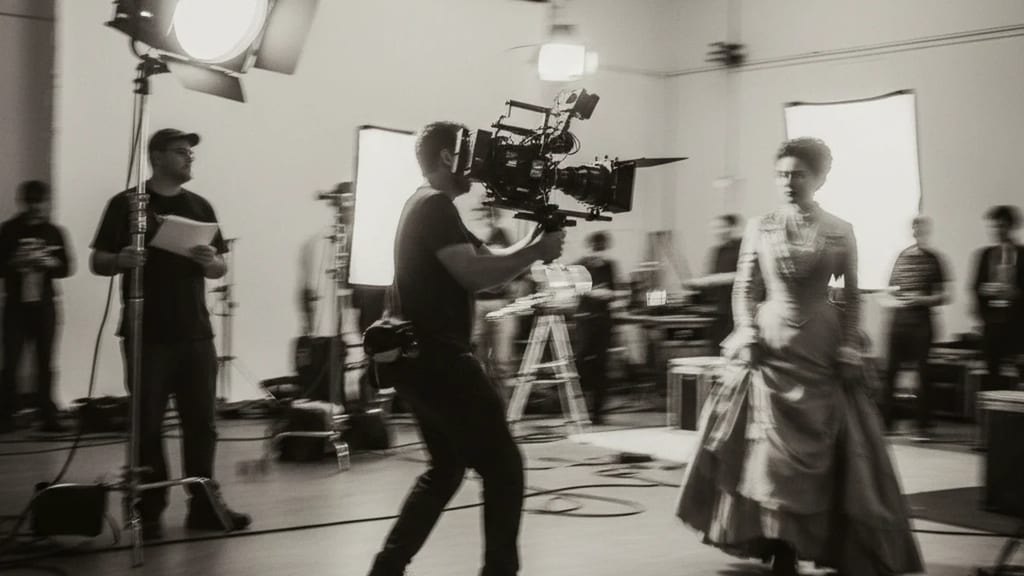
Whip Pan / Flash Pan
Camera · Terms

Whip Pan / Flash Pan

Murnau AI illustration
tracking shot push in pull out cut montage

A rapid panning movement where the camera swings quickly from one subject or position to another, creating motion blur that serves as a visual transition or energetic punctuation.

In film history

Famous examples · Whip Pan / Flash Pan

Curated examples across cinema history that illustrate the term — from compositional principle to deliberate refusal.
01 / WHIP PAN AS RHYTHMIC STORYTELLING DEVICE OF THE NEW HOLLYWOOD ERA

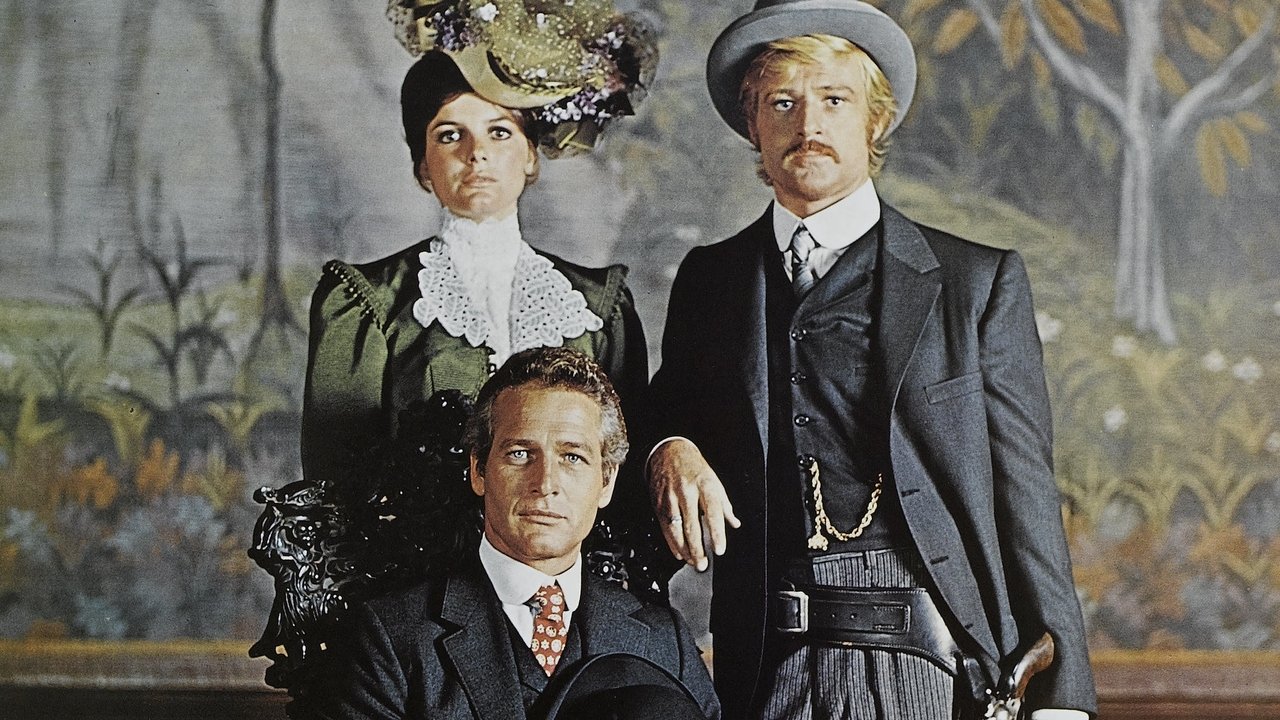
Butch Cassidy and the Sundance Kid

George Roy Hill · 1969 · Conrad Hall

Conrad Hall's energetic whip pans in the action sequences defined the dynamic style of New Hollywood and established the whip pan as a legitimate narrative tool beyond B-movies.

Butch Cassidy and the Sundance Kid · sample frame
02 / BOXING RING CHAOS: WHIP PAN AS EXPRESSION OF UNCONTROLLED VIOLENCE

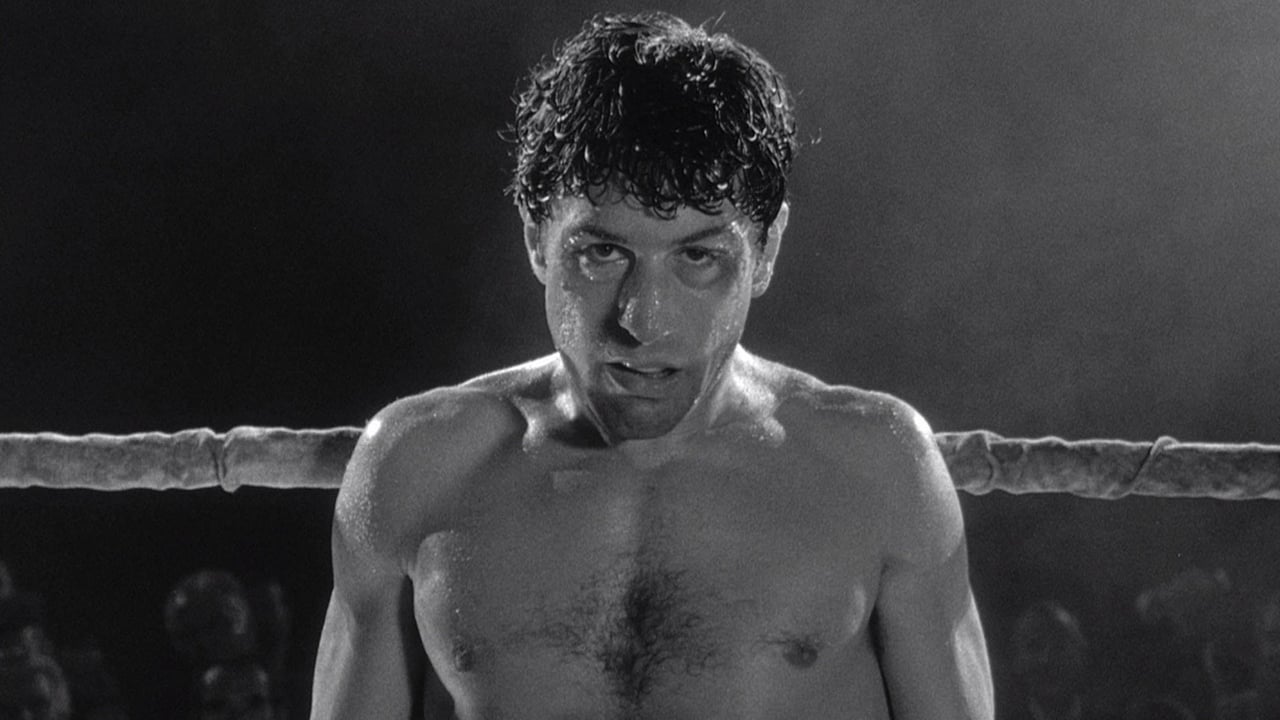
Raging Bull

Martin Scorsese · 1980 · Michael Chapman

Scorsese and Chapman deploy lightning-fast whip pans in the boxing sequences to make the psychological intensity and brutal energy of Jake LaMotta's fights physically palpable.

Raging Bull · sample frame
03 / VIDEO GAME AESTHETICS: WHIP PAN AS COMIC-STYLE SCENE TRANSITION

Scott Pilgrim vs. the World

Edgar Wright · 2010 · Bill Pope

Edgar Wright systematically uses the whip pan as an editing technique to charge scene transitions with the energy of a video game and cinematically translate the comic-book source material.

Scott Pilgrim vs. the World · sample frame
04 / MULTIVERSE IN MOTION: WHIP PAN AS PORTAL BETWEEN REALITIES

Everything Everywhere All at Once

Daniel Kwan, Daniel Scheinert · 2022 · Larkin Seiple

The Daniels and cinematographer Larkin Seiple use whip pans as a structural device to shift between parallel universes, visually embodying the protagonist's disorientation.

Everything Everywhere All at Once · sample frame

Film stills sourced via the TMDB API. This product uses the TMDB API but is not endorsed or certified by TMDB. themoviedb.org ›

Technical Details

Technically, a whip pan is created by camera movements between 180° and 720° per second, with the optimal speed at 24fps being between 240°-360°/second. At 50fps, speeds up to 480°/second are possible without losing the characteristic streaking effect. Fluid heads with variable damping allow for precise control: damping set to minimum (level 1-2), counter-balance adjusted to camera weight. Handheld whip pans require lens focal lengths under 50mm to avoid uncontrolled shake. Gimbal systems like the DJI Ronin operate in "Sport Mode" with stabilization deactivated for authentic motion blur.

History & Development

Akira Kurosawa established the whip pan as a deliberate stylistic device in 1954's "Seven Samurai," enhanced by telephoto lenses (200-400mm). Sam Peckinpah perfected the technique in 1969's "The Wild Bunch" by combining it with slow-motion sequences. The French New Wave adopted the handheld whip pan from 1960 onwards as an expression of spontaneous camera work. With digital post-production, artificial whip pans created through software like After Effects emerged from 2000 onwards, where motion blur is generated algorithmically.

Practical Use in Film

Edgar Wright uses precisely timed 270° whip pans in "Scott Pilgrim vs. The World" (2010) as scene transitions between different locations. In action films like the "Bourne" trilogy, rapid 180° pans enhance disorientation during fight scenes. The classic workflow begins with marking the start and end positions, rehearsing the movement at reduced speed, then shooting with full intensity. Monitoring is done via external recorders, as camera viewfinders cannot adequately represent the movement.

Comparison & Alternatives

The whip pan differs from a normal pan in its speed and deliberate creation of blur. Unlike zoom blur, the focal length remains constant. Steadicam movements create smooth transitions without motion blur. Modern 360° cameras allow for post-production whip pan effects, but do not achieve the organic motion quality of mechanical camera pans. Jump cuts replace whip pans in static camera positions, but appear more abrupt and less connective between shots.

From the crafts

Perspectives

Cinematographer

Reißschwenks sind Präzisions-Technik. Ich stelle Fluid-Kopf-Dämpfung auf Minimum (Stufe 1-2) und markiere Start-/Endposition mit Klebeband. Vor volles-Speed-Take übe ich dreimal in Slow-Motion. Bei Handkamera unter 35mm Brennweite funktioniert es am besten - darüber wird die Bewegung zu wackelig und Bewegungsunschärfe unkontrollierbar. Mit 24fps optimal 240-360 Grad pro Sekunde, mit 50fps bis 480 Grad/Sekunde. Gimbal-Systeme (DJI Ronin) im "Sport Mode" mit deaktivierter Stabilisierung erzeugen authentische Bewegungsunschärfe. Ich benötige externe Video-Monitoring, da Sucher die schnelle Bewegung nicht adäquat darstellt.

Director

Whip Pans sind unsichtbare Schnitte und emotionale Marker. Ich nutze sie für Verwirrung, Schock, plötzliche Erkenntnis. 180-Grad-Schwenks verbinden zwei Räume psychologisch. In Actionsequenzen verstärken schnelle Pans (360 Grad in unter 1 Sekunde) das Chaos und die Desorientierung. Aber ich dosiere sparsam - zu viele Whip Pans wirken affektiert. Edgar Wrights "Scott Pilgrim vs. The World" nutzt präzise getimmte Whip Pans als Szenenwechsel. Timing zur Musik/Dialog ist entscheidend - ich plane im Storyboard mit exakten Timing-Angaben.

Editor

Whip Pans bieten elegante Schnitt-Lösungen ohne explizite Cuts. Ein Whip Pan als Übergang zwischen zwei räumlich oder zeitlich unterschiedlichen Szenen wirkt organisch. Die Bewegungsunschärfe verdeckt visuelle Kontinuität-Sprünge. Ich schnide den Endpunkt des Whip Pan präzise auf den Moment, wenn neue Szene sichtbar wird. Multiple Takes desselben Whip Pan bieten Timing-Optionen. Color-Correction bei Whip Pan muss ich mit Vorsicht behandeln - aggressive Grading kann die Bewegungsunschärfe künstlich wirken lassen.

Producer

Whip Pans sind zeitaufwendig - 20-30 Minuten Setup pro Einstellung. Sie erfordern mehrere Takes (durchschnittlich 8-12 bis perfekt), also kalkuliere ich extra Zeit. Handheld Whip Pan birgt Verletzungsrisiko für Operatoren (Überbelastung, Balance-Verlust), daher brauche ich erweiterte Versicherung. Aber in Post-Production sparen Whip Pans Schnitt-Zeit und Farbkorrektur - natürliche Übergänge erfordern weniger Grading als Hard Cuts zwischen unterschiedlich beleuchteten Szenen. Moderne Software-basierte Whip Pan-Effekte (After Effects) sparen 3-4 Takes, wirken aber oft künstlich.'

More in the lexikon

Related terms

Test your knowledge

Quiz

1. Was beschreibt „Reißschwenk / Schneller Schwenk" am besten?

2. Zu welchem Department gehört „Reißschwenk / Schneller Schwenk"?

3. Wie viele verschiedene Fachperspektiven bietet dieser Eintrag?

Report an error
From the Filmfarm ecosystem

Understand visual language, budget productions, connect crew.

The Lexikon is part of the Filmfarm ecosystem — alongside budgeting (FilmBalance), an industry magazine (FilmCircus) and crew networking (FilmCall, CrewMesh). One shared vocabulary for the whole production.

FilmFarm FilmRadarComing soonFilmPulseComing soonFilmNumbersComing soonFilmCapitalComing soonFilmLabComing soonFilmBalanceComing soonFilmCircusComing soon