Technical Details
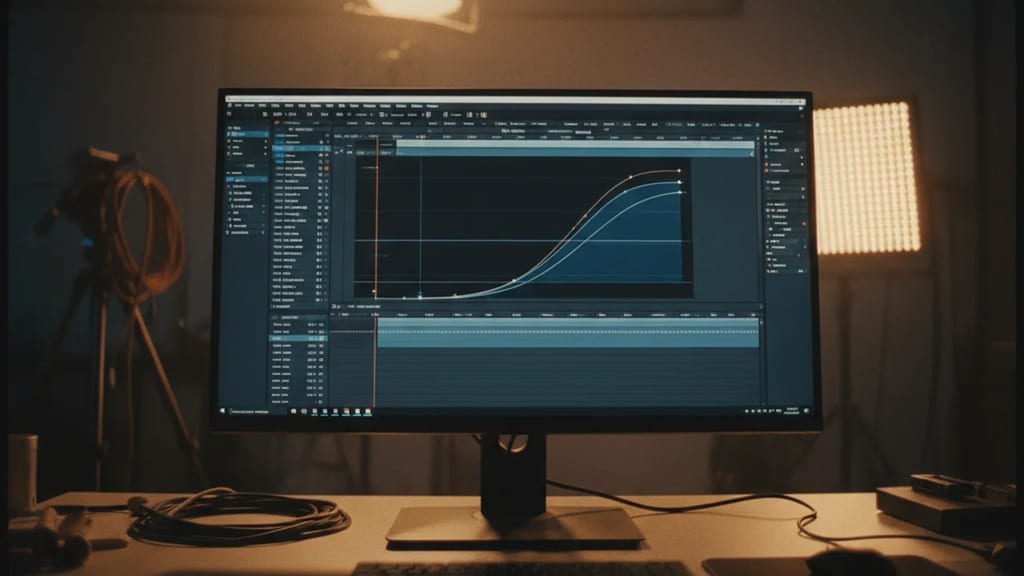
Speed ramp edits require source material with frame rates between 60fps and 1000fps for slow-motion effects, while time-lapse is achieved through frame dropping on 24fps material. The speed ramp typically follows an S-curve with a 0.5-2 second transition time. Modern editing software calculates intermediate frames using optical flow or AI-based frame interpolation. Three main variants exist: Linear Ramps (constant acceleration), Smooth Ramps (Bézier curves), and Custom Ramps (manually defined speed curves). The dynamic range typically lies between 10% and 1000% of the original speed.
History & Development
The technique was first systematically employed in 1999 in "The Matrix" by editor Zach Staenberg for the "Bullet Time" sequences. The breakthrough for conventional productions came in 2004 with Zack Snyder's "300," where speed ramps added dramatic emphasis to fight scenes. The technical foundation was laid by Twixtor from RE:Vision Effects (2002), which for the first time enabled high-quality speed ramps without additional camera technology. From 2010 onwards, Avid, Premiere, and Final Cut Pro integrated native speed ramp tools, making the technique a standard repertoire.
Practical Application in Film
Speed ramps enhance emotions and draw attention to key narrative moments. In action films, they slow down hits or explosions to 20-50% of the original speed, then accelerate again to 200-400% for transitions. "Mad Max: Fury Road" (2015) uses over 200 speed ramps to create rhythm. The workflow begins with 120fps footage at a 1/250s shutter speed to minimize motion blur. Disadvantages include increased render times (factor of 3-5) and file sizes, as well as potential artifacts with fast camera movements or complex backgrounds.
Comparison & Alternatives
Speed ramps differ from simple slow motion through dynamic speed changes within a single shot. While overcranking creates constant slow motion, speed ramps create fluid transitions. Modern alternatives like AI-based RIFE interpolation or Adobe's Frame Blending achieve similar results with 24fps material but produce ghosting artifacts with complex movements. For budget productions, speed ramps offer a cost-effective alternative to elaborate camera rigs but require careful planning of source material specifications.