Filmlexikon.
Support
Roll
Camera · Terms

Roll

Murnau AI illustration
flow para take

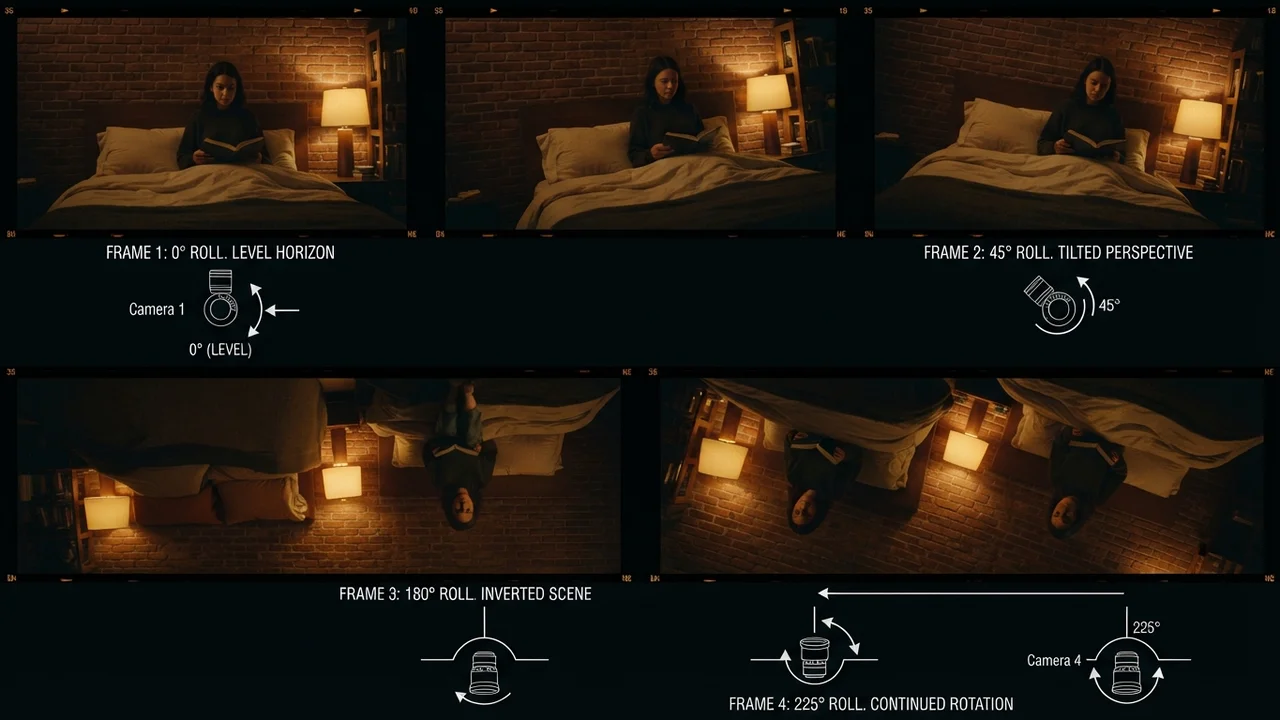
Camera rotation around the optical axis, producing a lateral tilt of the frame for dynamic or destabilizing effects.

Technical Details

35mm standard rolls have a core diameter of 50.8mm (2 inches) and vary in outer diameter between 178mm (400-foot roll) and 279mm (1000-foot roll). 16mm rolls use 25.4mm cores (1 inch) with capacities from 30 to 122 meters. The winding cores are made of plastic or metal with precise tolerances of ±0.1mm to prevent winding errors. Professional rolls feature flanges with standardized mounting holes for magazines and editing tables. For 65mm large format, the core diameter is 76.2mm (3 inches).

History & Development

Thomas Edison introduced the first standardized 35mm roll with a 50-foot capacity in 1891. In 1909, the Motion Picture Patents Company established the 1000-foot roll as an industry standard, corresponding to the maximum hand-crank speed of projectors. In 1923, Kodak developed safety film rolls made of non-flammable acetate material as a replacement for explosive nitrate films. The introduction of plastic cores in 1952 reduced weight by 40% compared to metal cores. Modern digital workflows have increasingly used telecine transfer directly from original rolls since 2005.

Practical Use in Film

Cinematographers plan shots according to roll lengths: a 400-foot roll allows for a maximum 4-minute take, as seen in Orson Welles' famous opening sequence in "Touch of Evil" (1958). Stanley Kubrick used special 2000-foot rolls for "Barry Lyndon" (1975) to minimize splices in candlelight scenes. In the editing room, roll changes mark traditional cutting points – visible in early films as "changeover cues" for projector synchronization. Documentary filmmakers prefer 400-foot rolls due to their better handling during location shoots.

Comparison & Alternatives

Rolls differ from spools by their removable flanges and magazine compatibility. Cassette magazines hold multiple roll equivalents (up to 1220m for Arriflex) but require specialized camera systems. Daylight spools allow film changes without a darkroom but hold a maximum of 30 meters. Digital storage media are replacing rolls: RED cards correspond to approximately 16 traditional 1000-foot rolls at 4K recording. Core adapters allow the use of coreless film winders on standard roll holders, reducing material costs by 15%.

From the crafts

Perspectives

Cinematographer

Ich kalkuliere meine Einstellungslängen exakt nach Rollenkapazität - bei einer emotionalen 6-Minuten-Dialogszene muss ich auf 1000-Fuß-Rollen setzen oder einen störenden Reload einplanen. Die Gewichtsverteilung zwischen Aufnahme- und Abwickel-Rolle verändert das Kamera-Balancing kontinuierlich, besonders bei Handkamera-Arbeit spürbar.

Director

Ich nutze Rollenwechsel bewusst als natürliche Schnitt-Rhythmik - die historischen 10-Minuten-Zyklen prägen noch heute meine Szenenstruktur. Bei langen Plansequenzen zwingen mich die physischen Grenzen zu kreativen Lösungen: Versteckte Schnitte, Kamerawechsel oder die bewusste Entscheidung für teurere Großrollen.

Producer

Ich rechne mit 45€ pro 1000-Fuß-Rolle plus 38€ Entwicklungskosten - bei einem 90-Minuten-Film entstehen allein 2.400€ Negativkosten bei konservativem 3:1-Verhältnis. Der Rollenwechsel kostet durchschnittlich 4 Minuten Drehzeit, das entspricht bei einer 180.000€-Tagesgage 480€ pro Reload.

More in the lexikon

Related terms

Test your knowledge

Quiz

1. Zu welchem Department gehört „Rollen"?

2. Wie viele verschiedene Fachperspektiven bietet dieser Eintrag?

Report an error
From the Filmfarm ecosystem

Understand visual language, budget productions, connect crew.

The Lexikon is part of the Filmfarm ecosystem — alongside budgeting (FilmBalance), an industry magazine (FilmCircus) and crew networking (FilmCall, CrewMesh). One shared vocabulary for the whole production.

FilmFarm FilmRadarComing soonFilmPulseComing soonFilmNumbersComing soonFilmCapitalComing soonFilmLabComing soonFilmBalanceComing soonFilmCircusComing soon