Filmlexikon.
Support
Rushes
Production · Terms

Rushes

Murnau AI illustration
reshoot production run of show shift principal photography shooting production

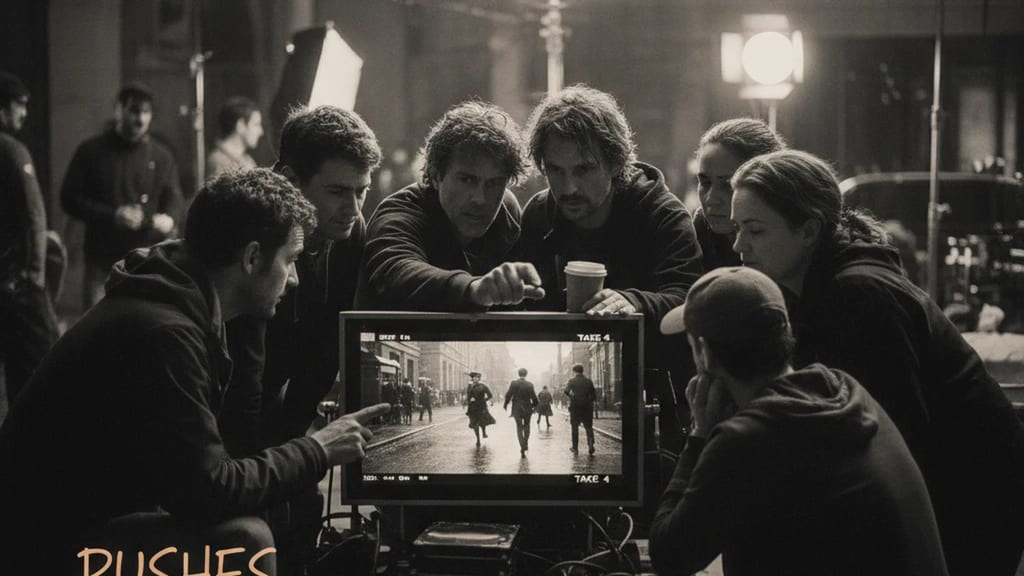
Unedited film stock or digital footage shot during production, viewed immediately to assess recorded scenes and performance quality.

Technical Details

On 35mm film, rushes are created by developing the exposed negatives in the film laboratory, typically with a processing time of 2-4 hours after delivery. Digital rushes are transferred directly from storage media such as CFast cards (512GB-2TB) or SSD drives, with 4K ProRes material generating approximately 880GB per shooting day. The files are usually in LOG color spaces (S-Log3, V-Log, C-Log2) with 10-14 bit color depth. Modern workflows utilize cloud-based daily systems like PIX or Frame.io, enabling upload speeds of up to 1Gbps.

History & Development

The rush system was established in the 1920s in Hollywood as studio production developed standardized workflows. MGM introduced the "Daily Rush Screening" in 1926, where producers and directors evaluated the results daily. With the introduction of video assist in the 1970s, an initial instant preview emerged, but it did not replace chemically developed rushes. The transition to digital dailies began in 2005 with pioneering productions like "Star Wars Episode III," and the purely digital rush workflow became fully established by 2012.

Practical Application in Film

For "Eyes Wide Shut," Stanley Kubrick reviewed up to 40 takes per scene daily in the rushes, resulting in a total of over 1.4 million feet of film. Christopher Nolan still insists on 65mm film rushes today, which must be available within 6 hours of shooting. For "The Revenant," Alejandro G. Iñárritu used HDR dailies on 1000-nit monitors to correctly evaluate the extreme lighting conditions of the natural light shots. Streaming series like "The Crown" use automated rush workflows with AI-powered scene recognition and automatic sync creation.

Comparison & Alternatives

Rushes differ from Dailies in their level of processing – while rushes are completely unedited, dailies may already include color corrections or sound mixes. Selects represent a further refinement stage, where only the best takes from the rushes are compiled. Modern live streaming systems like Teradek CUBE allow for real-time viewing on set but do not replace high-resolution rushes for final evaluations. Proxy files offer compressed versions of the rushes (typically 1/4 resolution) for quick editing in Avid Media Composer or DaVinci Resolve.
From the crafts

Perspectives

Cinematographer

Ich nutze die Rush-Sichtung am iPad direkt nach jeder Einstellung, um Schärfe und Belichtung bei 4K-Aufnahmen zu verifizieren, da der 7-Zoll-Monitor am Set nur 1920x1200 Pixel zeigt. Besonders bei Available-Light-Szenen erkenne ich erst in den kalibrierten Rushes auf dem Referenz-Monitor, ob die LOG-Aufzeichnung genügend Dynamikumfang in den Schatten erfasst hat. Die Metadaten der Rushes geben mir exakte Werte für ISO, Blende und Farbtemperatur, die ich für Anschlüsse am Folgetag benötige.

Director

Ich schaue Rushes grundsätzlich ohne Ton, um mich vollständig auf die visuelle Performance und Kameraführung zu konzentrieren – so entdecke ich Nuancen in der Schauspielführung, die am Set untergegangen sind. Bei Dialog-intensiven Szenen markiere ich in den Rushes präzise Timecodes für die besten emotionalen Momente, da der Editor später nur mit diesen Angaben die optimalen Takes identifizieren kann. Die Rush-Sichtung zeigt mir auch, welche Einstellungen zu ähnlich wirken und beim nächsten Setup variiert werden müssen.

Producer

Rush-Management kostet bei einer 50-Tage-Produktion etwa 180.000€ für Labor, Digitalisierung und Übertragung, wobei Cloud-basierte Systeme die Kosten um 30% reduzieren gegenüber physischen Kopien. Ich tracke täglich das Verhältnis von gedrehtem zu verwendetem Material – bei Ratios über 15:1 führe ich Gespräche mit der Regie über Effizienz. Die Rush-Metadaten fließen direkt in mein Produktions-Tracking ein und zeigen mir, ob wir planmäßig 12-15 Minuten verwendbares Material pro Drehtag erreichen.

More in the lexikon

Related terms

Test your knowledge

Quiz

1. Was beschreibt „Rushes" am besten?

2. Zu welchem Department gehört „Rushes"?

3. Wie viele verschiedene Fachperspektiven bietet dieser Eintrag?

Report an error
From the Filmfarm ecosystem

Understand visual language, budget productions, connect crew.

The Lexikon is part of the Filmfarm ecosystem — alongside budgeting (FilmBalance), an industry magazine (FilmCircus) and crew networking (FilmCall, CrewMesh). One shared vocabulary for the whole production.

FilmFarm FilmRadarComing soonFilmPulseComing soonFilmNumbersComing soonFilmCapitalComing soonFilmLabComing soonFilmBalanceComing soonFilmCircusComing soon