Filmlexikon.
Support
Offset Arm
Lighting · Terms

Offset Arm

Murnau AI illustration
color temperature flow offset roll take

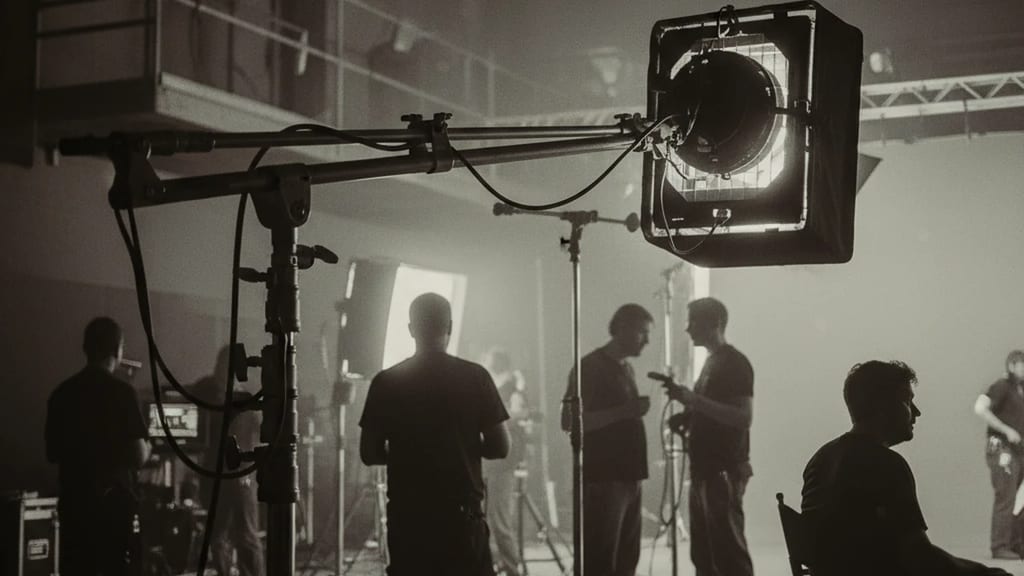
Extendable arm for C-stands that positions light sources up to 15 kg offset from the stand base. A counterweight balances the load, enabling precise light positioning around obstacles.

Technical Details

Standard offset arms have a length between 60 and 120 centimeters and can carry loads up to 15 kilograms when fully extended. The construction consists of a main tube (usually 16mm or 5/8" diameter) with an integrated spigot for baby or junior receivers. A counterweight of 2-5 kilograms at the short end of the arm compensates for the moment of the light source. High-quality models like the Matthews Studio Offset Arm feature a telescopic construction with clamping levers and 360-degree rotation at the mounting point.

History & Development

Matthews Studio Equipment developed the first standardized offset arm for Hollywood productions in 1952. The need arose from increasingly cramped studio conditions and more complex camera movements. In the 1970s, Manfrotto introduced European variants, which impressed with their lower weight and modular design. Modern carbon fiber versions since the 2000s reduce the dead weight by up to 40 percent with the same load capacity.

Practical Application in Film

Offset arms enable lighting placement over railings, through windows, or around architectural elements. In "Blade Runner 2049," Roger Deakins used them for side-mounted LED panels in tight apartment sets where conventional stands would have obstructed camera movement. Typical workflow: Mount on a C-stand, align the arm, attach the light source at the end, fine-tune using the stand's mechanics. The disadvantage lies in reduced mobility due to the counterweight and increased setup and breakdown times.

Comparison & Alternatives

In contrast to a rigid extension arm, the offset arm offers lateral displacement rather than just extension. Magic arms (articulated arms) are more flexible but can only carry 3-5 kilograms. For heavy tungsten lights, the offset arm remains the first choice, while modern LED panels are often realized with lighter boom pole solutions. Motorized remote heads are increasingly replacing static offset arms for frequent lighting changes during takes.
From the crafts

Perspectives

Cinematographer

Als DoP schätze ich Offset-Arms besonders für Gegenlicht-Setups, wo ich die Lichtquelle außerhalb des Kamerabereichs positionieren muss, aber das Stativ nicht hinter der Szene stehen kann. Die seitliche Versetzung ermöglicht mir präzise Lichtführung auch in architektonisch schwierigen Räumen, ohne dass Stativbeine im Bild auftauchen.

Director

Ich nutze Offset-Arms gezielt für narrative Lichteffekte – etwa wenn Sonnenlicht durch ein Fenster fallen soll, das Stativ aber nicht vor der Fassade stehen kann. Die flexible Positionierung hilft mir, emotionale Lichtstimmungen zu kreieren, ohne dass die Technik die Schauspielführung oder Kamerabewegungen einschränkt.

Producer

Offset-Arms kosten 200-400 Euro, amortisieren sich aber durch eingesparte Rigging-Zeit und reduzierte Standmiete bei Location-Drehs. Ein 4-köpfiges Gaffer-Team spart täglich 30-45 Minuten Setup-Zeit gegenüber komplexen Aufhängungen, was bei 10 Drehtagen bereits 500 Euro Personalkosten einspart.

More in the lexikon

Related terms

Test your knowledge

Quiz

1. Was beschreibt „Offset-Arm" am besten?

2. Zu welchem Department gehört „Offset-Arm"?

3. Wie viele verschiedene Fachperspektiven bietet dieser Eintrag?

Report an error
From the Filmfarm ecosystem

Understand visual language, budget productions, connect crew.

The Lexikon is part of the Filmfarm ecosystem — alongside budgeting (FilmBalance), an industry magazine (FilmCircus) and crew networking (FilmCall, CrewMesh). One shared vocabulary for the whole production.

FilmFarm FilmRadarComing soonFilmPulseComing soonFilmNumbersComing soonFilmCapitalComing soonFilmLabComing soonFilmBalanceComing soonFilmCircusComing soon