Color of light measured in Kelvin — from warm orange (candle, 1800K) through tungsten (3200K) and daylight (5600K) up to cold blue (clear sky, 10000K).
The color temperature — measured in Kelvin (K) — describes the color impression of a light source on a scale from warm orange (candlelight, 1800 K) through neutral white to cold blue (clear sky, 10,000 K). The underlying principle is the radiation of a black body: a theoretical object that glows red, then yellow, then white, then blue when heated — the temperature at which it emits a specific color is its color temperature. On a film set, color temperature is one of the first questions the DP asks: "What do we have here? 3200 or 5600?" — because the camera's white balance, lighting fixture selection, and gel choices depend on it.
The Magic Numbers: 3200K and 5600K
The two standard color temperatures in film are 3200 K (tungsten light, incandescent lamp) and 5600 K (daylight, mid-sun). HMI (Hydrargyrum Medium-Arc Iodide) lights provide precise 5600 K with high luminous efficacy; a 1.2kW HMI replaces about 5kW of tungsten at the same color temperature. LED panels like Arri Skypanels or Aputure 600c are bi-color capable and can be continuously adjusted between 2800 K and 10,000 K — making gel changes unnecessary in many situations. Nevertheless, in large setups with 20 lights, the gaffer sticks to fixed color temperatures because mixing calculations with 20 continuously adjustable sources would drive the DIT at the monitor insane.
Mixed Light: Everyday Life on Set
Reality is almost always mixed light: a window provides 5600 K from outside, the practical lamp on the table has a 2800 K bulb, and the ceiling lights in the office hallway are 4000 K fluorescent tubes with a green cast. The gaffer decides which source dominates and adjusts all others with gels: CTO on the window (turns daylight into tungsten light), CTB on the practical lamp, Minus Green on the fluorescent tubes. The camera's white balance is set to the dominant source, typically 3200 K for interiors or 5600 K for exteriors. Raw formats like Arriraw or REDcode store the white balance only as metadata — the DIT can shift the color temperature in post, but only the gaffer on location can eliminate the green cast of a fluorescent tube.
Creative Use: Color Temperature as a Storytelling Element
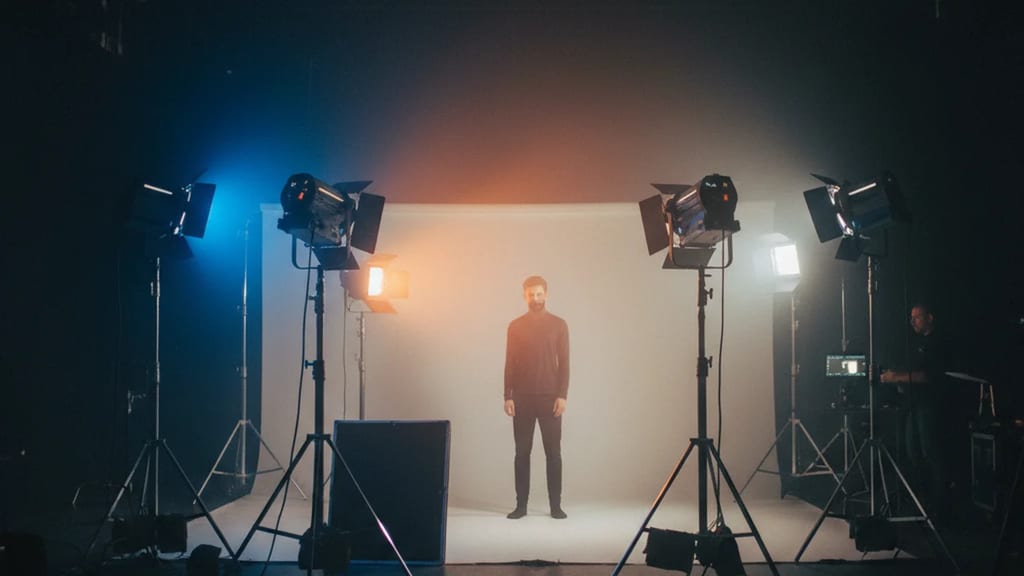
Color temperature is not just a technical aspect but also a carrier of meaning. Warm 2800 K scenes signal intimacy, nostalgia, or coziness; cold 7000 K images convey coldness, sterility, or threat. DPs mix deliberately: a character stands in warm 3200 K key light, while the background through an uncorrected window (5600 K) remains cool — the color temperature difference emotionally separates the figure from the space. In color grading, the colorist can enhance this separation, but the foundation must be set on set: a scene shot entirely at 3200 K cannot be convincingly "re-colored" to 5600 K.
Related terms
Quiz
1. Was beschreibt „Farbtemperatur" am besten?
2. Zu welchem Department gehört „Farbtemperatur"?