Definition
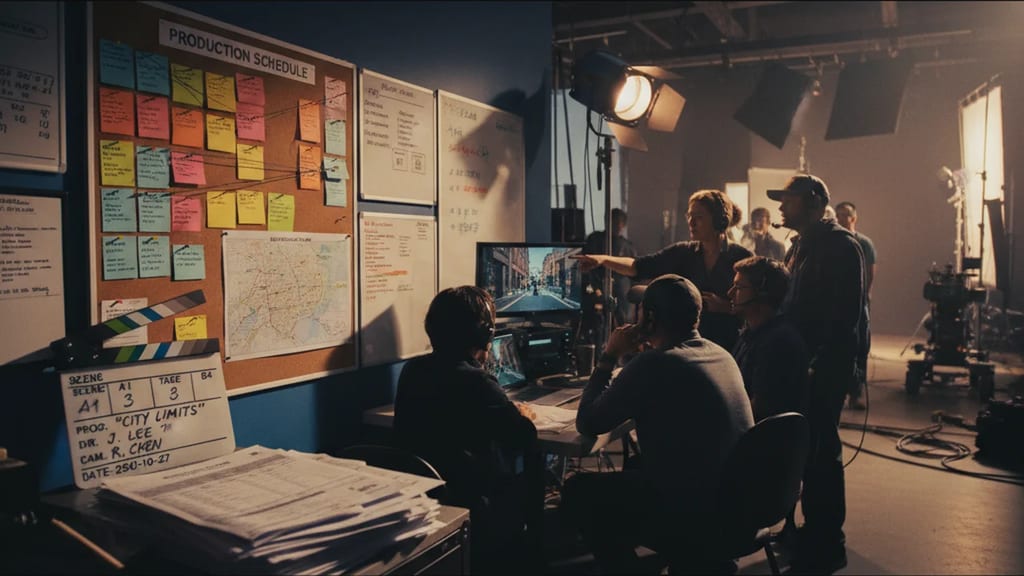
The slate is a mechanical synchronization device consisting of a writable board (30×25 cm standard) with a hinged wooden bar that produces a distinct clap when closed. The device is used for precise audio-video synchronization in post-production by accurately marking the beginning of a take. The term derives from the characteristic clapping sound, with the English "clapperboard" coming from "clap".
Technical Details
Standard Slate: black board with white bars, writable with chalk or erasable markers. The upper bar measures 40×5 cm and is closed with a force of 15-20 Newtons. Digital Slates (Smart Slate) integrate LED displays with a timecode generator, precisely synchronized to 1/100th of a second. Color Slate for white balance combines gray, white, and black fields (18% gray according to Kodak standard). Night Slate uses a white board with black lettering for low-light situations.
History & Development
In 1929, American cinematographer Frank Thring introduced the first film slate at Warner Brothers. Originally a purely informational board, it was equipped with the hinged bar in 1931 for sound film synchronization. In 1980, Denecke Inc. developed the first timecode slate with a digital display. Modern Smart Slates, since 2010, wirelessly transmit metadata to cameras and sound devices, support GPS coordinates, and connect via Wi-Fi to the production database.
Practical Use in Film
On "Mad Max: Fury Road" (2015), the team used GPS-enabled Smart Slates for precise geolocation of the 480 camera setups in the desert. Christopher Nolan insists on analog wooden slates – even for "Interstellar," he eschewed digital alternatives. Multi-camera productions use master-slave systems: one main slate triggers up to 12 secondary camera slates synchronously via radio. Second unit shots require identical timecode settings to the main unit.
Comparison & Alternatives
Soft Clap replaces the wooden bar with foam pads for noise-sensitive recordings. Insert Slate marks subsequently inserted shots without a clapper sound. Digital workflows utilize Tentacle Sync devices, which automatically synchronize cameras and sound devices. VR productions use 360° slates without visible edges. For live streaming, the software-based Virtual Slate replaces physical slates with programmable overlays featuring automatic timecode matching.