Filmlexikon.
Support
Isco Gottingen
Manufacturers

Isco Gottingen

Murnau AI illustration
flow para roll take

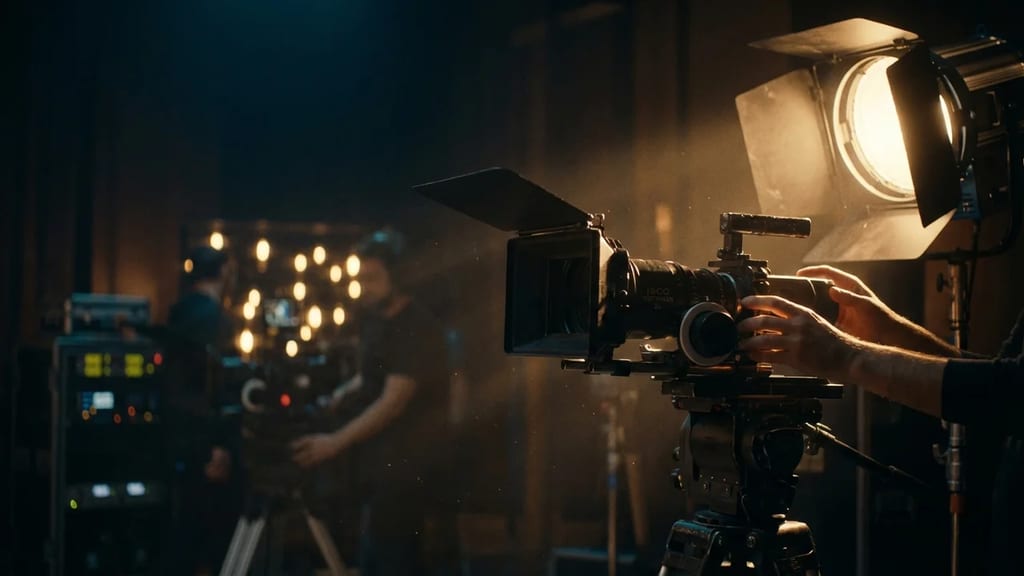
German lens manufacturer (1928–1970) from Göttingen, producing Tessar-design cinema lenses f/1.4–f/2.8 renowned for soft bokeh and distinctive vintage aesthetic.

Technical Details

The classic Isco lenses operate with maximum apertures between f/1.4 and f/2.8 at a flange focal distance of 52mm for 35mm cameras. The Tessar design with four elements in three groups achieves a resolution of up to 120 line pairs per millimeter in the image center. The mechanical construction made of brass with a nickel-plated surface weighs between 280g (25mm) and 850g (135mm). Focusing is achieved via helical adjustment with a minimum working distance of 0.8m for normal focal lengths. The aperture blades made of blackened steel produce an 8-sided opening.

History & Development

In 1920, C.P. Goerz took over the production of lenses originally developed for Leica and adapted them for film cameras. After being acquired by Isco in 1928, approximately 12,000 cinema lenses of various focal lengths were produced in Göttingen until 1955. The peak period was between 1935 and 1950, when German film productions routinely relied on Isco optics. In 1970, Isco ceased lens production and concentrated on projectors. Today, surviving examples are considered collector's items with prices ranging between 2,000 and 8,000 Euros.

Practical Use in Film

Fritz Lang's "Metropolis" (1927) used early Isco prototypes for close-ups, while the normal focal lengths were used in Murnau's "The Last Laugh" (1924). In the 1950s, German productions like "The Sinner" (1951) exclusively used Isco lenses from the 25mm, 50mm, and 85mm series. The characteristic bokeh and contrast transfer at low frequencies made them ideal for portraits and interior shots. The disadvantage was the limited depth of field at wide apertures and strong vignetting from f/1.4 onwards.

Comparison & Alternatives

Isco lenses competed with Zeiss Sonnar and Leitz Summarit models, but offered softer skin tones and less contrast. Modern alternatives like Cooke S4/i or Zeiss Master Primes achieve higher resolution but lose the characteristic vintage look. For productions with a retro aesthetic, original Isco lenses remain the first choice, while digital emulations only approximate the look. Reconstructions like the Isco Ultra Star series from 2010 use modern coatings but do not achieve the optical properties of the originals.
From the crafts

Perspectives

Cinematographer

Ich setze Isco-Objektive gezielt für Hautton-kritische Aufnahmen ein, da sie Rottöne besonders warm und organisch wiedergeben. Der weiche Übergang zwischen Schärfe und Unschärfe macht sie perfekt für Nahaufnahmen, allerdings muss ich bei Offenblende mit deutlicher Randabschattung rechnen. Die mechanische Präzision der alten Schneckengang-Fokussierung erlaubt mir extrem feinfühlige Schärfeverlagerungen.

Director

Ich nutze die charakteristische Bildsprache von Isco-Objektiven, um Nostalgie und Intimität zu erzeugen – der weiche Kontrast und die warme Farbgebung verstärken emotionale Szenen erheblich. Besonders in Dialogszenen schaffen die 85mm-Brennweiten eine träumerische Atmosphäre, die moderne Objektive nicht erreichen. Die begrenzte Schärfentiefe zwingt mich zu bewussten Fokus-Entscheidungen und macht jede Einstellung intentionaler.

Producer

Ich kalkuliere 3.000-5.000 Euro Mietkosten pro Objektiv für eine vierwöchige Produktion, zusätzlich 800 Euro Versicherung aufgrund des Sammlerwertes. Die Beschaffung dauert 6-8 Wochen, da nur wenige Verleih-Sets existieren, deshalb buche ich diese Optiken bereits in der Vorproduktion. Ein spezialisierter Kameratechniker kostet weitere 200 Euro täglich für Wartung und Justierung.

More in the lexikon

Related terms

Test your knowledge

Quiz

1. Zu welchem Department gehört „Isco Göttingen"?

2. Wie viele verschiedene Fachperspektiven bietet dieser Eintrag?

Report an error
From the Filmfarm ecosystem

Understand visual language, budget productions, connect crew.

The Lexikon is part of the Filmfarm ecosystem — alongside budgeting (FilmBalance), an industry magazine (FilmCircus) and crew networking (FilmCall, CrewMesh). One shared vocabulary for the whole production.

FilmFarm FilmRadarComing soonFilmPulseComing soonFilmNumbersComing soonFilmCapitalComing soonFilmLabComing soonFilmBalanceComing soonFilmCircusComing soon