Filmlexikon.
Support
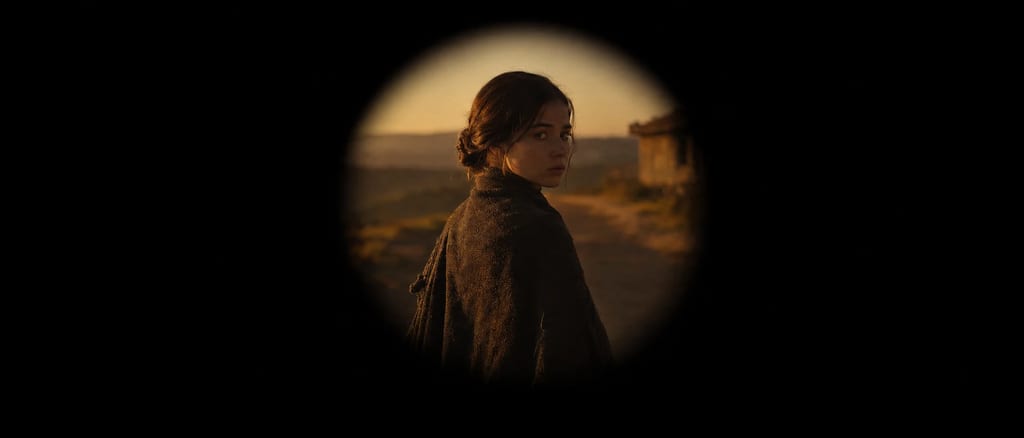
Iris Out
Editing · Terms

Iris Out

Murnau AI illustration
dissolve fade in fade out fade to black fade to white quasar x crossfade wipe

Circular wipe where the image closes from edges to a point, created via iris diaphragm or digital radial mask.

Technical Details

Traditionally, the iris effect is created by mechanically manipulating the camera aperture during recording or by using special masks in front of the lens. Standard iris masks have diameters ranging from 35mm to 150mm depending on the film format. In digital post-production, the effect is generated using radial masks with an exponential falloff curve. The iris can be concentric (circular) or elliptical, with aspect ratios from 1:1 to 2:1 being common. Variable speeds from 12 to 96 frames per second allow for different dramatic effects.

History & Development

The iris effect was developed in 1902 by French film pioneer Georges Méliès and first used in "Le Voyage dans la Lune" (A Trip to the Moon). D.W. Griffith perfected the technique in 1915 in "The Birth of a Nation" through precisely choreographed iris movements. During the silent film era, the iris out became established as a standard transition between sequences. With the advent of sound film from 1927 onwards, the effect was used less frequently, as hard cuts were preferred. Charlie Chaplin still used the iris aperture in 1936 in "Modern Times" as a conscious nod to silent film aesthetics.

Practical Use in Film

Sergio Leone used the iris out in the "Dollars Trilogy" (1964-1966) to focus on faces in duel scenes. Warner Bros. established the effect as a trademark of the "Looney Tunes" cartoons with the characteristic black iris around Porky Pig's "That's all folks!". In "Raiders of the Lost Ark" (1981), Spielberg closes with an iris on the government warehouse to evoke the classic adventure film style. The effect is particularly suitable for time jumps, dream sequences, and nostalgic flashbacks.

Comparison & Alternatives

In contrast to a dissolve, the iris out keeps a central image element visible for longer. A fade out uniformly darkens the entire image, whereas the iris selectively focuses. Wipes operate with straight or geometric transitions instead of circular ones. Modern alternatives include zoom blur effects and radial blurs. The iris in functions as the reverse effect at the beginning of a scene. Today, iris out is mainly used for stylistic homages or deliberately nostalgic effects.
From the crafts

Perspectives

Cinematographer

Ich nutze mechanische Iris-Blenden am Set nur noch für spezielle Vintage-Looks, da die Kontrolle über Timing und Präzision begrenzt ist. In der digitalen Pipeline bevorzuge ich saubere Plates und übergebe den Iris-Effekt an die Postproduktion, wo ich exakte Keyframes und Geschwindigkeitskurven definieren kann. Die Herausforderung liegt in der gleichmäßigen Belichtung des verbleibenden Bildkreises, besonders bei komplexen Lichtsituationen.

Director

Ich setze Iris schließen gezielt ein, um dem Publikum zu signalisieren, dass eine Geschichte oder Gedankenfolge abgeschlossen ist – wie ein visueller Punkt am Satzende. Der Effekt lenkt die Aufmerksamkeit auf das letzte Element im Bildkreis und gibt mir die Möglichkeit, eine emotionale Reaktion beim Zuschauer zu verstärken. Besonders wirkungsvoll ist die Iris bei Charaktermomenten, wo das Gesicht des Protagonisten das Letzte ist, was verschwindet.

Producer

Mechanische Iris-Effekte am Set kosten mich zusätzliche Takes und präzise Timing-Koordination zwischen Kamera und Schauspielern, was den Drehtag verlängert. Digital erstellte Iris-Übergänge sind kostengünstiger und flexibler, benötigen aber zusätzliche Postproduktions-Kapazitäten von etwa 2-4 Stunden pro Effekt. Ich kalkuliere Iris-Blenden hauptsächlich bei Projekten ein, die bewusst auf Nostalgie oder Genre-Referenzen setzen, da der ROI durch Zielgruppen-Authentizität gerechtfertigt ist.

More in the lexikon

Related terms

Test your knowledge

Quiz

1. Was beschreibt „Iris schließen" am besten?

2. Zu welchem Department gehört „Iris schließen"?

3. Wie viele verschiedene Fachperspektiven bietet dieser Eintrag?

Report an error
From the Filmfarm ecosystem

Understand visual language, budget productions, connect crew.

The Lexikon is part of the Filmfarm ecosystem — alongside budgeting (FilmBalance), an industry magazine (FilmCircus) and crew networking (FilmCall, CrewMesh). One shared vocabulary for the whole production.

FilmFarm FilmRadarComing soonFilmPulseComing soonFilmNumbersComing soonFilmCapitalComing soonFilmLabComing soonFilmBalanceComing soonFilmCircusComing soon