Filmlexikon.
Support
Eye Level
Camera · Terms

Eye Level

Murnau AI illustration
flow para roll take

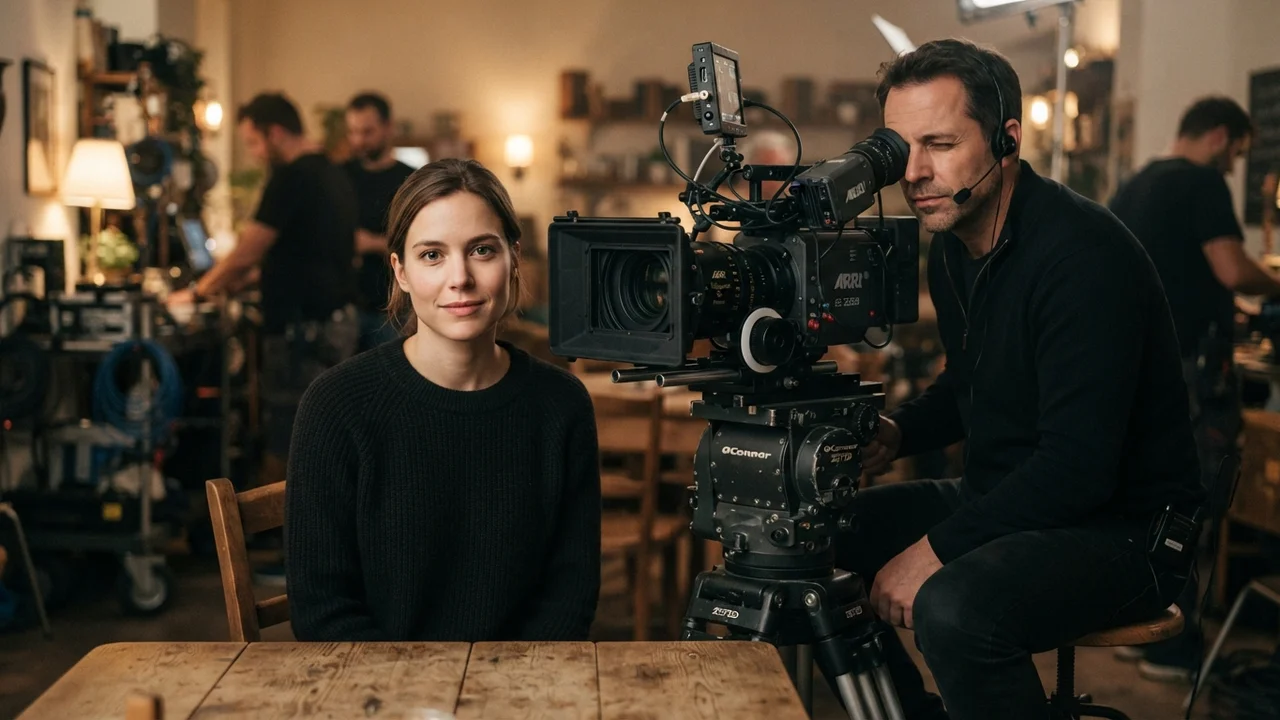
Eye level camera position at character height (standard 1.65m), creating natural perspective and viewer identification with on-screen subjects.

Technical Details

The exact height varies depending on the average height of the target audience: in Europe, the standard is 1.65 meters, in the USA, it is 1.68 meters. Modern camera tripods use markings at 165 cm as an "eye level" reference. In Steadicam shots, eye level corresponds to the operator's natural arm position, typically 10-15 cm below their eye line. Gimbal systems offer precise height adjustment with detents every 5 cm around the standard height.

History & Development

D.W. Griffith already consciously used eye level in "The Birth of a Nation" in 1915 as a narrative norm from which deviations were made to achieve dramatic effects. Systematic codification occurred in 1930 by German cinematographer Karl Freund, who first documented exact height specifications for camera positioning. The Dogme 95 Manifesto of 1995 elevated eye level to a requirement to simulate "natural" vision.

Practical Use in Film

In "Schindler's List" (1993), Steven Spielberg consistently uses eye level for dialogues between equals, while power imbalances are visualized through deviations. The Coen Brothers establish eye level as the default setting in "No Country for Old Men" (2007), from which deviations only occur when Anton Chigurh appears. In documentaries like "Free Solo" (2018), eye level forces identification with the protagonists without artistic exaggeration.

Comparison & Alternatives

Eye level is clearly distinguished from the frog perspective (below 1.20 meters) and the bird's-eye view (above 2.20 meters). Shoulder height is 15-20 cm higher and creates slight dominance. Modern drone cinematography expands the spectrum: DJI Ronin 4D allows seamless transitions between eye level and extreme positions within a single shot. Virtual reality demands constant eye level, as deviations can cause nausea.
From the crafts

Perspectives

Cinematographer

Ich setze Augenhöhe als visuellen Anker, von dem bewusste Abweichungen ihre Wirkung entfalten – ein 15-Grad-Aufschwenk von Augenhöhe zur leichten Untersicht verstärkt bereits die Präsenz einer Figur messbar. Meine Stativ-Crew kennt die 165cm-Markierung auswendig, sodass wir bei Dialogszenen binnen Sekunden zur Neutralposition zurückkehren können.

Director

Augenhöhe fungiert als emotionale Grundlinie meiner Bildsprache – hier begegnen sich Figuren auf Gleichberechtigung, hier fühlt sich das Publikum sicher. Sobald ich diese Norm etabliert habe, wird jede Kamerabewegung nach oben oder unten zur bewussten Manipulation der Zuschauer-Empathie, die ich dosiert als dramaturgisches Werkzeug einsetze.

Producer

Augenhöhe spart mir täglich 20-30 Minuten Setup-Zeit, da meine Crew diese Standardposition blind anfahren kann und weniger Beleuchtungsanpassungen nötig sind. Bei internationalen Koproduktionen definiere ich die lokale Augenhöhe bereits in der Prep, um kulturelle Unterschiede in der Körpergröße zu kompensieren und einheitliche Optik zu gewährleisten.

More in the lexikon

Related terms

Test your knowledge

Quiz

1. Zu welchem Department gehört „Augenhöhe"?

2. Wie viele verschiedene Fachperspektiven bietet dieser Eintrag?

Report an error
From the Filmfarm ecosystem

Understand visual language, budget productions, connect crew.

The Lexikon is part of the Filmfarm ecosystem — alongside budgeting (FilmBalance), an industry magazine (FilmCircus) and crew networking (FilmCall, CrewMesh). One shared vocabulary for the whole production.

FilmFarm FilmRadarComing soonFilmPulseComing soonFilmNumbersComing soonFilmCapitalComing soonFilmLabComing soonFilmBalanceComing soonFilmCircusComing soon