Technical Details
The Dolby Atmos Mastering Suite operates at a sample rate of 48 kHz with 24-bit resolution. Audio objects are provided with metadata that defines x, y, and z coordinates, as well as size and motion paths. Cinema playback uses a 9.1 bass layout (Left, Center, Right, Surround, Back Surround plus Subwoofer) extended with overhead speakers in four zones. Home theater implementations range from 5.1.2 to 9.1.6 configurations, with the last digit indicating the number of height speakers. The Dolby Atmos Renderer calculates the optimal distribution of audio objects to the available speakers in real-time.
History & Development
Dolby Laboratories introduced Atmos at CinemaCon in 2012. The first film with an Atmos mix was "Brave" (Pixar, 2012), followed by "Life of Pi" as the first live-action film in 2012. In 2014, Dolby expanded the system to home theater applications. In 2017, Netflix integrated Atmos into its streaming offerings, followed by implementation in video game consoles in 2018. Since 2020, the format also supports binaurally encoded headphone playback via smartphones and tablets.
Practical Application in Film
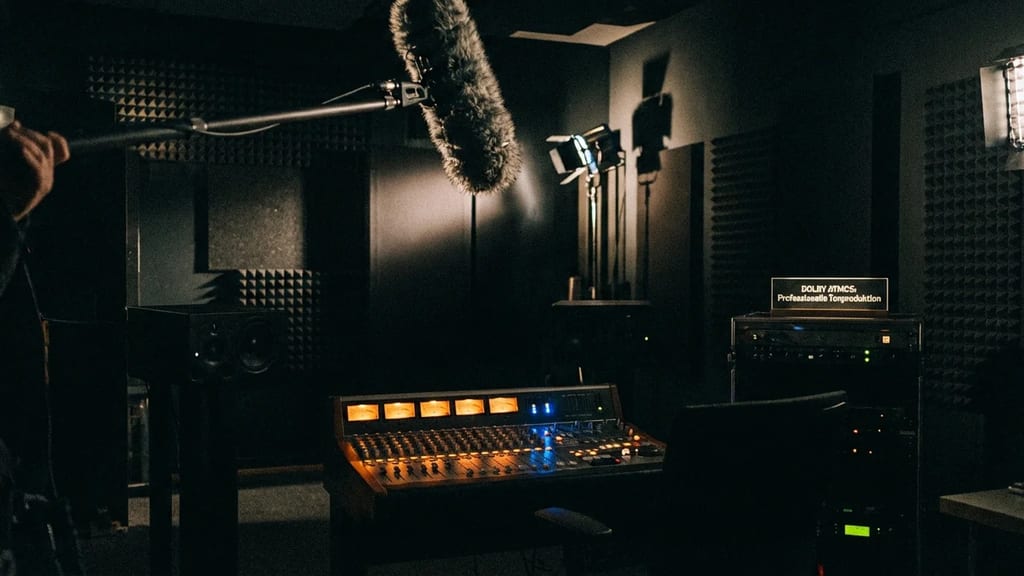
"Mad Max: Fury Road" (2015) utilized Atmos for precise positioning of vehicle sounds in a 360-degree space. In "Blade Runner 2049" (2017), the overhead layer enhanced the futuristic atmosphere with floating vehicles and rain from above. The Atmos workflow requires specialized mixing studios like the Dolby Screening Rooms or appropriately equipped facilities. Sound designers create separate stems for objects and beds, making post-production complex but flexible. Disadvantages include higher mixing costs and limited cinema distribution – in 2023, approximately 8,000 screens worldwide featured Atmos playback.
Comparison & Alternatives
Atmos differs from channel-based 7.1 surround through its object-based approach – sounds are not assigned to fixed speakers but are treated as movable entities. Competing formats include DTS:X (introduced in 2015) and Auro-3D, which also offer three-dimensional sound. Sony 360 Reality Audio focuses on music streaming. While traditional 5.1/7.1 is sufficient for standard productions, Atmos is preferred for action, science fiction, and animated films with complex sound design. Documentaries and dialogue-driven films benefit less from the additional technical effort.