Filmlexikon.
Support
Detuned Lens
Camera · Equipment

Detuned Lens

Murnau AI illustration
anamorphic lens anamorphic projection lens angenieux optimo prime arri master prime arri signature prime arri ultra prime arri zeiss variable prime atlas lens co

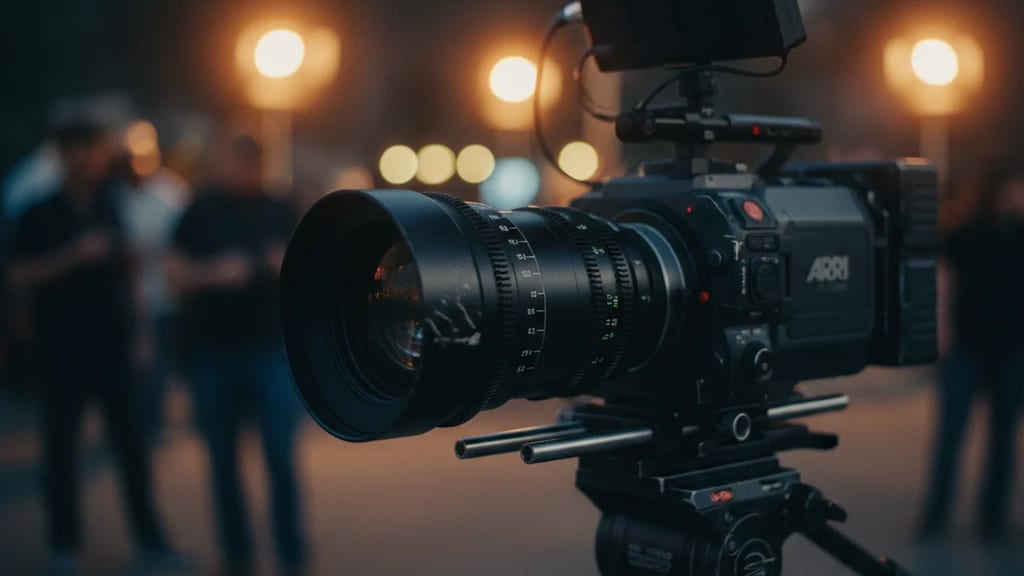
Lens with intentional optical aberrations—coma, chromatic distortion—built in to achieve a softer, more organic image aesthetic.

Technical Details

Detuning is primarily achieved by axially shifting the front or rear lens group or by decentering individual elements. Typical parameters include coma aberrations of 0.5-1.2 stops at the image edges and chromatic aberrations with color fringing 2-4 pixels wide at 4K resolution. Modern detuned lenses, such as the Cooke S4/i Uncoated or ARRI Signature Primes, also utilize special coatings with reduced transmission (85-90% instead of 98-99%). Mechanically, a distinction is made between permanently detuned lenses from the factory and subsequently modified series by specialized workshops like TLS or Otto Nemenz.

History & Development

The first documented use occurred in 1971 in Gordon Willis's work on "The Godfather," where Panavision lenses were deliberately de-tuned. Cinematographer Conrad Hall perfected the technique in 1999 for "American Beauty" with specially prepared Zeiss Super Speeds. In 2005, Cooke introduced the first mass-produced detuned lenses with the S4/i Uncoated. ARRI followed in 2017 with the Signature Primes, which feature factory-controlled aberrations.

Practical Use in Film

Roger Deakins used detuned Zeiss Master Primes for the prison sequences in "1917" (2019) to create emotional distance. Netflix productions like "Mindhunter" consistently use Cooke S4/i Uncoated for an authentic 70s look. The workflow requires precise test shots, as aberrations vary depending on focal length and aperture. Focus pulling becomes more complex due to an irregular focus fall-off. Digital color correction must account for the increased chromatic aberrations.

Comparison & Alternatives

Detuned lenses differ from vintage lenses by having controlled, reproducible aberrations compared to age-related changes. Pro-Mist or Black Pro-Mist filters create similar softening effects but do not influence the characteristic edge softness. Modern alternatives include digital post-effects like the DaVinci Resolve Lens Blur plugin or specialized LUTs. For budgets under 50,000 Euros, subsequently modified vintage lenses are an option, while high-end productions opt for Signature Primes (daily rental approx. 180-220 Euros).
From the crafts

Perspectives

Cinematographer

Ich verwende Detuned-Objektive gezielt für organischere Bildwirkung, besonders bei Nahaufnahmen wo die Randunschärfe Gesichter weicher modelliert. Die veränderte Bokeh-Charakteristik mit leichten Farbsäumen verleiht Hintergrundlichtern mehr Dimension, erfordert aber präzisere Belichtungsmessung da die Aberrationen bei verschiedenen T-Stops unterschiedlich stark ausgeprägt sind.

Director

Detuned-Objektive setze ich ein, um technische Perfektion zu durchbrechen und emotionale Nähe zu schaffen – der leichte "Imperfektions-Look" lässt Charaktere menschlicher wirken. Besonders in Dramen nutze ich die verstärkte Randunschärfe, um Isolation zu visualisieren, während die chromatischen Aberrationen nostalgische Stimmungen unterstützen.

Producer

Detuned-Objektive bedeuten 15-20% höhere Mietkosten gegenüber Standard-Optiken, sparen aber Post-Production-Zeit da weniger digitale Nachbearbeitung nötig ist. Ich kalkuliere zusätzlich einen halben Tag für Objektivtests ein, da die Aberrationen bei verschiedenen Kameras unterschiedlich reagieren können – bei TV-Serien amortisiert sich das durch den konsistenten Look über alle Folgen.

More in the lexikon

Related terms

Test your knowledge

Quiz

1. Was beschreibt „Detuned-Objektiv" am besten?

2. Zu welchem Department gehört „Detuned-Objektiv"?

3. Wie viele verschiedene Fachperspektiven bietet dieser Eintrag?

Report an error
From the Filmfarm ecosystem

Understand visual language, budget productions, connect crew.

The Lexikon is part of the Filmfarm ecosystem — alongside budgeting (FilmBalance), an industry magazine (FilmCircus) and crew networking (FilmCall, CrewMesh). One shared vocabulary for the whole production.

FilmFarm FilmRadarComing soonFilmPulseComing soonFilmNumbersComing soonFilmCapitalComing soonFilmLabComing soonFilmBalanceComing soonFilmCircusComing soon