Overview
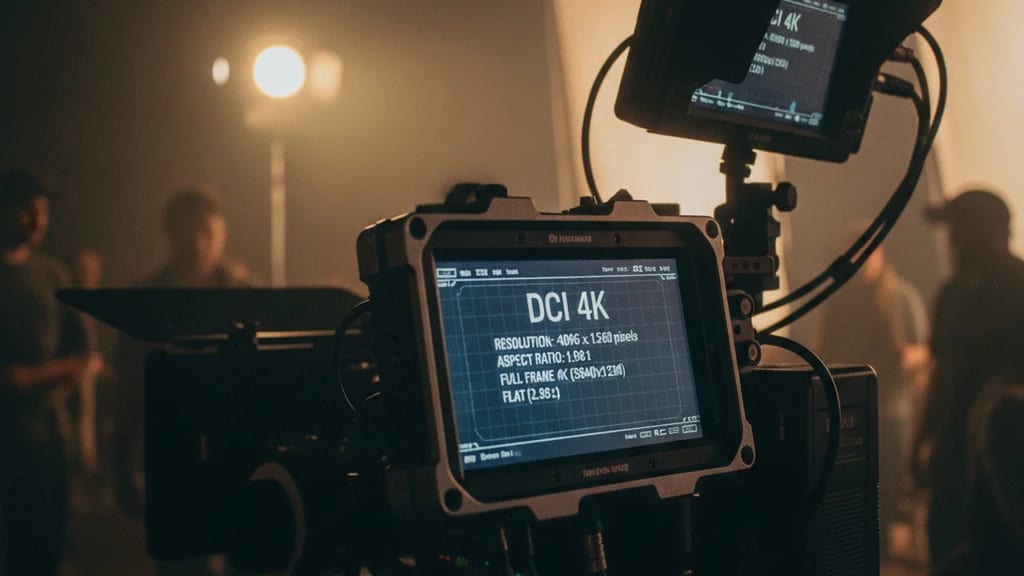
DCI 4K refers to the resolution standard for digital cinema, defined by the Digital Cinema Initiatives (DCI) – an alliance of major Hollywood studios (including Disney, Fox, Paramount, Sony, Universal, Warner Bros.) founded in 2002. DCI 4K is not lighting or grip equipment, but a container and format specification for theatrical distribution. The specifications are anchored in the Digital Cinema System Specification (DCSS) and standardized by SMPTE standards (SMPTE 428 series).
The DCI 4K container has a horizontal resolution of 4096 pixels. This distinguishes it from the consumer and broadcast standard UHD (3840 x 2160 pixels, aspect ratio 16:9), which applies to television and streaming. DCI 4K is wider and at home in the cinema workflow.
Technical Specifications
Container Resolution: 4096 x 2160 pixels (approx. 8.85 megapixels), aspect ratio ≈ 1.90:1 (exactly 256:135).
Within the container, two active image areas are standardized for projection:
| Format | Active Resolution | Aspect Ratio |
|---|
| Full Container | 4096 x 2160 | ≈ 1.90:1 |
| Flat | 3996 x 2160 | 1.85:1 |
| Scope (CinemaScope) | 4096 x 1716 | ≈ 2.39:1 |
For distribution as a Digital Cinema Package (DCP), the following are additionally specified:
- Codec: JPEG 2000
- Color Space: device-independent DCI XYZ
On-Set Usage
On set, DCI 4K is primarily relevant as a recording and delivery format. Many cinema cameras offer their own DCI 4K option (4096 px wide) alongside the UHD mode (3840 px wide). Those planning theatrical distribution shoot in DCI 4K to utilize the full cinema aspect ratio and wider image area; for TV and streaming delivery, however, UHD is the appropriate target.
The choice influences framing, cropping in post-production, and subsequent DCP creation. Since DCI 4K is slightly wider than UHD, camera, framing, and monitoring decisions on set must align with the planned final format (Flat 1.85:1 or Scope 2.39:1) to avoid unwanted cropping during mastering.