Filmlexikon.
Support
Camera Tape
Lighting · Terms

Camera Tape

Murnau AI illustration
color temperature flow roll take

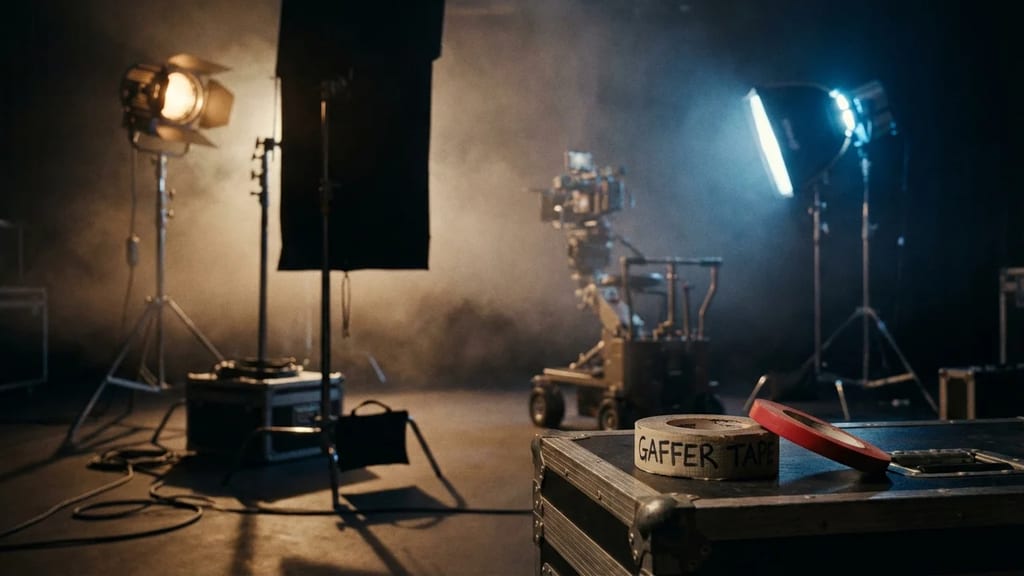
Matte black gaffer tape with 180 μm polyethylene backing and carbon coating used to eliminate lens flares and unwanted reflections on camera lenses.

Technical Details

Standard camera tape consists of a 180 μm thick polyethylene carrier film with a matte carbon coating and temperature-resistant acrylate adhesive. The adhesive strength is 8-12 N/25mm at room temperature, and the tape remains functional between -40°C and +80°C. Professional variants such as Permacel P-665 or Scapa 3159 can be removed without residue after months of use. Special versions for IMAX productions achieve a reflectivity of less than 1.5% through graphite additives.

History & Development

3M developed the first matte black adhesive tape in 1971 for NASA space missions to eliminate distracting reflections on instruments. Cinematographer Vilmos Zsigmond first adapted it for film productions in 1973 on "The Long Goodbye" to control lens flares. Starting in 1978, rental houses like Panavision introduced camera tape as standard equipment. Modern variants have integrated antistatic properties for digital sensors since 2010.

Practical Application in Film

Roger Deakins extensively used camera tape on "Blade Runner 2049" (2017) to create the characteristic hard light cuts without digital post-processing. The tape masks lens mounts in extreme backlight shots, prevents internal reflections between filter elements, and eliminates stray light from matte box edges. Gaffers use it for precise light shaping by partially taping LED panels, thus creating hard shadow edges without barndoors.

Comparison & Alternatives

Camera tape differs from gaffer tape by its matte surface and thinner construction, which prevents it from creating visible bumps on lenses. Duvetyne fabric absorbs light more effectively but cannot be positioned precisely. Modern matte box systems with integrated masking flags partially replace camera tape but offer less flexibility for spontaneous adjustments. For extreme temperature ranges or UV-intensive outdoor shots, special camera tape remains the only alternative.

From the crafts

Perspectives

Cinematographer

Ich verwende Kamera-Tape täglich zur Streulichtbekämpfung, besonders bei extremen Weitwinkelaufnahmen wo Barndoors nicht greifen. Das Band ist unverzichtbar bei Available-Light-Situationen – ein schmaler Streifen am Objektivtubus eliminiert oft störende Reflexionen, die in der Postproduktion Stunden kosten würden. Bei digitalen Sensoren achte ich auf antistatische Varianten, da sich sonst Staubpartikel magnetisch anziehen.

Director

Kamera-Tape ermöglicht mir präzise Kontrolle über Lichtführung ohne aufwendige Umbauten zwischen Takes. Bei Nahaufnahmen kann ich gezielt Hautpartien durch selektive Abschattung modellieren oder harte Lichtschnitte für Film Noir-Atmosphäre erzeugen. Das spart teure Drehtage, da wir nicht auf komplexe Licht-Setups warten müssen – ein Streifen Tape verändert oft die gesamte Bildstimmung.

Producer

Kamera-Tape kostet 15-25 Euro pro Rolle, spart aber täglich Hunderte von Euros durch verkürzte Setup-Zeiten und weniger Postproduktions-Aufwand. Meine Teams bestellen es palettenweise, da es universell einsetzbar ist und nie schlecht wird. Die rückstandslose Entfernung schützt teure Leihausrüstung vor Beschädigungen – defekte Objektive durch Klebereste kosten schnell fünfstellige Beträge.

More in the lexikon

Related terms

Test your knowledge

Quiz

1. Zu welchem Department gehört „Kamera-Tape"?

2. Wie viele verschiedene Fachperspektiven bietet dieser Eintrag?

Report an error
From the Filmfarm ecosystem

Understand visual language, budget productions, connect crew.

The Lexikon is part of the Filmfarm ecosystem — alongside budgeting (FilmBalance), an industry magazine (FilmCircus) and crew networking (FilmCall, CrewMesh). One shared vocabulary for the whole production.

FilmFarm FilmRadarComing soonFilmPulseComing soonFilmNumbersComing soonFilmCapitalComing soonFilmLabComing soonFilmBalanceComing soonFilmCircusComing soon