Technical Details
The original Ninja exclusively records in Apple ProRes 422 (HQ) and Avid DNxHD onto 2.5-inch SSDs with capacities up to 1TB. The input signal is via HDMI 1.3 with 8-bit 4:2:2 color depth at 1920x1080p up to 30fps or 1080i up to 60fps. The internal battery (Sony NP-F570 series) allows for approximately 2 hours of continuous operation at 7.4V. The aluminum housing measures 145x95x35mm and weighs 340g. Later variants like the Ninja-2 and Ninja Blade expanded codec support to include ProRes 422 LT and proxy modes.
History & Development
Atomos, founded in 2010 by Australian entrepreneur Jeromy Young, launched the first Ninja in 2011. The device revolutionized DSLR video production, as cameras like the Canon 5D Mark II only recorded heavily compressed H.264 internally. In 2012, the Ninja-2 followed with improved menu navigation, and in 2013, the Ninja Blade with SDI inputs. The Ninja series established the concept of affordable ProRes recorders and paved the way for modern 4K recorders like the Ninja V (2018).
Practical Use in Film
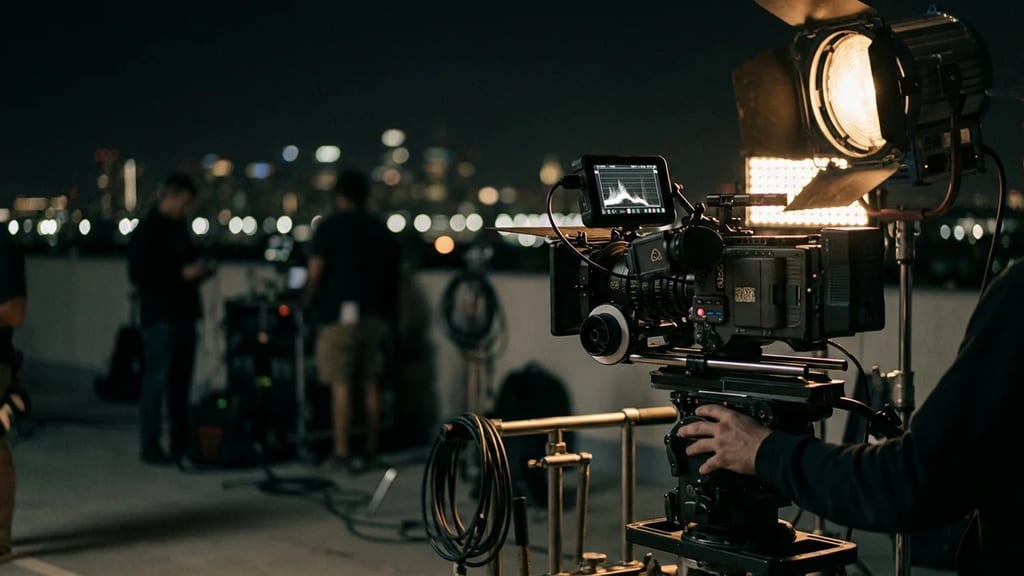
The Ninja enabled independent productions to access broadcast-ready codecs without expensive camera systems. Documentarians utilized the combination of the Canon 5D Mark III and Ninja for cinematic shots with 10-bit-like quality. The integrated monitor with Focus Peaking and Zebra Pattern replaced additional monitoring solutions. A typical workflow involved the HDMI Clean Output from the DSLR to the Ninja, with parallel recording of compressed camera footage as a backup. Limitations arose from HDMI cable failures and the 30-minute recording limit of many DSLR cameras.
Comparison & Alternatives
Unlike internal camera codecs, ProRes offers significantly less compression (220 Mbps vs. 45 Mbps H.264) and simplifies post-production. BlackMagic Video Assist competed from 2015 onwards with similar functionality at lower prices. Modern alternatives like the Atomos Ninja V support 4K ProRes RAW and 10-bit HDR recording. Internal RAW recording on current cameras (Canon R5, Sony FX3) reduces the need for external recorders for many applications today, although the Ninja series continues to excel in longer recording times and advanced monitoring features.
Current News
After seven years, Atomos presents a complete redesign of the Ninja series in 2024. The new models, Ninja TX and TX Go, support CFexpress Type B cards for the first time and feature a central, balanced battery mount. While the TX handles HDMI and SDI inputs up to 6K 30p and offers wireless timecode synchronization, the TX Go focuses on HDMI recording without SDI connections.