Filmlexikon.
Support
Angenieux DP
Camera · Equipment

Angenieux DP

Murnau AI illustration
angenieux flow para roll take

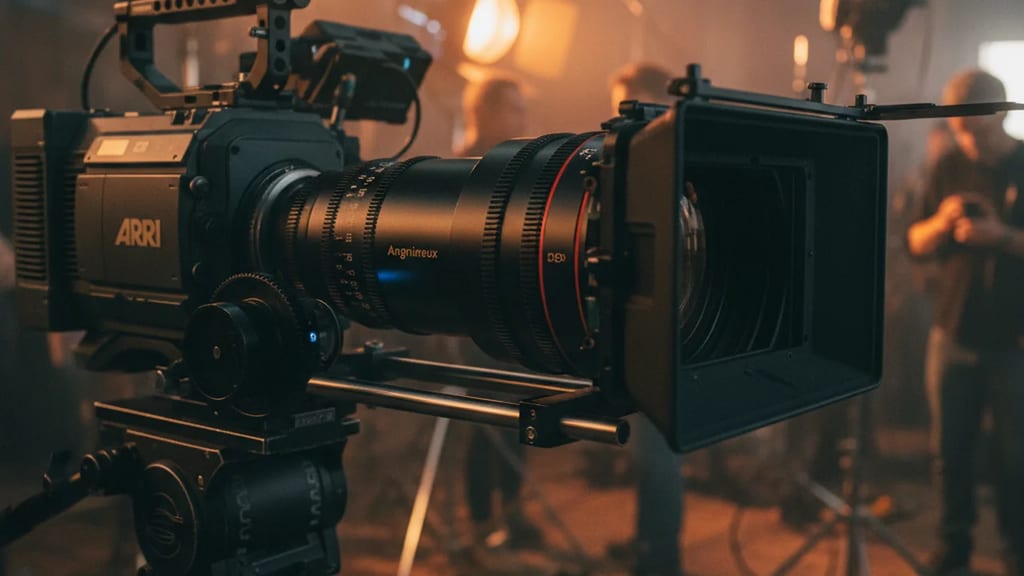
Angenieux DP: modular PL-mount zoom lenses for digital cinema cameras, developed 2008 for Super35 sensors with continuous zoom and distinctive French bokeh rendering.

Technical Details

The DP series is based on a modular PL-mount system and weighs between 2.8kg (DP 16-42) and 3.2kg (DP 30-80). The lenses feature a 114mm front element and a uniform 0.8mm gear pitch for follow focus systems. The minimum focus distance is 60cm, and the image circle fully covers Super35 sensors. All DP lenses utilize an 11-blade iris for smooth bokeh and feature Angenieux's proprietary Optimus coating to reduce flares and ghosting.

History & Development

Angenieux introduced the DP series in 2008, in response to the increasing digitalization of film production and the transition from 35mm film to digital cameras like the RED ONE. The series arose from the realization that digital sensors have different optical requirements than film emulsion. In 2012, Angenieux expanded the series with the DP 30-80mm, followed by a revised version in 2015 with improved mechanics and reduced weight.

Practical Use in Film

The DP series quickly established itself in the independent film scene and among documentary filmmakers. Roger Deakins used the DP 16-42mm for scenes in "Skyfall" (2012), particularly for handheld sequences in the Istanbul chase scenes. The compact design makes the lenses ideal for Steadicam shots and gimbal systems. The continuous zoom allows for smooth focal length changes during shooting, which is appreciated for crash zooms or subtle compositional adjustments within a shot.

Comparison & Alternatives

The DP series is positioned between consumer zooms and high-end cine lenses like the Angenieux Optimo series. While Optimo lenses offer larger zoom factors (15:1 or 24:1), DP lenses are more manageable and cost-effective. Competing systems like Canon's CN-E series or Fujinon's Cabrio lenses offer similar specifications, but the typical Angenieux bokeh and French optical character differ significantly from Japanese alternatives.

From the crafts

Perspectives

Cinematographer

Als DoP schätze ich an den DP-Objektiven die konsistente Farbwiedergabe über den gesamten Zoombereich – keine Farbverschiebungen wie bei günstigeren Alternativen. Das DP 16-42mm ist mein Standardobjektiv für Handheld-Arbeit, da es bei T2.8 durchgängig scharf abbildet und das Gewicht auch bei längeren Drehtagen erträglich bleibt.

Director

Die DP-Serie gibt mir die Flexibilität, innerhalb einer Einstellung von Totale zu Halbtotale zu wechseln, ohne den Schnitt zu unterbrechen – perfekt für emotionale Wendepunkte in Dialogen. Das organische Bokeh der französischen Optik verleiht besonders Gesichtern eine weichere, filmischere Anmutung als die oft zu sterilen deutschen oder japanischen Konkurrenzprodukte.

Producer

Mit 15.000€ pro Objektiv bewegen sich die DP-Modelle im mittleren Preissegment – günstiger als Optimos, aber teurer als Canon CN-E. Der Wiederverkaufswert ist stabil, da Angenieux einen soliden Reparaturservice bietet. Für Indies sind sie oft die erste Wahl, wenn das Budget für Optimos nicht reicht, aber trotzdem Cine-Qualität gefordert wird.

More in the lexikon

Related terms

Test your knowledge

Quiz

1. Was beschreibt „Angenieux DP" am besten?

2. Zu welchem Department gehört „Angenieux DP"?

3. Wie viele verschiedene Fachperspektiven bietet dieser Eintrag?

Report an error
From the Filmfarm ecosystem

Understand visual language, budget productions, connect crew.

The Lexikon is part of the Filmfarm ecosystem — alongside budgeting (FilmBalance), an industry magazine (FilmCircus) and crew networking (FilmCall, CrewMesh). One shared vocabulary for the whole production.

FilmFarm FilmRadarComing soonFilmPulseComing soonFilmNumbersComing soonFilmCapitalComing soonFilmLabComing soonFilmBalanceComing soonFilmCircusComing soon