Overview
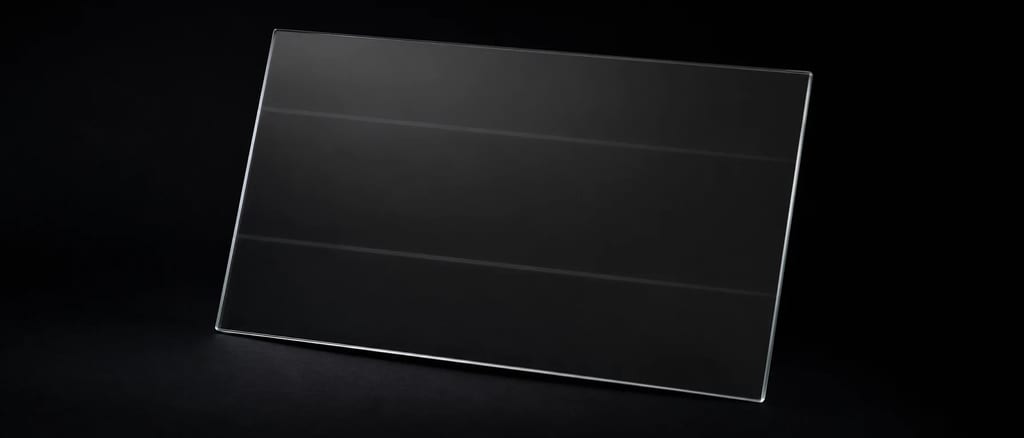
The term "6.6x6.6 Filter" does not refer to a single product but to a standardized square filter format for professional cinematography. The designation indicates the edge length of the filter glass: 6.6 × 6.6 inches. Filters of this format are not screwed onto the lens thread but are inserted as glass plates into the filter tray or filter frame of a matte box in front of the lens.
The 6.6x6.6 format is the larger, square sibling of the widely used rectangular 4×5.65" format. The square geometry allows the filter to be rotated in the tray – an advantage for polarizing filters and graduated filters, whose effect depends on their orientation. Due to the larger glass surface area, the format is particularly suitable for wide-angle optics and large sensor formats, where smaller filters could cause vignetting.
Technical Data
- Format: square, 6.6 × 6.6 inches (equivalent to approx. 16.76 × 16.76 cm or about 168 mm edge length)
- Glass Thickness: typically 4 mm (industry standard from several manufacturers, including NiSi)
- Mounting: Inserted into the filter tray or frame of a matte box; no screw thread
- Adaptation: Reduction frames allow the use of smaller formats (e.g., 4×5.65") in a 6.6x6.6 matte box
The format is supported by numerous matte box systems, including ARRI LMB 6x6, Bright Tangerine, and models from Tilta. Filters in this format come from manufacturers such as NiSi, Lee Filters, Tiffen, and Schneider.
Filter Types in this Format
- ND Filters (Neutral Density) for exposure and aperture control
- IRND Filters with additional infrared blocking for clean color reproduction on digital sensors
- Graduated ND Filters for darkening skies or bright image areas
- Polarizing Filters (linear and circular/CPL), often rotatable
- Diffusion/Mist Filters for softening and smoothing skin tones
- Clear/Protection Filters (Pure Clear) without optical effect, used as front protection
Use on Set
6.6x6.6 filters are primarily used in higher-end feature film, commercial, and series productions, typically in a matte box attached to the camera head. The camera assistant (Focus Puller or 2nd AC) changes the glass plates directly in the tray without disassembling the lens. The larger glass surface area compared to the 4×5.65" format provides a buffer against vignetting with wide-angle optics and large sensors, but comes with increased weight and higher acquisition costs.