Filmlexikon.
Support
Matte Box
Camera · Terms

Matte Box

Murnau AI illustration
compositing keying green screen blue screen chroma key roto rotoscoping clip on matte box

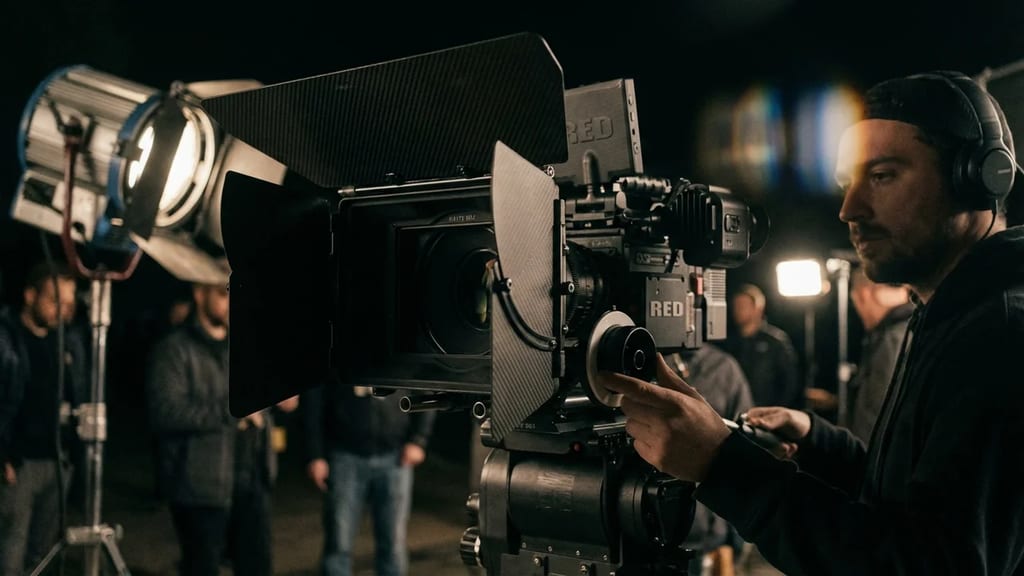
Light-shielding hood with adjustable flags and filter slots for 4×4″ to 6.6×6.6″ filters; prevents lens flares and allows filter changes during shooting.

Technical Details

Professional matte boxes consist of a 15-19 mm thick carbon or aluminum construction with adjustable top, bottom, and side flags. The filter trays accommodate standardized 4x4", 4x5.65", or 6.6x6.6" filters, with up to three filter stages arranged one above the other. They are attached via studio rods with 15mm or 19mm diameter, with distances to the lens ranging from 80-300 mm depending on the focal length. Modern systems like ARRI LMB or Chrosziel MatteBox achieve weights between 0.8 and 2.4 kg.

History & Development

The first matte boxes emerged in the 1920s as simple cardboard lens hoods. In 1958, Chrosziel developed the first adjustable matte box with standardized filter trays for the German Bavaria Studios. ARRI presented the modular LMB system in 1982, which for the first time enabled tool-free adjustment to different lens diameters. Since 2010, carbon constructions have dominated the market, offering the same stability at 40% less weight.

Practical Use in Film

Roger Deakins consistently used ARRI LMB-6 matte boxes with special fog filters for the dystopian atmosphere in "Blade Runner 2049". During daylight exterior shots, the matte box prevents lens flares and contrast loss, while the filter trays hold graduated ND filters for darkening the sky. The workflow requires constant collaboration between the 1st AC and the gaffer, as filter changes must remain possible during takes.

Comparison & Alternatives

Compared to lens filters, the matte box offers larger filter areas without vignetting on wide-angle lenses under 20mm focal length. Digital alternatives like software de-faring or LED walls reduce the need for filters but do not replace mechanical light baffling. Clip-on matte box systems like Tilta Mirage compete for smaller cameras but do not achieve the stability of rod support systems in professional configurations over 8 kg weight.
From the crafts

Perspectives

Cinematographer

Ich dimensioniere das Kompendium nach dem weitesten Objektiv meiner Brennweiten-Palette – ein 4x4" System reicht mir für 28mm aufwärts, darunter brauche ich 4x5,65". Die verstellbaren Flags justiere ich für jede Brennweite neu, um maximale Abschattung ohne Vignettierung zu erreichen, dabei teste ich immer die Ecken meines Sensors im Monitor.

Director

Für mich ist das Kompendium ein Gestaltungswerkzeug – mit Graduated ND-Filtern kann ich die Himmelsstimmung bereits beim Dreh festlegen, statt alles in die Post zu verschieben. Bei Nachtszenen mit praktischen Lichtquellen im Bild verwende ich bewusst Pro-Mist Filter im Kompendium, um die Lichtquellen weicher und filmischer zu machen, ohne die Schärfe der Gesichter zu beeinträchtigen.

Producer

Ein professionelles Kompendium-Set kostet 8.000-15.000 Euro, rechnet sich aber durch die Zeitersparnis in der Postproduktion – weniger Compositing bedeutet weniger VFX-Budget. Bei internationalen Co-Produktionen achte ich darauf, dass wir Kompendien mit Standard-Filtergrößen verwenden, damit wir weltweit kompatibles Equipment mieten können, statt alles zu verschiffen.

More in the lexikon

Related terms

Test your knowledge

Quiz

1. Was beschreibt „Kompendium" am besten?

2. Zu welchem Department gehört „Kompendium"?

3. Wie viele verschiedene Fachperspektiven bietet dieser Eintrag?

Report an error
From the Filmfarm ecosystem

Understand visual language, budget productions, connect crew.

The Lexikon is part of the Filmfarm ecosystem — alongside budgeting (FilmBalance), an industry magazine (FilmCircus) and crew networking (FilmCall, CrewMesh). One shared vocabulary for the whole production.

FilmFarm FilmRadarComing soonFilmPulseComing soonFilmNumbersComing soonFilmCapitalComing soonFilmLabComing soonFilmBalanceComing soonFilmCircusComing soon