Filmlexikon.
Support
Zenitar 16mm Fisheye
Camera · Technique

Zenitar 16mm Fisheye

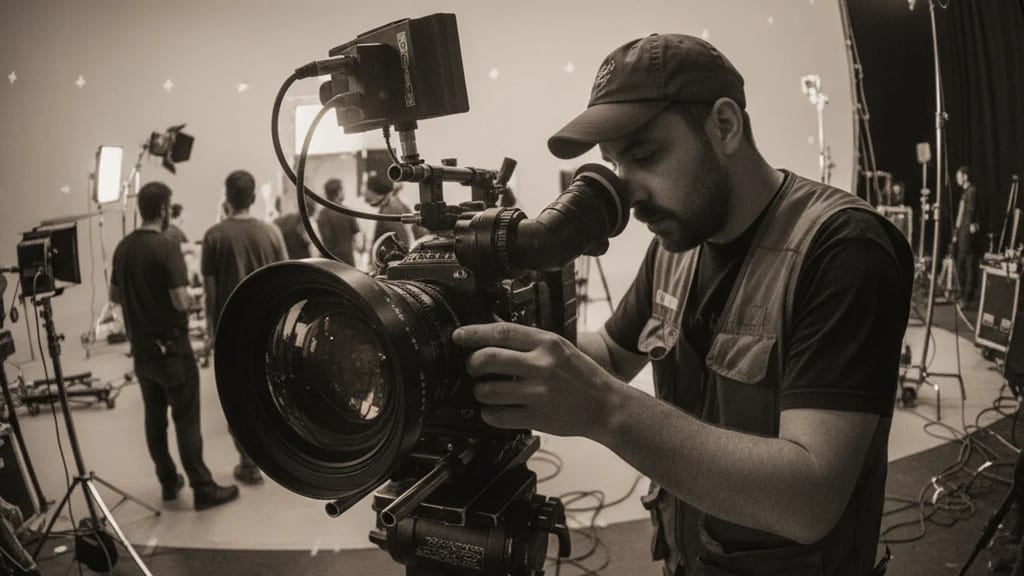
Murnau AI illustration
flow para roll take

Soviet 16mm fisheye lens by KMZ (1965–1990s), f/2.8–22, 900g; produces extreme distortion for surreal cinematography.

Technical Details

The lens has a focal length of 16mm with a maximum aperture of f/2.8, which can be stopped down to f/22. The optical construction consists of 9 elements in 8 groups with a special retrofocus design. The lens weighs 900g and has a filter diameter of 72mm, with only gel filters being usable, screwed into the rear element. It was mainly available with an M42 mount, later also in Pentax K and Canon EF mounts. The minimum focusing distance is 0.2m with a reproduction ratio of 1:7.

History & Development

KMZ developed the Zenitar in 1965 based on post-war German Zeiss designs. Mass production began in 1968 and continued into the 1990s. The lens was part of the Soviet strategy to produce professional photographic equipment for export. After the collapse of the USSR, various successor companies took over production, with quality fluctuating significantly. Since the 2000s, Zenit has been producing new versions with improved coatings.

Practical Use in Film

In film production, the Zenitar is used for extreme establishing shots and surreal sequences. Russian director Alexei Balabanov used it in "Brat" (1997) for St. Petersburg street scenes. The extreme distortion is suitable for dream sequences or depicting altered states of consciousness. On 16mm film cameras, the crop factor results in an oval image circle instead of a round one. The lens requires manual focusing and exposure metering, as there are no electronic contacts.

Comparison & Alternatives

Unlike modern fisheye lenses such as the Sigma 15mm f/2.8 or Canon EF 8-15mm, the Zenitar produces significantly stronger chromatic aberrations and vignetting. However, these "flaws" are often appreciated as characteristic. The Peleng 8mm f/3.5 from the same Soviet tradition offers even more extreme distortion. Modern alternatives like the Laowa 12mm f/2.8 Zero-D completely eliminate fisheye distortion and are suitable for different applications.
From the crafts

Perspectives

Cinematographer

Das Zenitar zwingt mich zur manuellen Arbeit - kein Autofokus, keine Blendenautomatik, nur pure Optik und Erfahrung. Die extreme Vignettierung und chromatischen Aberrationen an den Bildrändern plane ich bewusst ein oder korrigiere sie in der Post, je nach gewünschtem Look. Besonders bei Available Light schätze ich die f/2.8 Offenblende, auch wenn die Schärfe dann deutlich nachlässt.

Director

Mit dem Zenitar hole ich Räume komplett ins Bild und schaffe surreale Perspektiven, die das Publikum aus der Komfortzone reißen. Die kreisförmige Verzerrung nutze ich für subjektive Kamera oder um Klaustrophobie zu verstärken - der Betrachter fühlt sich wie durch ein Bullauge gefangen. Der vintage sowjetische Look passt perfekt zu Geschichten über Entfremdung oder osteuropäische Settings.

Producer

Das Zenitar kostet gebraucht zwischen 200-400 Euro statt mehrerer Tausend für moderne Fisheyes - ideal für Low-Budget-Produktionen mit experimentellem Anspruch. Allerdings verlängert die reine Handarbeit die Drehzeit, und ich muss einen erfahrenen Focus Puller einplanen. Die fehlende elektronische Anbindung bedeutet mehr Takes für die perfekte Belichtung, was Filmkosten hochtreibt.

More in the lexikon

Related terms

Test your knowledge

Quiz

1. Zu welchem Department gehört „Zenitar 16mm Fischauge"?

2. Wie viele verschiedene Fachperspektiven bietet dieser Eintrag?

Report an error
From the Filmfarm ecosystem

Understand visual language, budget productions, connect crew.

The Lexikon is part of the Filmfarm ecosystem — alongside budgeting (FilmBalance), an industry magazine (FilmCircus) and crew networking (FilmCall, CrewMesh). One shared vocabulary for the whole production.

FilmFarm FilmRadarComing soonFilmPulseComing soonFilmNumbersComing soonFilmCapitalComing soonFilmLabComing soonFilmBalanceComing soonFilmCircusComing soon