Filmlexikon.
Support
ZEISS High Speed
Camera · Equipment

ZEISS High Speed

Murnau AI illustration
flow high speed para roll speed take

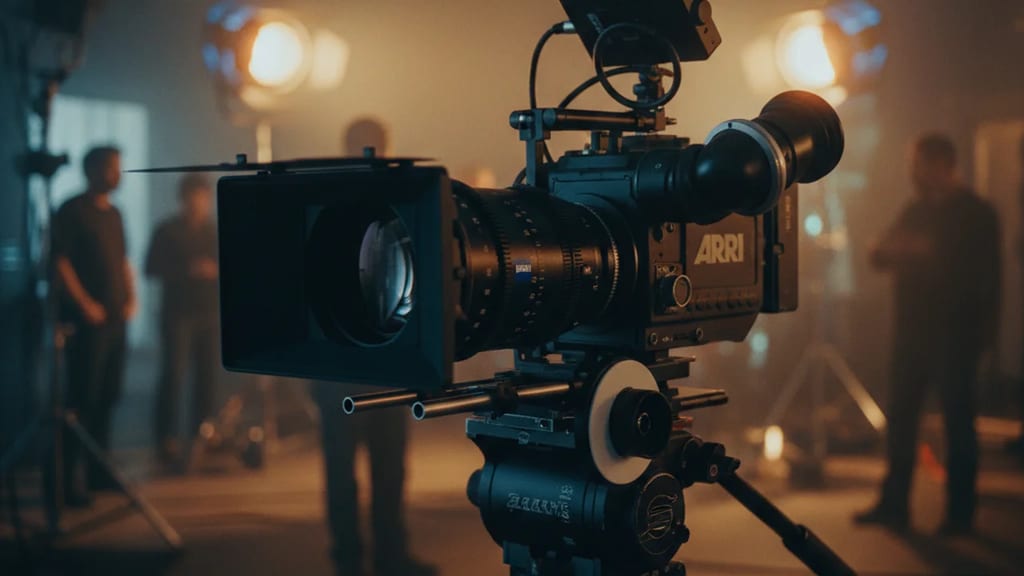
ZEISS High Speed lens series with T1.3 aperture for available light cinematography, PL mount, 18–85mm focal lengths, characterized by soft bokeh rendering.

Technical Details

All High Speed lenses utilize the PL mount system and weigh between 1.9kg (85mm) and 2.4kg (18mm). The focus ring rotates 300° for precise focus pulling, and the iris ring rotates 90°. The lenses feature a 95mm front lens diameter and a uniform 0.8 gear pitch for follow focus systems. The minimum focus distance ranges from 0.3m (18mm) to 0.6m (85mm). The optical design uses up to 16 elements in 11 groups with ZEISS T* multi-layer coating for flare reduction.

History & Development

Carl Zeiss introduced the High Speed series in 2009 in response to the growing demand for available light cinematography. Development occurred in parallel with the RED ONE camera and other digital cinema cameras that enabled higher ISO values. In 2012, ZEISS expanded the series with the 85mm lens. The optical DNA originates from the proven Compact Primes but was recalculated for T1.3, with ZEISS deliberately avoiding larger focal lengths as they would have become too heavy due to their construction.

Practical Use in Film

Christopher Nolan used ZEISS High Speed lenses for night scenes in "The Dark Knight Rises" (2012) to naturally utilize Gotham City's street lighting. Cinematographer Hoyte van Hoytema employed them in "Her" (2013) for intimate interior scenes with available light. The lenses are particularly suitable for handheld shooting in low light, as the wide aperture allows for faster shutter speeds. The characteristic look features soft bokeh with round out-of-focus circles and minimal chromatic aberration even at T1.3.

Comparison & Alternatives

In contrast to the standard Compact Primes (T2.1), High Speed lenses offer one stop more light but are significantly heavier and more expensive. Competing systems such as the Cooke S4/i (T2.0) or ARRI Master Primes (T1.3-T2.8) achieve similar light sensitivity but differ in optical character. Modern alternatives include the ZEISS Supreme Primes (T1.5), introduced in 2019, which cover larger sensors but do not reach the extreme T1.3 aperture of the High Speed series.

From the crafts

Perspectives

Cinematographer

Ich schätze die High Speed Objektive für ihre konstante T1.3-Blende über alle Brennweiten, was mir bei Available-Light-Drehs maximale Flexibilität gibt. Das weiche Bokeh und die minimale Fokusatmung machen sie ideal für Close-ups mit geringer Schärfentiefe, wobei ich das höhere Gewicht beim Handheld-Einsatz einkalkulieren muss.

Director

Die T1.3-Blende erlaubt mir, Charaktere visuell zu isolieren und intime Momente durch extreme Schärfentiefen-Kontrolle zu verstärken. Besonders bei Dialog-Szenen kann ich mit der natürlichen Unschärfe emotionale Nähe schaffen und gleichzeitig störende Hintergründe ausblenden.

Producer

ZEISS High Speed Objektive kosten etwa 40% mehr als Standard Compact Primes, sparen aber Beleuchtungskosten bei Low-Light-Szenen und verkürzen Setup-Zeiten. Das Gewicht erfordert stärkere Kamera-Rigs, die Mietkosten liegen bei etwa 200€ pro Objektiv/Tag, was sich bei längeren Nachtdrehs durch eingesparte Beleuchtung amortisiert.

More in the lexikon

Related terms

Test your knowledge

Quiz

1. Was beschreibt „ZEISS High Speed" am besten?

2. Zu welchem Department gehört „ZEISS High Speed"?

3. Wie viele verschiedene Fachperspektiven bietet dieser Eintrag?

Report an error
From the Filmfarm ecosystem

Understand visual language, budget productions, connect crew.

The Lexikon is part of the Filmfarm ecosystem — alongside budgeting (FilmBalance), an industry magazine (FilmCircus) and crew networking (FilmCall, CrewMesh). One shared vocabulary for the whole production.

FilmFarm FilmRadarComing soonFilmPulseComing soonFilmNumbersComing soonFilmCapitalComing soonFilmLabComing soonFilmBalanceComing soonFilmCircusComing soon