Filmlexikon.
Support
ZEISS Lightweight Zoom
Camera · Equipment

ZEISS Lightweight Zoom

Murnau AI illustration
arri signature zoom canon flex zoom contra zoom dolly zoom dzofilm catta zoom hitchcock zoom leitz zoom sigma ff zoom

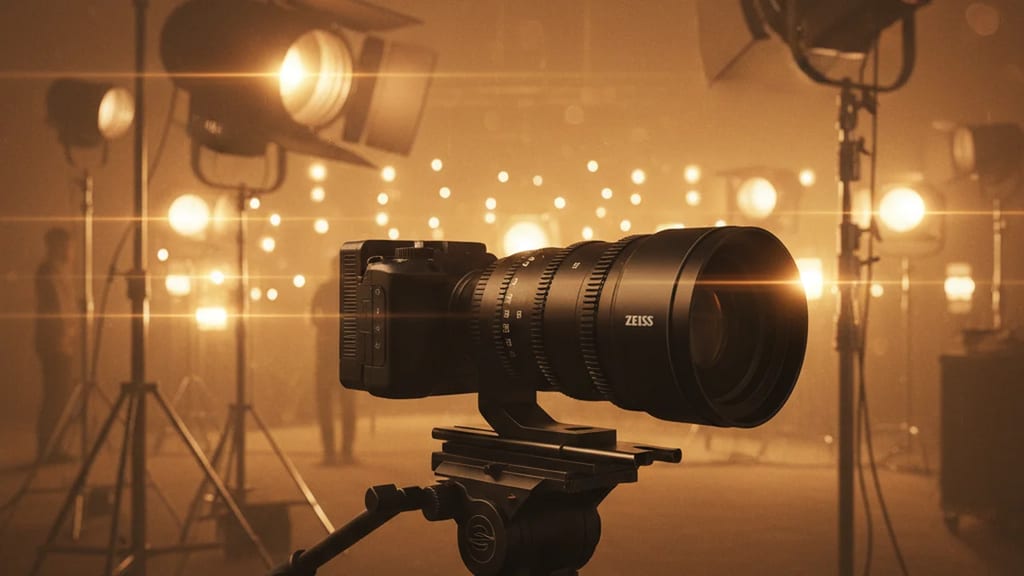
Compact ZEISS cinema zoom lenses engineered for reduced weight, ideal for handheld and gimbal rigs.

Technical Details

All LWZ lenses feature a constant aperture of T2.9 across the entire zoom range and a minimum focusing distance of 0.8m to 1.2m depending on the focal length. The optical design is based on 16-20 lens elements in 11-14 groups with special ED glass to minimize chromatic aberrations. The lens mount is available in PL-Mount and EF-Mount, with standardized gear rings (0.8 module) for follow focus systems. The zoom ring offers a 100° rotation angle, and the focus ring 300°, enabling precise manual operation.

History & Development

Zeiss developed the Lightweight Zoom series from 2012-2014 in response to the boom in DSLR film productions and compact digital cinema cameras like the RED Epic or Sony FS7. The first introduction took place at NAB 2014, with the 21-100mm serving as the debut model. In 2015, the focal lengths 15.5-45mm and 70-200mm followed. The series arose from the realization that traditional studio zooms like the Master Primes were too heavy and cumbersome for modern, mobile production methods.

Practical Use in Film

The LWZ.3 series is frequently used in documentaries, independent productions, and event cinematography where mobility and quick focal length changes are crucial. Cinematographer Roger Deakins used the 21-100mm for handheld sequences in "Blade Runner 2049," while the series was used for gimbal shots in Netflix productions like "Stranger Things." The constant T2.9 aperture allows for seamless focal length changes without exposure adjustments, which saves time, especially during run-and-gun shoots.

Comparison & Alternatives

Compared to Zeiss's Master Prime Zooms (2.8-4.1 kg), the LWZ offers significantly less weight with only a slight reduction in optical performance. Competing products include the Canon CN-E Zooms and the Fujinon MK series, with the latter being more compact but slower. For high-end studio productions, heavier optics like Cooke S4/i or ARRI Master Primes continue to be preferred, while the LWZ excels in documentary work and fast production cycles.
From the crafts

Perspectives

Cinematographer

Ich schätze besonders die konstante T2.9-Blende, die mir erlaubt, zwischen den Brennweiten zu wechseln ohne die Belichtung nachzuregeln – das spart bei handheld-Drehs entscheidende Sekunden. Die Schärfeleistung erreicht zwar nicht ganz das Niveau der Master Primes, aber für die meisten digitalen Produktionen ist die Bildqualität mehr als ausreichend, während das geringe Gewicht stundenlanges Arbeiten aus der Hand ermöglicht.

Director

Die LWZ-Serie gibt mir die Freiheit, spontan zwischen weiten Establishing-Shots und intimen Close-ups zu wechseln, ohne dass mein Team schwere Optiken tauschen muss – das hält den Rhythmus am Set aufrecht und die Schauspieler im Flow. Besonders bei emotionalen Szenen kann ich mit dem 21-100mm organisch vom Dialog-Setup in eine dramatische Nahaufnahme zoomen, ohne die Intimität durch technische Unterbrechungen zu zerstören.

Producer

Mit den drei LWZ-Objektiven decke ich 90% aller Brennweitenanforderungen ab, was Mietkosten um etwa 40% reduziert gegenüber einem Full-Set schwerer Primes – bei einem 20-Drehtage-Budget macht das schnell 15.000€ Unterschied aus. Die kompakte Bauweise reduziert außerdem Transportkosten und ermöglicht kleinere Crews, da weniger Grip-Equipment für schwere Optiken benötigt wird.

More in the lexikon

Related terms

Test your knowledge

Quiz

1. Was beschreibt „ZEISS Lightweight Zoom" am besten?

2. Zu welchem Department gehört „ZEISS Lightweight Zoom"?

3. Wie viele verschiedene Fachperspektiven bietet dieser Eintrag?

Report an error
From the Filmfarm ecosystem

Understand visual language, budget productions, connect crew.

The Lexikon is part of the Filmfarm ecosystem — alongside budgeting (FilmBalance), an industry magazine (FilmCircus) and crew networking (FilmCall, CrewMesh). One shared vocabulary for the whole production.

FilmFarm FilmRadarComing soonFilmPulseComing soonFilmNumbersComing soonFilmCapitalComing soonFilmLabComing soonFilmBalanceComing soonFilmCircusComing soon