Filmlexikon.
Support
Trim
Editing · Terms

Trim

Murnau AI illustration
head polissage harter schnitt tail film transition jittery cut

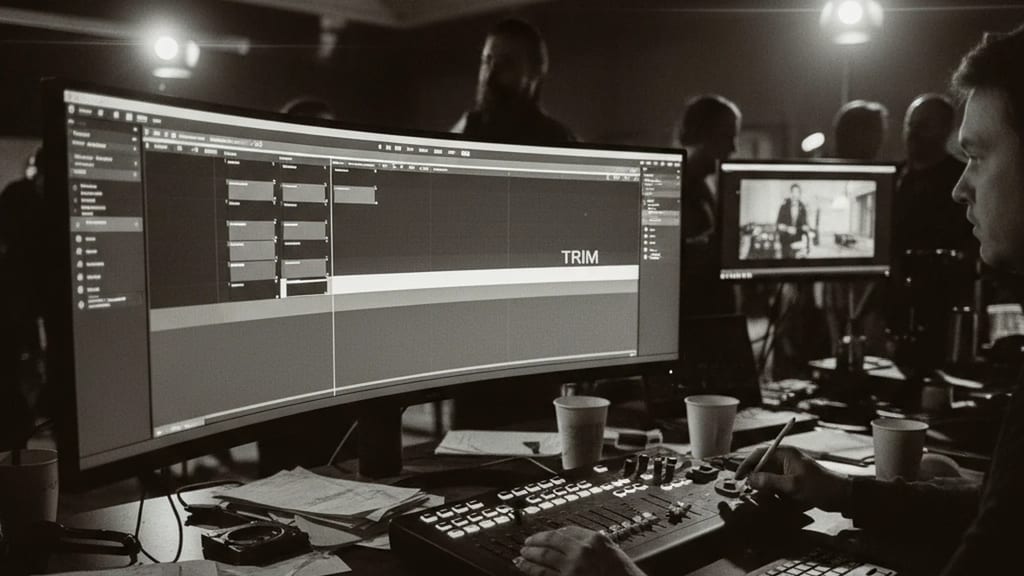
Precise frame-level adjustment of edit points using roll, ripple, or slip trim functions in digital editing systems.

Technical Details

Modern editing systems offer three basic types: Roll Trim (moves the edit point between two clips), Ripple Trim (changes only one clip and shifts subsequent material), and Slip/Slide Trim (changes timing without altering overall length). Professional systems like Avid Media Composer operate with trim resolutions down to half a frame (12.5ms at 24fps), while consumer-oriented software is usually limited to whole frames. Trim functions utilize J, K, L keys for dynamic scrubbing at speeds between 1x and 32x.

History & Development

Trimming evolved from the mechanical film editing of the 1920s, where editors physically shortened and lengthened film strips. In 1971, CMX introduced the first computer-assisted trimming with the CMX 600, enabling precise frame-accurate work. Avid revolutionized digital trimming in 1989 with real-time preview and Dynamic Trimming. Since the 2000s, modern codecs like ProRes and DNxHD have enabled lossless trimming even with highly compressed formats.

Practical Application in Film

In "Mad Max: Fury Road," editor Margaret Sixel used extensive trimming to shape the final action sequences from 470 hours of footage – individual explosions were trimmed by 2-3 frames for maximum impact. In dialogue scenes, trimming is typically done by 1-8 frames to optimize natural speech pauses. The standard workflow begins with a rough cut, followed by a fine cut with intensive trimming of the last 10-15% of edits by 1-4 frames each.

Comparison & Alternatives

Trimming differs from rough cutting by millimeter-precise adjustments rather than major structural changes. Slip editing alters clip content without moving edit points, while trimming exclusively modifies edit points. AI-based tools like Adobe Sensei Scene Edit Detection automate rough pre-cutting but do not replace manual fine-trimming, which still requires the craft of experienced editors.
From the crafts

Perspectives

Cinematographer

Beim Drehen denke ich bereits ans spätere Trimming und halte Einstellungen grundsätzlich 2-3 Sekunden länger als geplant. Besonders bei Handheld-Aufnahmen filme ich extra Material am Anfang und Ende, da die Stabilisierung oft die ersten und letzten Frames unbrauchbar macht - das gibt dem Editor später Trimming-Spielraum von mindestens 12-24 Frames pro Schnitt.

Director

Trimming ist mein Feintuning-Werkzeug für emotionale Beats - ein einziger Frame kann entscheiden, ob eine Pointe landet oder verpufft. In der Post arbeite ich eng mit dem Editor zusammen und lasse mir kritische Schnitte in 3-Frame-Varianten vorführen, um die perfekte emotionale Kadenz zu finden - manchmal macht ein Frame Unterschied zwischen Lachen und Schweigen im Kinosaal.

Producer

Trimming-Sessions kosten mich etwa 15-20% der gesamten Post-Production-Zeit, aber diese Investition reduziert später teure Nachbesserungen nach Testscreenings. Ich plane standardmäßig 8-12 Stunden Fine-Trimming pro Filmminute ein und stelle sicher, dass unsere Schnittsoftware-Lizenzen auch Dynamic Link zu Color-Correction-Tools unterstützen, um Rendering-Zyklen während der Trimming-Phase zu minimieren.

More in the lexikon

Related terms

Test your knowledge

Quiz

1. Was beschreibt „Trimmen" am besten?

2. Zu welchem Department gehört „Trimmen"?

3. Wie viele verschiedene Fachperspektiven bietet dieser Eintrag?

Report an error
From the Filmfarm ecosystem

Understand visual language, budget productions, connect crew.

The Lexikon is part of the Filmfarm ecosystem — alongside budgeting (FilmBalance), an industry magazine (FilmCircus) and crew networking (FilmCall, CrewMesh). One shared vocabulary for the whole production.

FilmFarm FilmRadarComing soonFilmPulseComing soonFilmNumbersComing soonFilmCapitalComing soonFilmLabComing soonFilmBalanceComing soonFilmCircusComing soon