Filmlexikon.
Support
Tail
Editing · Terms

Tail

Murnau AI illustration
shot wide shot very wide shot full shot medium shot close up medium close up

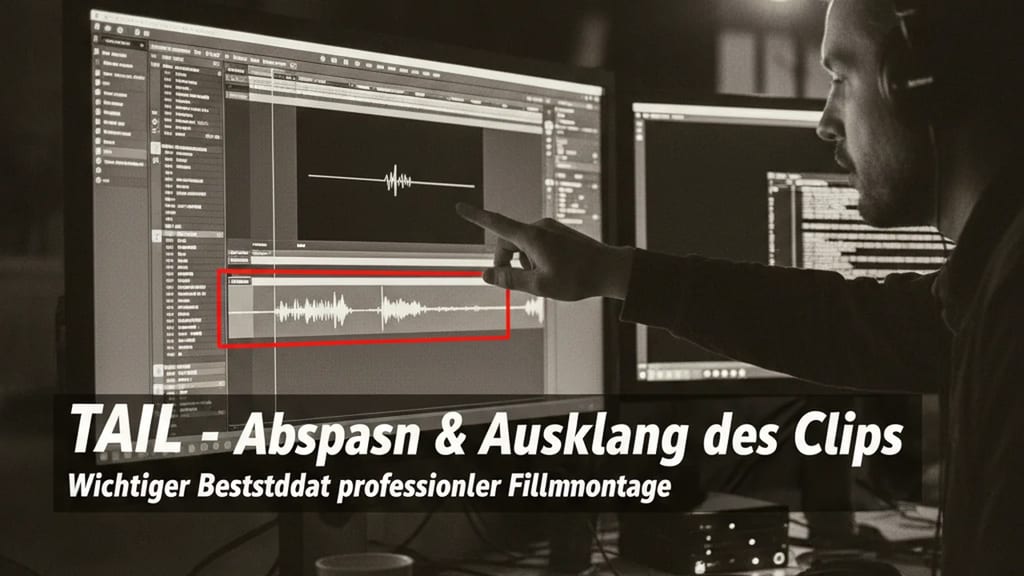
Tail is a technique in filmmaking editing.

Technical Details

Professional cameras record an additional 2-5 seconds of material after the "cut" command as standard. At 24fps, this corresponds to 48-120 additional frames per take. In Avid Media Composer, tails are created as "tail handles" with at least 1 second (24 frames) of material. Final Cut Pro and DaVinci Resolve use similar defaults, with the handle length being project-configurable between 12-96 frames. The tail is defined by timecode markers and displayed in the bin view as available material reserve.

History & Development

The term originates from the analog film era, when physical film rolls actually had a "tail end." In 1924, UFA first introduced standardized material overhangs of 16 frames. With the introduction of Steenbeck editing tables in 1931, the practice of deliberately leaving longer tails became established. Digital editing systems adopted the concept of handles from 1989 (Avid/1) onwards, with tails now becoming virtually extendable as long as raw material was available.

Practical Use in Film

Edgar Wright consciously uses longer tails in "Baby Driver" (2017) for precise beat synchronization in music editing. For dialogue editing, tails of 3-5 seconds are needed to seamlessly integrate natural breaths and room tone. Action sequences often require minimal tails of 6-12 frames, as every frame influences impact. Colorists use tails for test runs of color transitions without affecting the final edit.

Comparison & Alternatives

Tails differ from heads by their position after the cut point. While freeze frames artificially extend the last image, actual tails offer continuous motion. Slip edits utilize heads and tails to shift clips in time. In the VFX pipeline, extended tails of 10-20 seconds are required for compositing work, significantly longer than standard editorial tails.
From the crafts

Perspectives

Cinematographer

Ich lasse die Kamera grundsätzlich 5-8 Sekunden nach "Cut" weiterlaufen, besonders bei komplexen Kamerabewegungen oder wenn Schauspieler im Flow sind. Diese zusätzlichen Frames haben mir schon oft den Arsch gerettet, wenn der Editor plötzlich 12 Frames mehr für einen perfekten Übergang brauchte. Bei Steadicam-Shots filme ich sogar noch länger nach, weil die besten Bewegungen oft am Ende kommen.

Director

Längere Enden geben mir in der Post dramaturgische Flexibilität - manchmal entdecke ich in diesen "ungeplanten" Momenten die authentischsten Emotionen meiner Darsteller. Ich lasse bewusst nach dem eigentlichen Ende weiterdrehen, weil Schauspieler oft ihre Anspannung lösen und dabei goldene Reaktionen zeigen. Diese 2-3 Sekunden Tail können den emotionalen Rhythmus einer ganzen Szene verändern.

Producer

Längere Enden bedeuten höhere Speicherkosten und mehr Übertragungszeit bei Remote-Workflows, aber sie sparen teure Reshoots. Ich kalkuliere 15% zusätzliche Datenmengen für erweiterte Handles ein, was sich bei 4K-Material schnell auf mehrere Terabytes summiert. Dafür reduzieren sich die ADR-Kosten erheblich, wenn der Tonmeister genug Tail-Material für saubere Dialogübergänge hat.

More in the lexikon

Related terms

Test your knowledge

Quiz

1. Was beschreibt „Ende" am besten?

2. Zu welchem Department gehört „Ende"?

3. Wie viele verschiedene Fachperspektiven bietet dieser Eintrag?

Report an error
From the Filmfarm ecosystem

Understand visual language, budget productions, connect crew.

The Lexikon is part of the Filmfarm ecosystem — alongside budgeting (FilmBalance), an industry magazine (FilmCircus) and crew networking (FilmCall, CrewMesh). One shared vocabulary for the whole production.

FilmFarm FilmRadarComing soonFilmPulseComing soonFilmNumbersComing soonFilmCapitalComing soonFilmLabComing soonFilmBalanceComing soonFilmCircusComing soon