Technical Details
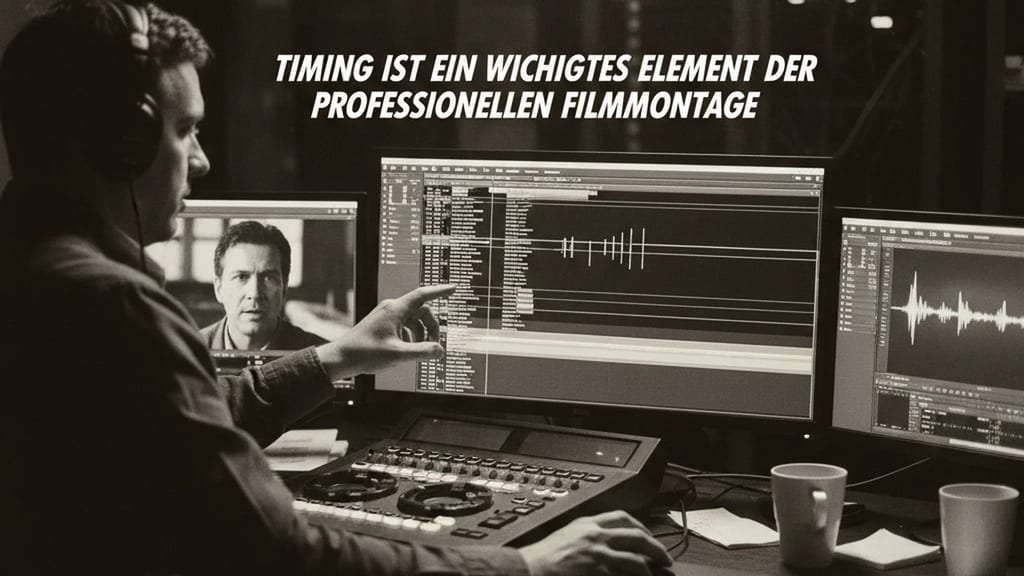
In digital editing systems, timing is controlled via timecode (SMPTE) at the frame level, with each individual frame receiving a unique time position (HH:MM:SS:FF). Modern non-linear editing systems operate with sub-frame accuracy up to 1/96-second resolution. Three fundamental timing categories exist: Metric Timing (uniform intervals), Rhythmic Timing (accented beats), and Organic Timing (narrative necessity). Audio synchronization requires a +/- 2 frame tolerance, while visual impact requires +/- 1 frame.
History & Development
In 1925, Sergei Eisenstein developed systematic timing principles in "Battleship Potemkin," particularly the acceleration of the Odessa Steps by progressively shortening shot lengths from 52 to 8 frames. In 1979, Walter Murch coined computer-assisted timing with "Apocalypse Now" through his "Blink" theory – cuts follow natural blink rhythms. The introduction of the Avid Media Composer in 1989 enabled frame-accurate digital timing control for the first time.
Practical Application in Film
Edgar Wright uses precise beat timing in "Baby Driver" (2017), synchronizing cuts to musical rhythms with a 0.5-frame tolerance. Christopher Nolan works with three different timing levels in "Dunkirk" (2017): Land (1 week), Sea (1 day), Air (1 hour), which are mathematically precisely interwoven. Action sequences follow the 180-degree rule with 12-16 frame shot lengths for maximum intensity, while dialogue scenes use 48-72 frame lengths for narrative calm.
Comparison & Alternatives
Timing differs from rhythm through its technical precision – rhythm describes perceived beat, while timing refers to measurable frame positions. Pacing deals with overarching speed dramaturgy across sequences, whereas timing optimizes individual edit points. Cut-point detection software like ScriptSync automates rough timing, with final fine-tuning done manually. AI-based timing tools have been analyzing eye movements and heart rates of test groups since 2020 for objective timing optimization.