Technical Details
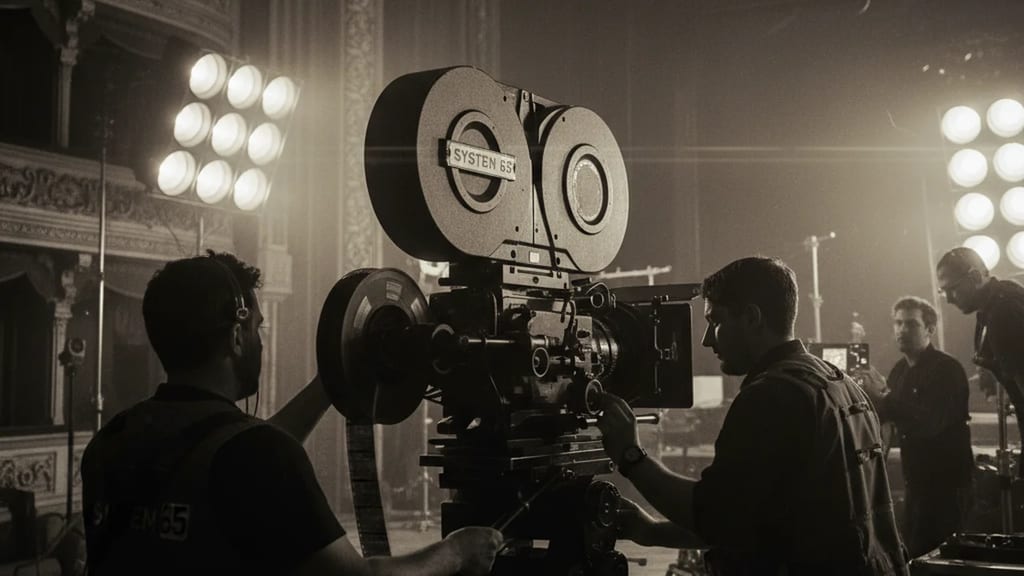
System 65 cameras operate at a frame rate of 24 fps with a transport speed of 3.048 meters per minute. Perforation follows the standard 35mm pattern, but with greater spacing between frames. The camera systems weighed between 45-80 kg and required special tripod heads with a load capacity of at least 100 kg. Lenses were manufactured in special 65mm mounts, with focal lengths needing to be calculated differently due to the larger sensor area – a 50mm lens corresponds to approximately a 25mm lens in 35mm format. Film magazines typically held 300 or 1000 feet of film.
History & Development
MGM introduced the system in 1955 with "Ben Hur," developed by engineers Robert Gottschalk and Richard Vetter. Panavision took over further development in 1962 and standardized the technology with the Panavision System 65 camera. Between 1955 and 1992, only 29 feature films were made in this format. The last regular production was "Far and Away" (1992), before Christopher Nolan revived the format in 2008 with "The Dark Knight." Today, only a few manufacturers like Arri and Panavision produce corresponding camera systems.
Practical Use in Film
Classic System 65 productions include "Lawrence of Arabia" (1962), "2001: A Space Odyssey" (1968), and "Apocalypse Now" (1979). The workflow requires specialized film processing facilities and printing techniques. Camera operation necessitates reinforced tripods and often motorized heads. Steadicam shots are practically impossible, and handheld shots are extremely strenuous. The superior image quality is particularly evident in landscape shots and action sequences, but film costs increase threefold compared to 35mm production.
Comparison & Alternatives
System 65 surpasses standard 35mm film by approximately 300% in resolution, but does not achieve the sharpness of IMAX 15/70mm film. Modern digital alternatives like Arri Alexa 65 or Red Monstro 8K VV offer comparable resolution at significantly lower weight and cost. VistaVision uses 35mm film horizontally and achieves similar image quality with less effort. System 65 remains unparalleled for maximum analog image quality in standard cinema aspect ratios, while IMAX is optimized for more square formats.