Filmlexikon.
Support
Swish Pan
Camera · Terms

Swish Pan

Murnau AI illustration
arri skypanel astera hydrapanel company move cooke panchro cooke speed panchro led panel litepanels astra litepanels gemini

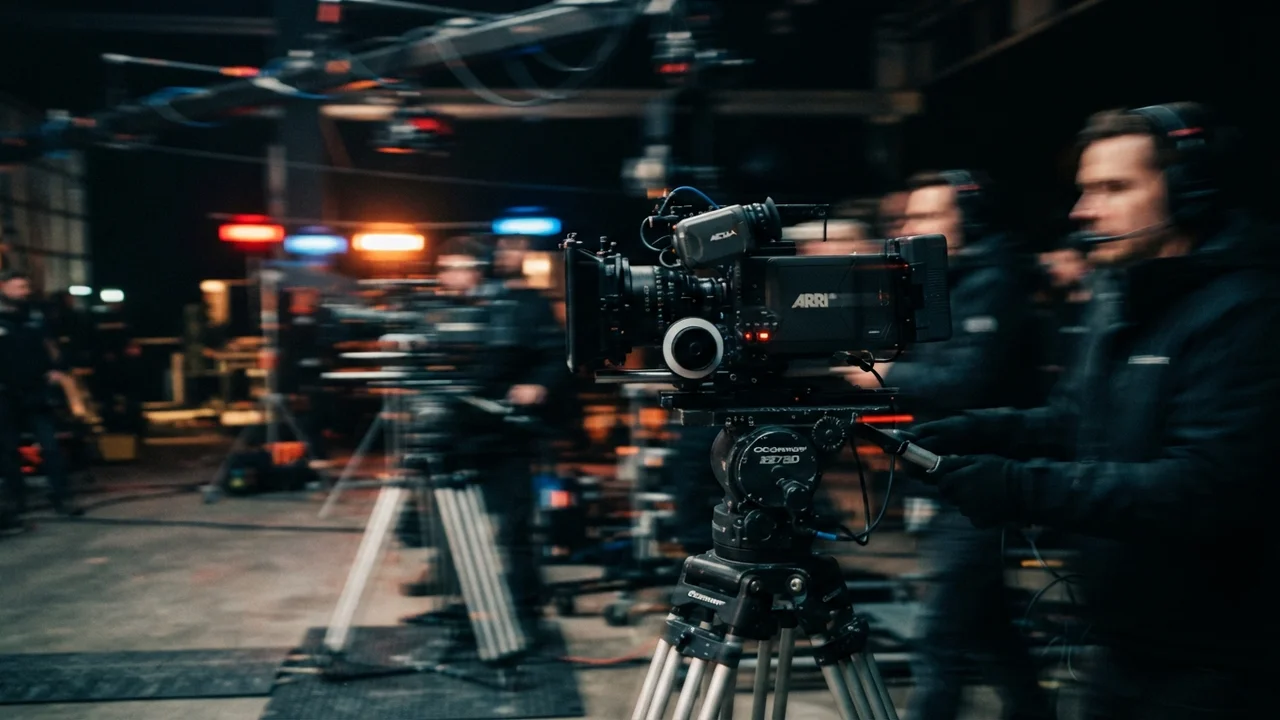
Extremely fast camera pan (180–720°/s) with intentional motion blur, used as a transition between shots or to accelerate pacing.

Technical Details

Classic swish pans are executed at speeds between 180° and 720° per second, with 360°/s considered standard. At 24fps, this results in motion blur of 15-60° per frame. Fluid heads with low resistance (Pan Drag 1-2) allow for the smoothest execution. Digitally, swish pans are created through keyframe animation with ease-in/ease-out curves or as a practical transition between two separate shots. Vertical variants (tilt whip) and 360° rotations around the optical axis expand the technical spectrum.

History & Development

The first documented swish pans can be found in Edwin S. Porter's "The Great Train Robbery" in 1903. In the 1960s, the technique became established as a deliberate stylistic device through Akira Kurosawa's precise choreography in "Yojimbo" (1961). Sam Raimi's "Evil Dead" (1981) popularized extreme 720° swish pans, while the digital revolution from 1990 onwards enabled computer-generated variants. Today, a distinction is made between practical in-camera swish pans and post-production effects.

Practical Use in Film

Edgar Wright systematically uses swish pans as a tempo enhancer in "Baby Driver" (2017), often synchronized with the music. In "Whiplash" (2014), 180° swish pans between the conductor and the drummer amplify emotional tension. Practically, execution requires precise markers for start and end positions, as motion blur does not allow for correction during the shot. The focus puller must anticipate the focus point, as the focus plane is not trackable during the pan.

Comparison & Alternatives

The swish pan differs from a normal camera pan in speed and deliberate motion blur. While standard pans reach 15-45°/s, swish pans start from 180°/s. Jump cuts achieve a similar transitional effect without motion blur, and speed ramping alters time perception without changing direction. Match cuts connect shots through formal similarity rather than movement. In post-production, directional blur and radial blur are increasingly replacing practical swish pans.
From the crafts

Perspectives

Cinematographer

Ich setze Wischschwenks gezielt bei 360°/s ein, um harte Szenenwechsel zu kaschieren oder Tempo zu erzeugen. Die kritischen Punkte sind der exakte Start-/Endframe und die Wahl des richtigen Fluid-Head-Widerstands – zu viel Drag macht die Bewegung ruckelig, zu wenig lässt sie unkontrolliert werden. Bei digitalen Kompositings achte ich darauf, dass der Motion Blur natürlich aussieht und nicht wie ein Post-Effekt wirkt.

Director

Der Wischschwenk ist mein Mittel, um Zuschauer emotional von einer Situation in die nächste zu katapultieren – besonders effektiv bei Stimmungsumbrüchen oder Zeitsprüngen. Ich nutze ihn bewusst sparsam, da er sehr dominant wirkt und die Aufmerksamkeit auf sich zieht. In Actionsequenzen verstärkt er das Chaos, in ruhigen Szenen kann er ironische Pointen setzen oder Träume von Realität trennen.

Producer

Wischschwenks sparen mir Drehtage, da sie nahtlose Übergänge zwischen verschiedenen Locations ermöglichen – ein 180°-Schwenk kann einen kompletten Szenenwechsel verbergen. Die Technik ist kostengünstig und erfordert keine aufwendigen Steadicam-Rigs oder Kranfahrten. Allerdings plane ich immer Backup-Takes ein, da die Bewegung nur einmal pro Setup funktioniert und Wiederholungen bei komplexen Szenen teuer werden.

More in the lexikon

Related terms

Test your knowledge

Quiz

1. Was beschreibt „Wischschwenk" am besten?

2. Zu welchem Department gehört „Wischschwenk"?

3. Wie viele verschiedene Fachperspektiven bietet dieser Eintrag?

Report an error
From the Filmfarm ecosystem

Understand visual language, budget productions, connect crew.

The Lexikon is part of the Filmfarm ecosystem — alongside budgeting (FilmBalance), an industry magazine (FilmCircus) and crew networking (FilmCall, CrewMesh). One shared vocabulary for the whole production.

FilmFarm FilmRadarComing soonFilmPulseComing soonFilmNumbersComing soonFilmCapitalComing soonFilmLabComing soonFilmBalanceComing soonFilmCircusComing soon