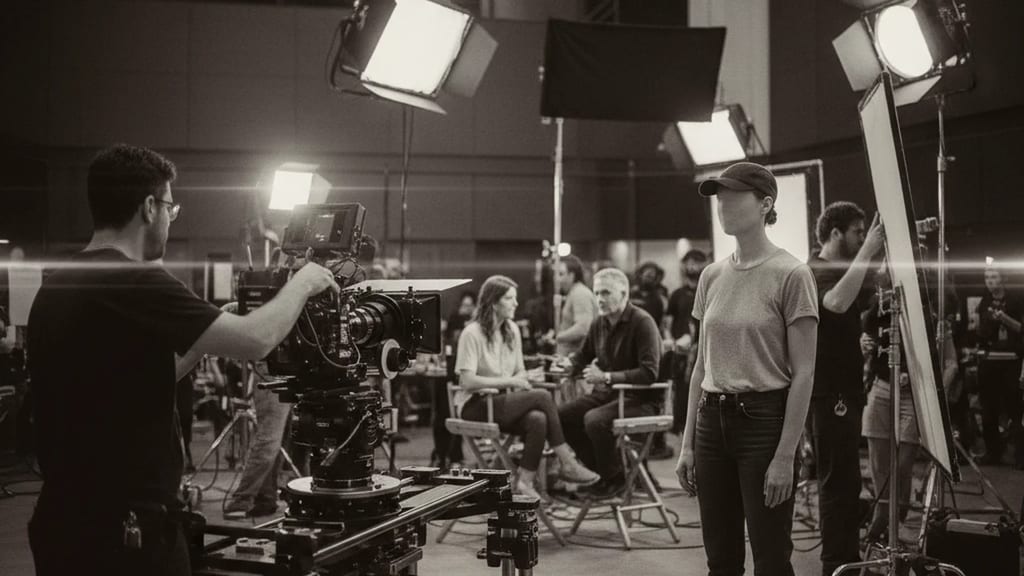
Technical Details
Stand-ins are selected based on specific physical characteristics: height (to within 2-3 cm), shoulder width, hair length and color, and skin tone for accurate light metering. They often wear neutral clothing in similar shades to the eventual costume. For wide shots, a rough resemblance is sufficient; for close-ups, body doubles with exact physical matches are required. For complex camera movements, stand-ins mark exact positions with tape markers on the floor.
History & Development
The stand-in system became established in the 1920s, parallel to the introduction of more elaborate lighting setups in Hollywood studios. Mary Pickford is considered one of the first stars to systematically use stand-ins to optimize her working hours. In the 1930s, major studios like MGM and Paramount developed their own stand-in pools with permanently employed individuals. Since the 2000s, digital motion capture has reduced the need for stand-ins in VFX-heavy productions, as body movements can be precisely captured digitally.
Practical Use in Film
In "Lawrence of Arabia" (1962), David Lean used up to eight different stand-ins for Peter O'Toole during the complex desert shoots. Modern blockbusters employ stand-ins for 60-80% of the principal actors' shooting time. During a typical 12-hour shooting day, a stand-in works actively for about 4-6 hours, while the principal actor undergoes costume, makeup, and dialogue rehearsals. Stand-ins allow for time savings of 30-45 minutes per setup with elaborate lighting installations.
Comparison & Alternatives
Stand-ins differ from photo doubles (for publicity shots) and stunt doubles (for action sequences) due to their purely technical function. Body doubles replace actors in intimate or nude scenes and require more exact physical matches. Virtual production with LED walls reduces the need for stand-ins, as lighting is adjusted automatically. In low-budget productions, crew members or script supervisors often perform stand-in duties.