Filmlexikon.
Support
Speed Rail Clamp
Grip · Equipment

Speed Rail Clamp

Murnau AI illustration
clamp color temperature flow roll speed rail speed

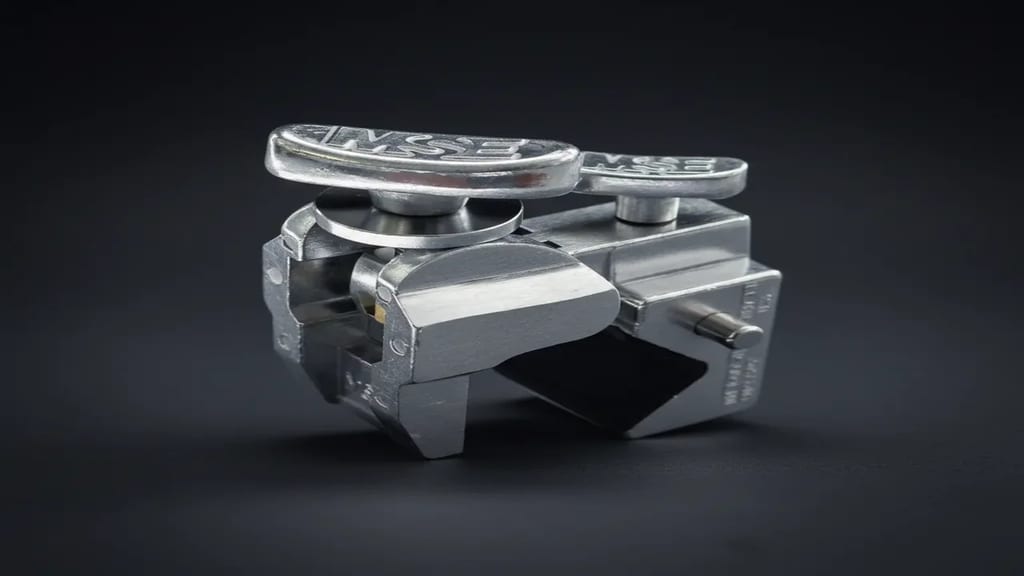
Clamp for tool-free connection of Speed Rail pipes (28–48 mm diameter) with clamping force up to 2,500 N.

Technical Details

Standard Speed Rail Clamps grip tube diameters of 28mm, 35mm, 42mm, and 48mm. The clamping range is adjusted by a 12mm diameter screw or a quick-release lever. The maximum clamping force is 2,500 Newtons. Variants include the C-Clamp for right-angle connections, the Swivel-Clamp with a 360-degree pivot, and the Double-Clamp for tube-to-tube connections. Special versions with 16mm or 28mm diameter spigots directly mount light heads.

History & Development

Matthews Studio Equipment introduced the first Speed Rail system in 1974, originally developed for the automotive industry. The first film sets began using the system in 1976 at Paramount Pictures. In 1982, Avenger in Italy expanded the concept to include European standards. Modern Studio Equipment perfected the quick-release mechanism in 1995, which is now the industry standard. Since 2010, CNC-milled aluminum clamps have dominated the market.

Practical Application in Film

On "Blade Runner 2049" (2017), DoP Roger Deakins used Speed Rail clamps for complex LED arrays in the city scenes. The clamps allowed for rapid repositioning of the panels between takes. Typical workflow: Grip builds the Speed Rail grid, electricians clamp lights using Speed Rail clamps, and readjustments are made tool-free in under 30 seconds. Advantage: tool-less assembly and high stability. Disadvantage: limited load capacity compared to welded connections.

Comparison & Alternatives

Speed Rail clamps differ from Super Clamps due to their specific adaptation for tube systems rather than universal mounting. Magic Arms offer more flexibility but less load capacity. Modern alternatives include Kupo's Snap Rail systems with bayonet locks (since 2018) or American Grip's Truss clamps. Speed Rail clamps are used for static setups, Magic Arms for dynamic camera movements, and Super Clamps for improvised mounting on existing structures.
From the crafts

Perspectives

Cinematographer

Ich verwende Speed-Rail-Klemmen hauptsächlich für präzise Lichtpositionierung, da sie mir erlauben, LED-Panels millimetergenau auszurichten ohne das gesamte Stativ zu bewegen. Bei komplexen Mehrfach-Setups spare ich damit kostbare Zeit zwischen den Takes, weil ich Leuchten schnell nachführen kann ohne die Grundkonstruktion anzutasten.

Director

Speed-Rail-Klemmen geben mir die Flexibilität, Lichtkonzepte während der Probe schnell anzupassen - wenn ich merke, dass ein Schatten die Gesichtsausdruck meines Darstellers verschluckt, kann mein Gaffer binnen Sekunden nachjustieren. Das ermöglicht mir experimentellere Beleuchtung, weil ich nicht bei der ersten Lösung bleiben muss.

Producer

Eine Speed-Rail-Klemme kostet 45-80 Euro, amortisiert sich aber durch gesparte Rigger-Stunden bereits am ersten Drehtag. Meine Grip-Trucks führen standardmäßig 50 Stück mit, das reduziert Rüstzeiten um durchschnittlich 20 Minuten pro Setup - bei 12 Setups täglich spare ich vier Stunden Overtime-Kosten.

More in the lexikon

Related terms

Test your knowledge

Quiz

1. Was beschreibt „Speed-Rail-Klemme" am besten?

2. Zu welchem Department gehört „Speed-Rail-Klemme"?

3. Wie viele verschiedene Fachperspektiven bietet dieser Eintrag?

Report an error
From the Filmfarm ecosystem

Understand visual language, budget productions, connect crew.

The Lexikon is part of the Filmfarm ecosystem — alongside budgeting (FilmBalance), an industry magazine (FilmCircus) and crew networking (FilmCall, CrewMesh). One shared vocabulary for the whole production.

FilmFarm FilmRadarComing soonFilmPulseComing soonFilmNumbersComing soonFilmCapitalComing soonFilmLabComing soonFilmBalanceComing soonFilmCircusComing soon