Technical Details
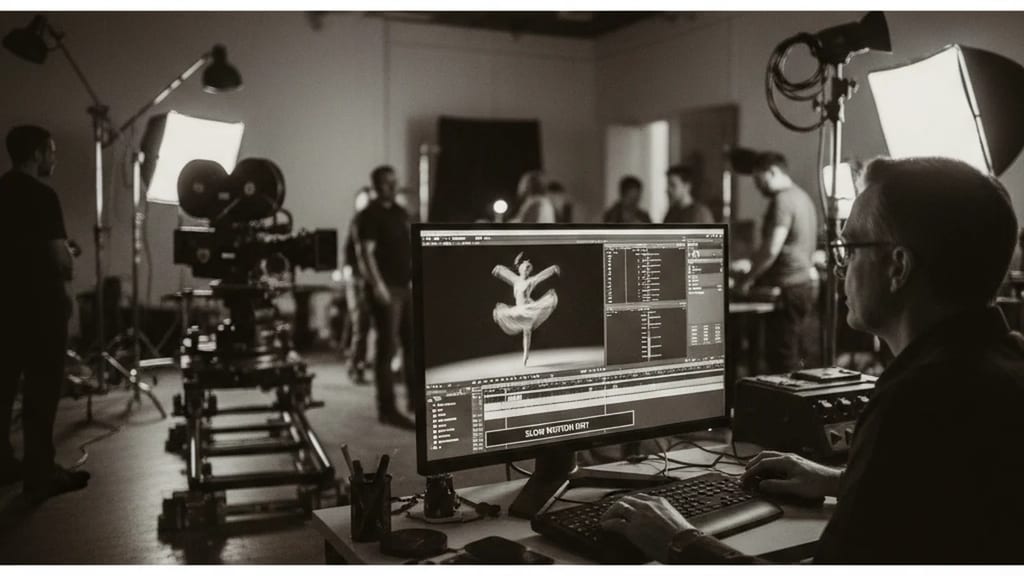
Modern editing software generates slow motion through Optical Flow algorithms, which calculate new intermediate frames between existing ones. Adobe After Effects achieves quality factors of up to 95% at 50% speed. Frame blending methods superimpose consecutive images with 50% transparency, while True Motion technologies like REELSmart Motion Blur analyze pixel-accurate motion vectors. Typical slowing factors range between 25% and 80% of the original speed – beyond that, the interpolation becomes visibly unnatural.
History & Development
Quantel developed the first digital slow motion edit in 1985 for the Harry system, but it cost $500,000 per workstation. In 1992, Avid first integrated real-time slow motion into consumer editing software. The breakthrough came in 2003 with Apple Final Cut Pro 4, featuring integrated Optical Flow technology. Adobe revolutionized the process in 2008 with the Timewarp effect, which offered automatic quality optimization for the first time. Since 2015, machine learning algorithms, such as those integrated into DaVinci Resolve, have enabled nearly artifact-free slow-downs up to a factor of 4.
Practical Use in Film
Zack Snyder systematically used 60% slow motion for fight sequences in "300" (2006), combined with 24fps dialogue. Wes Anderson employs subtle 85% slow motion for camera pans in "The Grand Budapest Hotel" (2014). The workflow requires rendering times of 3-8 hours per minute of sequence for 4K material. Advantage: Cost savings compared to high-speed cameras and post-hoc speed adjustments. Disadvantage: Motion blur does not correspond to physically correct slow motion, leading to stroboscopic effects with fast movements.
Comparison & Alternatives
True capture slow motion at 120-1000fps (Phantom TMX cameras) creates natural motion blur but costs €2,500 per day rental plus a specialist. Slow motion editing is suitable for speed reductions below 200%; above that, high-speed capture dominates. Frame interpolation using AI software like Topaz Video AI now achieves cinema quality at 1,000% slowdown, but requires 12-48 hours of render time per minute. Variable Speed Ramping combines both methods: capture at 60fps, edit with dynamic speed curves between 40% and 250%.