Filmlexikon.
Support
Side Arm
Lighting · Terms

Side Arm

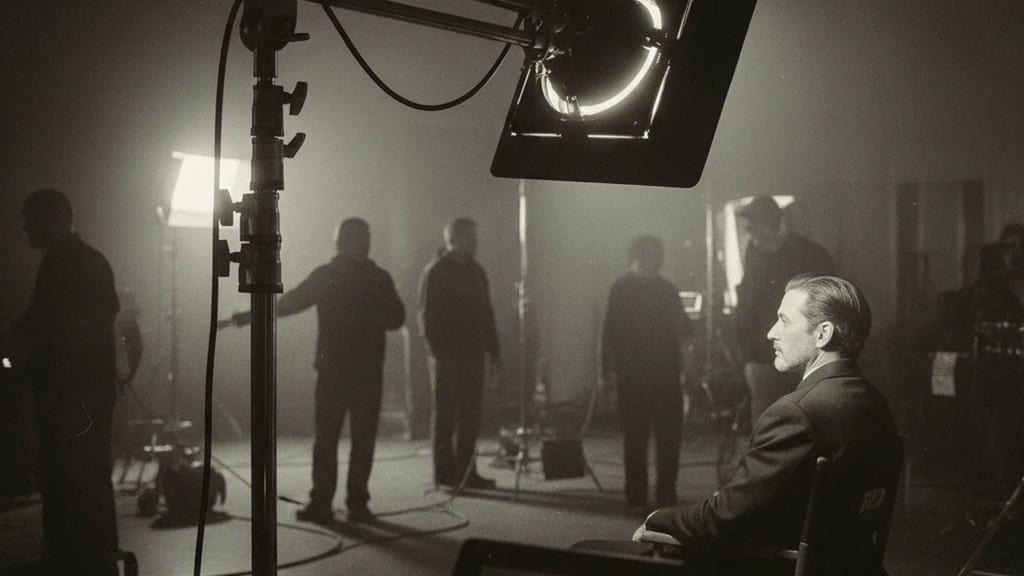
Murnau AI illustration
color temperature flow roll take

Extendable arm for C-stands (60–150 cm) supporting fixtures up to 15 kg outside camera frame, eliminating unwanted stand shadows.

Technical Details

Standard side arms measure between 60 and 150 centimeters in length with a tube diameter of 16 or 28 millimeters. Load capacity varies between 3 and 15 kilograms depending on the material, with aluminum constructions weighing approximately 800 grams and carbon variants 450 grams. High-quality models feature locking screws (Grip Head) with a torque of 25-35 Nm. Telescopic versions offer a length adjustment ratio of 1:2.5.

History & Development

The first side arms originated in 1935 at Warner Bros. Studios as a response to the spatial limitations of the then-current soundstages. Chief Lighting Technician Harold Rosson developed the concept for "A Midsummer Night's Dream" to position Fresnel spotlights outside the camera's field of view. Matthews Studio Equipment standardized the currently common dimensions in 1952. Carbon side arms only emerged in 2008 with the RED camera revolution, when lighter rigging solutions were in demand.

Practical Use in Film

In "Blade Runner 2049," Roger Deakins used side arms for precise edge lighting in apartment scenes without stands obstructing the frame. In automotive commercials, they enable the positioning of LED panels above vehicles without a boom operator. The typical workflow involves mounting on a C-stand, followed by attaching the light fixture and balancing with sandbags. Disadvantages include increased susceptibility to wind during exterior shoots and loss of stability at maximum extension.

Comparison & Alternatives

In contrast to a boom arm (Boom Pole), the side arm operates statically without an operator. While Magic Arms offer articulation, they can only carry a maximum of 2.5 kilograms compared to the side arm's 15 kilograms. Modern camera cranes with integrated light mounts are increasingly replacing the classic side arm configuration in elaborate productions. For low-budget shoots, side arms remain the preferred choice due to their price-performance ratio (starting at 45 Euros) compared to motorized pan-tilt systems (starting at 2,800 Euros).

From the crafts

Perspectives

Cinematographer

Als DoP nutze ich Seitenarme hauptsächlich für präzise Haarlichtsetzung und Backgroundseparation, da sie mir erlauben, LED-Panels oder kleine Fresnel-Spots exakt außerhalb des 180-Grad-Bildbereichs zu positionieren. Bei Steadicam-Fahrten sind sie unersetzlich für kontinuierliche Kantenlichtführung ohne sichtbare Stative im Background. Die Gewichtsverteilung muss ich allerdings mit mindestens zwei Sandsäcken ausgleichen, sonst kippt mir der ganze C-Stand um.

Director

Ich setze Seitenarme gezielt für dramatische Lichtführung ein, besonders wenn ich Charaktere emotional isolieren oder Machtverhältnisse durch asymmetrische Ausleuchtung visualisieren will. In Dialogszenen ermöglichen sie mir subtile Lichtakzente auf Requisiten oder Hintergrundelemente, ohne dass die Schauspieler von zusätzlicher Technik im Raum abgelenkt werden. Die horizontale Flexibilität gibt mir mehr kreative Freiheit als starre Stativpositionen.

Producer

Seitenarme reduzieren meinen Equipmentbedarf erheblich, da ein C-Stand mit Seitenarm oft zwei separate Stativpositionen ersetzt und damit Standmiete spart. Die Investition von 50-120 Euro pro Stück amortisiert sich bereits nach drei Drehtagen gegenüber zusätzlichen Grip-Kräften. Allerdings muss ich bei Location-Scouts auf Raumhöhen über 2,80 Meter achten, da ausgezogene Seitenarme schnell an niedrige Decken oder Sprinkleranlagen stoßen.

More in the lexikon

Related terms

Test your knowledge

Quiz

1. Zu welchem Department gehört „Seitenarm"?

2. Wie viele verschiedene Fachperspektiven bietet dieser Eintrag?

Report an error
From the Filmfarm ecosystem

Understand visual language, budget productions, connect crew.

The Lexikon is part of the Filmfarm ecosystem — alongside budgeting (FilmBalance), an industry magazine (FilmCircus) and crew networking (FilmCall, CrewMesh). One shared vocabulary for the whole production.

FilmFarm FilmRadarComing soonFilmPulseComing soonFilmNumbersComing soonFilmCapitalComing soonFilmLabComing soonFilmBalanceComing soonFilmCircusComing soon